• العربية
  • فارسی
Brand
  • Iran Insight
  • Politics
  • Economy
  • Analysis
  • Special Report
  • Opinion
  • Podcast
  • Iran Insight
  • Politics
  • Economy
  • Analysis
  • Special Report
  • Opinion
  • Podcast
  • Theme
  • Language
    • العربية
    • فارسی
  • Iran Insight
  • Politics
  • Economy
  • Analysis
  • Special Report
  • Opinion
  • Podcast
All rights reserved for Volant Media UK Limited
volant media logo

No final Iran-US understanding reached yet - Tasnim

May 29, 2026, 17:24 GMT+1

No final understanding has been reached between Iran and the United States, IRGC-affiliated Tasnim News reported, rejecting Trump’s remarks on lifting the naval blockade as unilateral and insisting Iran’s frozen assets must be addressed before any preliminary deal.

Tasnim said Trump’s comments should be viewed with skepticism, arguing that even if the naval blockade is lifted in practice, it would only amount to ending one violation of the ceasefire because the blockade should not have been imposed in the first place.

The outlet also dismissed claims by Trump and US media about the nuclear file as baseless, saying the current discussions do not involve details of the nuclear issue.

Tasnim said Trump’s insistence that Iran’s frozen funds will not be released only deepens Tehran’s doubts about Washington’s seriousness.

The Islamic Republic has repeatedly said the status of its frozen assets must be determined before any initial understanding is reached, the report added.

Most Viewed

Iran’s lion-and-sun flag at center of FIFA row before 2026 World Cup
1

Iran’s lion-and-sun flag at center of FIFA row before 2026 World Cup

2
SPECIAL REPORT

Witnesses describe gunfire, blocked exits and deadly market fire in Rasht

3
INSIGHT

How four Khamenei family names map the Islamic Republic’s inner circle

4

Amnesty says Iran using war to intensify repression

5

Names of some Iran protest victims vanish from Tehran cemetery database

Banner
Banner

Spotlight

  • Iran factions clash over interim US deal as Trump weighs final call
    INSIGHT

    Iran factions clash over interim US deal as Trump weighs final call

  • Names of some Iran protest victims vanish from Tehran cemetery database

    Names of some Iran protest victims vanish from Tehran cemetery database

  • How four Khamenei family names map the Islamic Republic’s inner circle
    INSIGHT

    How four Khamenei family names map the Islamic Republic’s inner circle

  • Witnesses describe gunfire, blocked exits and deadly market fire in Rasht
    SPECIAL REPORT

    Witnesses describe gunfire, blocked exits and deadly market fire in Rasht

  • Iran’s lion-and-sun flag at center of FIFA row before 2026 World Cup

    Iran’s lion-and-sun flag at center of FIFA row before 2026 World Cup

  • Iran’s partial internet return exposes rift inside ruling system

    Iran’s partial internet return exposes rift inside ruling system

•
•
•

More Stories

IRGC outlet disputes Trump’s account of emerging Iran deal

May 29, 2026, 16:45 GMT+1

Claims by US President Donald Trump about a possible agreement with Iran are “a mix of truth and lies” and do not reflect the draft terms being reviewed in Tehran, IRGC-affiliated Fars News reported, citing informed sources.

The report said the draft agreement, framed as “commitment for commitment,” is in the final stages of approval in Iran but no definitive decision has yet been made.

According to Fars, Trump has claimed victory by presenting points that contradict the text of the draft, even as he says the US blockade will be lifted.

The report denied that Iran had agreed to reopen the Strait of Hormuz without tolls or conditions, saying no such clause exists in the draft. It said Tehran would reopen the strait after the blockade is lifted, based on its own arrangements, which could include monitoring, inspections, services and security measures.

Fars also rejected Trump’s claim that Iran would dismantle or destroy its nuclear material, saying informed sources described the assertion as baseless and absent from the memorandum.

The report said the most important part of the draft is an immediate payment of $12 billion in frozen Iranian assets, adding that Tehran would not enter any further phase of negotiations until the money is released.

It also said a full ceasefire in Lebanon in line with Hezbollah’s position was another key issue.

Fars said Iran would only move to the next stage of talks, including sanctions relief and the nuclear issue, if those conditions are resolved, and that any final agreement would be based on the Islamic Republic’s red lines and “complete distrust” of the United States.

Iran factions clash over interim US deal as Trump weighs final call

May 29, 2026, 16:26 GMT+1
•
Maryam Sinaiee
Iran factions clash over interim US deal as Trump weighs final call
100%
People ride past an anti-US billboard depicting Donald Trump and the Strait of Hormuz, in Tehran. May 25, 2026

The prospect of an interim agreement between Tehran and Washington has exposed deep divisions in Iran, with some officials presenting it as diplomatic progress while hardliners warn it could cross the Islamic Republic’s red lines.

US President Donald Trump said on Friday he was heading to the White House's Situation Room to make a final decision on an emerging deal with Iran, after saying parts of the arrangement had been agreed.

The remarks came one day after the US military struck an Iranian drone facility near the Strait of Hormuz. Iran’s Revolutionary Guards reportedly responded by targeting an American base in the region, believed to be located in Kuwait.

In Tehran, lawmakers aligned with Parliament Speaker Mohammad Bagher Ghalibaf — who is also leading Iran’s negotiating team — reacted positively to reports of progress, while hardline factions sharply criticized the negotiations.

Fada-Hossein Maleki, a member of parliament’s National Security Commission, spoke of “significant quantitative and qualitative progress” in the talks and claimed that “most proposals of the Islamic Republic have been accepted.”

According to Maleki, Iran’s main concern is “Trump’s unpredictability.” He also said Ghalibaf’s recent trip to Qatar focused on frozen Iranian assets and had produced positive results for Tehran.

By contrast, National Security Committee spokesman Ebrahim Rezaei criticized concessions in the negotiations during a televised interview. “Why should we even commit to the United States not to build a nuclear weapon?” he said.

Another lawmaker, Ruhollah Izadkhah, accused Ghalibaf of sidelining parliament. “Apparently, they intend to keep parliament shut so they can reopen the strait,” he said, adding: “The people will not allow it.”

Abolfazl Aboutorabi, another lawmaker, claimed that Supreme Leader Mojtaba Khamenei’s “red lines” regarding the Strait of Hormuz, the nuclear issue and compensation demands had been violated in the talks.

He accused Washington of trying to deceive Iran by offering “a lollipop” — referring to a proposed $300 billion reconstruction fund without binding guarantees — in exchange for reopening the Strait of Hormuz. He also predicted that the United States would attack Iran again after the World Cup and US congressional elections.

Parisa Nasr, a market specialist, accused the negotiators of “surrenderism”. Writing online, she said: “First they turn Iran’s strategic assets into bargaining chips; then they effectively transform these into burned cards and worthless leverage; and finally, by arguing that ‘we have no winning cards left,’ they drag the country from one pit into another colonial surrender agreement.”

Doubts about a lasting agreement

Some Iranian social media users argue that even a signed agreement would not prevent future war. Others fear that if a temporary arrangement evolves into a durable settlement, hopes for political change inside Iran will fade significantly. Many in this camp believe Trump has abandoned the Iranian people and left them alone.

Saeed Mohammadi-Jazi, a trader and financial analyst, wrote on X that within a few months either a comprehensive agreement would be reached — ensuring the survival of the current system — or the region would face a “big and final” war that would determine the fate of the Islamic Republic.

Another user wrote: “A real nuclear agreement seems unlikely. Both sides will use this temporary calm to prepare for the next round of conflict — a conflict that may resume within months.”

Some ordinary users have also criticized Washington for negotiating with the Islamic Republic.

One user wrote on X: “A temporary Iran-US agreement — if it is signed — will not end Iran’s crisis. A regime emerging from this war will be weaker externally but stronger internally, and financially integrated into the global economy without the slightest accountability for what it has done.”

“The people who came into the streets in January and were killed were used as bargaining chips in this equation and then discarded once the deal was completed,” the user added.

A nation suspended between war and peace

Many Iranians are following developments minute by minute with growing anxiety. Ordinary citizens say the prolonged atmosphere of uncertainty has become more exhausting than anything else.

Sima, a Tehran resident, said the feeling of living in a “neither war nor peace” situation has affected every aspect of her life and the lives of those around her.

“So many times we thought a deal was close, and then within hours everything suddenly changed, and the threat of war escalated again — like last night’s clashes in the Persian Gulf and Bandar Abbas,” she said. “I truly felt again as if I could hear planes and missiles above my head. Fortunately, so far, neither side has said these clashes mean the ceasefire has collapsed.”

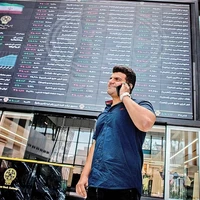
On Iranian news websites, reports on gold and currency prices continue to dominate headlines. Amid soaring inflation and political instability that have weakened the national currency, many Iranians have turned to buying foreign currency and gold. Yet a temporary agreement could sharply reduce the value of those investments if markets suddenly fall.

Morteza, a Tehran-based engineer, said he converted all of his savings intended for buying a home into US dollars several months ago. Although he believes an agreement — especially one leading to sanctions relief — could improve the economy, he says the uncertainty keeps him awake at night.

“When I was a child, after the end of the Iran-Iraq war, many people — including my father — suffered huge losses when Iran accepted the ceasefire resolution,” he said.

Trump says heading to Situation Room for final decision on Iran deal

May 29, 2026, 15:57 GMT+1

US President Donald Trump said on Friday he was heading to the White House's Situation Room to make a final decision on an emerging deal with Iran, after saying parts of the arrangement had been agreed.

"Iran must agree that they will never have a Nuclear Weapon or Bomb. The Hormuz Strait must be immediately open, no tolls, for unrestricted shipping traffic, in both directions. All water mines (bombs), if any, will be terminated (we have removed, through detonation, numerous such mines with our great underwater mine sweepers. Iran will complete the immediate removal and/or detonation of any mines that are left, which will not be many!)," he said in a post on Truth Social.

"Ships caught in the Strait due to our amazing and unprecedented Naval Blockade, which will now be lifted, may start the process of “heading home!” Say HELLO to your wives, husbands, parents, and families from me, your favorite President!"

He also said Iran's enriched nuclear material "will be unearthed by the United States (which, it is agreed, is the only Country, along with China, with the mechanical capability of doing so!), in close coordination and conjunction with the Islamic Republic of Iran, plus the International Atomic Energy Agency, and DESTROYED."

He said "no money will be exchanged, until further notice. Other items, of far less importance, have been agreed to. I will be meeting now, in the Situation Room, to make a final determination."

Iran's foreign minister condemns US threats against Oman

May 29, 2026, 15:47 GMT+1

Iranian Foreign Minister Abbas Araghchi condemned US threats against Oman, saying Iran and Oman were acting within international law to manage safe shipping through the Strait of Hormuz.

In a phone call Friday with Oman’s Foreign Minister Badr Albusaidi, Araghchi praised Muscat’s “principled and responsible” approach to regional peace and security and defended what he called responsible measures by Iran and Oman to ensure safe maritime traffic in the strait.

His remarks came after US President Donald Trump warned that Oman would have to “behave” over any role in the Strait of Hormuz, while Treasury Secretary Scott Bessent warned Washington would not tolerate efforts to impose tolls on vessels passing through the waterway.

Araghchi also briefed Albusaidi on the latest Pakistan-mediated diplomatic process, saying a final deal depended on Washington ending its “excessive” demands and “shifting and contradictory” positions.

He said Tehran remained “serious and steadfast” in pursuing what it calls its legitimate rights and interests.

Milan probes two Iranians over threats to regime opponents

May 29, 2026, 15:24 GMT+1
Milan probes two Iranians over threats to regime opponents
100%

Milan prosecutors are investigating two Iranians living in Italy over alleged threats to Iranian dissidents, including a reported death-sentence warning to one opposition supporter, Reuters reported, citing judicial documents.

The suspects, named in a search warrant as Farshid Jalilian and Rohoulah Adib Ansari, are accused of aggravated threats and association for the purpose of terrorism and subversion of democracy. Prosecutors have ordered searches of their homes.

The case follows complaints by several Iranians in Italy who said they were targeted over their opposition to the Tehran government.

In one case cited in the warrant, an Iranian dissident told investigators she received a call saying she had been sentenced to death for supporting the opposition and that her assets in Iran would be seized.

The warrant also said one of the suspects had an Instagram account from which death threats were issued against anyone backing the return to power of Prince Reza Pahlavi, the exiled son of Iran’s former Shah.

Both suspects were known to attend an Islamic center in Milan owned by the Iranian consulate, according to the warrant.

The alleged threats took place around the time of Iran's nationwide protests in January and a March sit-in by dissidents outside the Iranian consulate in Milan.