• العربية
  • فارسی
Brand
  • Iran Insight
  • Politics
  • Economy
  • Analysis
  • Special Report
  • Opinion
  • Podcast
  • Iran Insight
  • Politics
  • Economy
  • Analysis
  • Special Report
  • Opinion
  • Podcast
  • Theme
  • Language
    • العربية
    • فارسی
  • Iran Insight
  • Politics
  • Economy
  • Analysis
  • Special Report
  • Opinion
  • Podcast
All rights reserved for Volant Media UK Limited
volant media logo

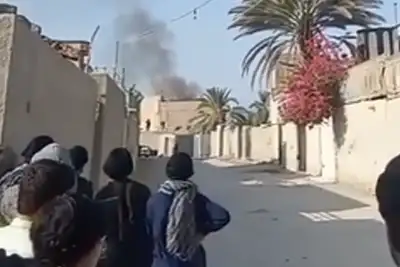
Iran says more than 1,500 schools damaged during war

May 26, 2026, 04:38 GMT+1

Iran’s School Renovation Organization says assessments so far show that 1,507 schools and 219 non-educational facilities were damaged during the recent war.

The head of the organization said 15 schools were completely destroyed and are now slated for reconstruction with the help of charities and support organizations.

Officials also said another 254 schools are expected to resume operations in two months.
Most Viewed

Iran demands access to $12B in Qatar funds as precondition for US MoU
1
EXCLUSIVE

Iran demands access to $12B in Qatar funds as precondition for US MoU

2
ANALYSIS

Iran is turning the internet into a privilege

3

Iran appears set to restore internet access after 3-months blackout

4
OPINION

Trump vs Tehran: how not signing became the deal

5

Prospect of US-Iran deal fuels attacks on Ghalibaf

Banner
Banner

Spotlight

  • Could Iran be building a Chinese-style internet system?
    ANALYSIS

    Could Iran be building a Chinese-style internet system?

  • Oil pressure and economic strain drive Iran-US talks
    ANALYSIS

    Oil pressure and economic strain drive Iran-US talks

  • Qatar emerges as key broker in US-Iran frozen funds dispute
    INSIGHT

    Qatar emerges as key broker in US-Iran frozen funds dispute

  • Trump vs Tehran: how not signing became the deal
    OPINION

    Trump vs Tehran: how not signing became the deal

  • Iran is turning the internet into a privilege
    ANALYSIS

    Iran is turning the internet into a privilege

•
•
•

More Stories

Oil pressure and economic strain drive Iran-US talks

May 26, 2026, 04:12 GMT+1

More than six weeks after Iran disrupted shipping through the Strait of Hormuz and the United States moved to enforce a naval blockade, the confrontation increasingly appears to be entering a new phase: negotiations driven by exhaustion.

What began as a military and geopolitical standoff has evolved into a contest over economic endurance, one that neither Iran nor the global economy appears capable of sustaining indefinitely.

After weeks of escalation, diplomacy has regained momentum. Talks involving Tehran, Washington and regional mediators have intensified, while US President Donald Trump has repeatedly suggested a deal may be close.

At the center of the latest negotiations lies the issue of frozen Iranian assets.

Read the full article here.

Could Iran be building a Chinese-style internet system?

May 26, 2026, 04:04 GMT+1
•
Negar Mojtahedi

Iran may be moving beyond temporary internet blackouts toward something more durable: a Chinese-style system of digital control.

Concerns intensified after a former head of Iran’s state broadcaster said Tehran had imported Chinese equipment for a “permanent internet shutdown,” while millions of Iranians endure what monitoring group NetBlocks says is now the world’s longest ongoing nationwide blackout.

Experts warn the Islamic Republic may not be trying to shut the internet off forever but instead attempting to build a controlled and heavily surveilled online ecosystem designed to filter information, monitor communications and isolate Iranians from the outside world while still keeping parts of the economy online.

Mohammad Sarafraz, the former head of Islamic Republic of Iran Broadcasting and a current member of the Supreme Council of Cyberspace, said in an interview with the online newspaper Faraz that factions in Tehran are seeking to restrict global internet access for the general public while preserving it for a limited and controlled group.

He said the Islamic Republic had imported Chinese equipment for “permanently cutting off the internet.”

Spectre of digital control

Laura Edelson, assistant professor of computer science at Northeastern University, said the closest comparison may be China’s internet crackdown in Xinjiang after unrest there in 2009, when authorities isolated the Uyghur-majority region from the outside internet for 10 months.

“Functionally, for the vast majority of the population, they were effectively cut off entirely from the outside world,” Edelson said.

She said China’s model is far more sophisticated than simply blocking websites, relying on centralized state control to filter content, surveil users and selectively determine what information people can access.

“This centralized model is one that a lot of other countries, including and almost especially Iran, has been moving toward,” she told Iran International.

She added that turning off the internet forever “is not useful,” meaning authoritarian governments increasingly favor adaptable systems that can tighten restrictions during politically sensitive moments and loosen them when economic activity is needed.

“Iran’s government doesn’t trust its own people,” Edelson said. “The vast majority of people don't support the government.”

“If you can have an internet that you can adaptively not just turn on and off, but control what people can reach and what they can’t reach — that’s a set of internet censorship and surveillance systems that I would be more afraid of personally,” she said.

Can Tehran pull it off?

Max Meizlish, Senior Research Analyst at the Foundation for Defense of Democracies and a former US Treasury official focused on sanctions enforcement, said China has long exported censorship technologies and surveillance capabilities to authoritarian partners.

“We know that China has been a significant partner to several malign actors, including Iran, but also Russia and North Korea, with respect to cyber technology censorship capabilities,” Meizlish told Iran International.

He said China’s own internet system gives Tehran both a blueprint and a commercial partner.

According to Meizlish, Iran’s centralized control over internet infrastructure already gives authorities the ability to regulate what information enters or leaves the country.

“What we could actually see is Iran building out its own internet,” he said, “so that the people of Iran are only able to view what the government wants them to view.”

He said technology transfers between Beijing and Tehran should increasingly be viewed through the lens of human rights abuses and digital repression.

“There’s an argument to be made that this form of censorship constitutes a wide-scale human rights abuse,” Meizlish said.

But Amin Sabeti, founder of cybersecurity research group CERTFA, cautioned that Iran still lacks many of the domestic technological capabilities that made China’s censorship system possible.

“The Iranian regime imports the technology; it doesn't own the technology,” Sabeti said.

Unlike China, he said, Iran lacks strong domestic alternatives to many global services and remains heavily dependent on foreign infrastructure and technology.

“In China, there isn't a need for Gmail because they have good services in terms of email,” Sabeti said. “In Iran, there isn't any proper email service.”

Sabeti said Iran has repeatedly shown it can temporarily shut down the internet during protests and unrest, but questioned whether the regime could sustain a truly permanent nationwide blackout over the long term.

“I don't think it will happen,” he said.

Iran’s rulers may not want to permanently disconnect Iranians from the global internet, but they appear to be moving toward a more sustainable architecture of digital control that allows the state to keep commerce functioning while isolating citizens from independent information, encrypted communications and even family members abroad.

For many Iranians, the question is no longer whether the internet will fully return, but what kind of internet the state intends to allow back.

Rubio says Iran deal language still under negotiation

May 26, 2026, 03:30 GMT+1

US Secretary of State Marco Rubio says negotiations over the wording of a possible agreement with Iran remain ongoing and could take “a few days” to finalize.

“I think there's a lot of talking back and forth going on about specific language in the initial document,” Rubio told reporters in Jaipur during an official visit to India.

"The president's expressed his desire to make it," he added. "He's either going to make a good deal or no deal."

Iranian rapper Toomaj condemns death sentences in Ekbatan case

May 26, 2026, 03:13 GMT+1

Iranian rapper Toomaj Salehi, who has himself faced imprisonment and a death sentence, condemned the death penalties issued against four defendants in the Ekbatan case, calling the rulings “anti-human.”

“Our conscience and honor demand that we stand against this injustice,” Salehi wrote on X after months of silence on social media.

Iran’s judiciary said on Sunday that several defendants in the high-profile Ekbatan case have been sentenced to death over charges linked to the killing of a Basij member during the country’s 2022 protests, despite courts acknowledging they could not determine who caused the fatal injury.

Salehi said that the movement, widely known by its central slogan Woman Life Freedom, had fought “for justice, freedom and human dignity.”

He also said freedom of expression and media freedom had been suppressed “under the pretext of war,” while poverty continued to worsen across the country.

Oil rises, stocks mixed as markets weigh Iran diplomacy and new strikes

May 26, 2026, 02:36 GMT+1

Oil prices edged higher Tuesday while stock markets were mixed as investor optimism over a possible US-Iran agreement was tempered by fresh US military strikes in the Middle East.

Nasdaq futures pared earlier gains to trade about 0.9% higher, while S&P 500 futures rose 0.68%.

Markets have swung sharply in recent weeks as traders try to gauge whether diplomacy between Tehran and Washington can prevent a deeper regional conflict and a prolonged disruption to shipping through the Strait of Hormuz.