• العربية
  • فارسی
Brand
  • Iran Insight
  • Politics
  • Economy
  • Analysis
  • Special Report
  • Opinion
  • Podcast
  • Iran Insight
  • Politics
  • Economy
  • Analysis
  • Special Report
  • Opinion
  • Podcast
  • Theme
  • Language
    • العربية
    • فارسی
  • Iran Insight
  • Politics
  • Economy
  • Analysis
  • Special Report
  • Opinion
  • Podcast
All rights reserved for Volant Media UK Limited
volant media logo

Death sentences handed down in Iran’s Ekbatan protest case

May 24, 2026, 22:44 GMT+1
Graffiti depicting several defendants in the Ekbatan case on a wall in Tehran’s Ekbatan residential complex

Iran’s judiciary said several defendants in the high-profile Ekbatan case have been sentenced to death over charges linked to the killing of a Basij member during the country’s 2022 protests, despite courts acknowledging they could not determine who caused the fatal injury.

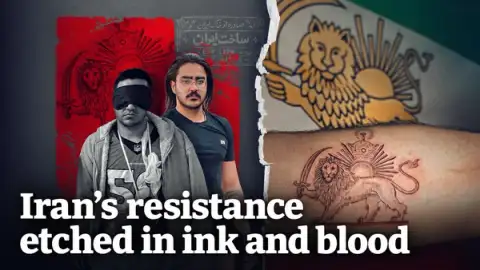
In a detailed statement published Sunday, the judiciary said some defendants were convicted of “corruption on earth,” a capital offense often used in politically sensitive security cases, while others received prison terms and additional punishments.

The statement did not specify how many people received death sentences or identify them, but IRGC-linked Tasnim News cited Tehran's Revolutionary Court as saying four of the nine defendants had been sentenced to death.

The case stems from the death of Arman Aliverdi, a 21-year-old Basij member and seminary student who was fatally injured during clashes in Tehran’s Ekbatan neighborhood in October 2022, at the height of the nationwide protests triggered by the death of Mahsa Amini in morality police custody.

The Ekbatan proceedings became one of the most closely watched legal cases arising from the 2022 protests, which evolved into the Islamic Republic’s biggest challenge in years and spread across dozens of cities under the slogan “Woman, Life, Freedom.”

The judiciary said forensic examinations, medical reviews, video evidence and investigative findings established that Aliverdi died from severe head trauma caused by a hard object, but investigators were unable to determine which individual inflicted the fatal injury because of what officials described as chaotic conditions and the large number of people present at the scene.

A criminal court consequently refrained from issuing qisas, or retributive execution sentences, ruling that while some defendants had participated in assaulting Aliverdi, responsibility for the fatal strike could not be conclusively assigned.

Three defendants were sentenced to prison and ordered to pay financial compensation, while three others were acquitted of direct involvement in the killing.

Separate proceedings in a Revolutionary Court addressed broader security-related accusations including acting against national security, propaganda against the state and “corruption on earth.”

It was in that branch of the case that death sentences were issued, according to the judiciary.

Rights groups and lawyers have repeatedly raised concerns about due process in protest-related prosecutions, including allegations of coerced confessions and heavy reliance on national security charges.

Iran has sharply increased executions over the past year, according to rights organizations, with activists warning that authorities are increasingly using capital punishment not only in criminal cases but also as a tool of deterrence.

The judiciary said all verdicts in the Ekbatan case remain subject to review by Iran’s Supreme Court.

Most Viewed

Iran demands access to $12B in Qatar funds as precondition for US MoU
1
EXCLUSIVE

Iran demands access to $12B in Qatar funds as precondition for US MoU

2

Iran, US edge toward deal to end war and reopen Hormuz

3

Iran executes another political prisoner, bringing tally to 37 since March

4
VOICES FROM IRAN

Citizens voice anger, distrust over possible US-Iran deal

5

Iran’s digital market buckles after war disrupts imports

Banner
Banner

Spotlight

  • Trump vs Tehran: how not signing became the deal
    OPINION

    Trump vs Tehran: how not signing became the deal

  • Iran is turning the internet into a privilege
    ANALYSIS

    Iran is turning the internet into a privilege

  • Trump’s strongest leverage over Tehran may run through Beijing
    PODCAST

    Trump’s strongest leverage over Tehran may run through Beijing

  • Pakistan continues quiet push to stop another Iran war
    ANALYSIS

    Pakistan continues quiet push to stop another Iran war

  • Iran scrambles for Omani back channel around the Hormuz blockade
    INSIGHT

    Iran scrambles for Omani back channel around the Hormuz blockade

•
•
•

More Stories

Iran executes another political prisoner, bringing tally to 37 since March

May 24, 2026, 09:44 GMT+1

Iran executed political prisoner Mojtaba Kian on Sunday after convicting him on accusations tied to cooperation with Israel and the United States, bringing the number of people put to death on political and security-related charges since March 17 to at least 37.

The judiciary’s Mizan news agency said Kian was convicted of “intelligence activity for Israel and the United States” and sending information related to Iran’s defense industries,

Kian, Mizan said, was accused of transmitting coordinates and information about defense industry units to “networks affiliated with Israel and the United States” during attacks by the two countries against the Islamic Republic. The judiciary said a court sentenced him to death and confiscation of property.

Mizan said fewer than 50 days passed between Kian’s arrest and execution on May 24, describing the case as part of orders for “decisive and swift” handling of files linked to alleged cooperation with Israel and the United States.

  • Amnesty says Iran drove global surge in executions in 2025

    Amnesty says Iran drove global surge in executions in 2025

The execution marks a sharp increase in the pace of political and security-related executions in Iran over recent weeks.

The HRANA human rights news agency previously reported that the Islamic Republic executed at least 52 prisoners on political and security-related charges between March 2025 and 2026.

Based on those figures, the rate of such executions has risen from roughly one per week earlier in the year to about one every two days over the past two months.

Concerns over accelerated prosecutions

The speed of Kian’s arrest, prosecution and execution has deepened concerns over due process in political and security-related cases in Iran.

Cases involving espionage and national security accusations in the Islamic Republic have long drawn scrutiny from rights groups and lawyers over allegations of forced confessions, torture, restricted access to independent lawyers and denial of fair trial guarantees.

Iran’s judiciary did not disclose the exact date of Kian’s arrest, details of court proceedings, whether he or his family had access to a lawyer of their choosing or how the Supreme Court reviewed the case.

Thousands detained after attacks

Iranian security forces have detained thousands of people across the country on political and security accusations since attacks by the United States and Israel began on February 28.

Police chief Ahmadreza Radan said on May 17 that security forces had arrested 6,500 people since the start of the conflict.

  • Abroad they talk, at home they hang

    Abroad they talk, at home they hang

Radan described the detainees as “traitors and spies,” accusations that lawyers and human rights organizations say Iranian authorities frequently use against opponents and protesters.

Human rights groups have warned that mass arrests combined with accelerated judicial proceedings in security cases could place more detainees at risk of execution.

UK court hears alleged money trail in Iran International journalist stabbing trial

May 22, 2026, 11:32 GMT+1

The trial over the stabbing of Iran International presenter Pouria Zeraati turned to the alleged money trail behind the attack, with prosecutors describing payments routed through a west London construction company and relatives of one defendant.

Woolwich Crown Court on Thursday was told that Nandito Badea, 21, and George Stana, 25, received thousands of pounds through payments linked to Hemroc Ltd, a company based in Park Royal, west London, which was incorporated in 2020 and listed its business as the construction of domestic buildings.

Badea and Stana are accused over the March 2024 stabbing of Zeraati outside his home in Wimbledon, southwest London. They deny the charges.

Prosecutors allege the attack was carried out by criminal proxies acting on behalf of the Islamic Republic, an allegation Iran’s embassy in London has called “baseless.”

  • Iran International journalist stabbed at Tehran's behest, UK court told

    Iran International journalist stabbed at Tehran's behest, UK court told

Prosecutors said Hemroc had links to another company, Besuch Ltd, which operated “unlicensed restaurants and cafes” and traded under the name Tehran Lounge.

The court was told a man named Constantin Matache was a director of the company and that Hemroc made 183 payments totaling £80,540 to Stana’s sister, Florina, with the reference “loan.”

Florina then made 130 payments to Stana, who mainly passed the money on to others but used some for food, travel, cash withdrawals and other spending, retaining £1,330, prosecutors said.

Badea received 78 payments from Florina, the court heard. Prosecutors said he used the money for daily expenses and payments to Hotel Lily in West Brompton, where the men stayed while conducting surveillance, retaining £8,312.

Earlier in the trial, jurors were shown CCTV that prosecutors said captured the alleged getaway after Zeraati was stabbed three times in the leg in broad daylight.

The court has heard the defendants flew in from Romania and spent about a month carrying out surveillance near Zeraati’s home. On the day of the attack, prosecutors allege, Andrei grabbed Zeraati from behind while Badea stabbed him and Stana waited in a side road as the getaway driver.

The men later took a taxi to Heathrow Airport, changed clothes and boarded a British Airways flight to Geneva, the court was told.

Police found the car two days later. Arrest warrants were issued on October 3, and all three men were arrested in Romania on December 4. Badea and Stana were extradited to Britain 13 days later. Andrei could not be extradited because he was subject to domestic proceedings in Romania.

Iranian authorities in 2022 labeled Iran International a terrorist organization and said anyone working with the broadcaster would be deemed a threat to national security.

That year, posters were put up in Tehran featuring pictures of several journalists, including Zeraati, under the heading “Wanted: dead or alive.”

The court has also heard that police provided armed security for Iran International’s offices in Chiswick in 2022, and that the broadcaster later moved to Washington for a period after being told its employees could not be adequately protected in the UK.

The trial is continuing. The defense case is expected to begin next week.

In a separate case earlier this month, a trial date was set for three defendants charged over an alleged arson incident near Iran International’s studios in northwest London. That trial is scheduled to begin on January 25 next year at the Central Criminal Court.

Families help identify more victims linked to Alghadir hospital

May 21, 2026, 14:59 GMT+1
•
Farnoosh Faraji

Alghadir hospital was already one of the clearest windows into Iran’s January massacre. Now, after a public campaign by Iran International, families and witnesses have come forward with more names tied to the same corridors, storage rooms and rear courtyard.

Iran International has now identified 21 people whose bodies were taken to Alghadir or whose final hours passed through the hospital, including 12 cases detailed in this report.

The accounts add to the record of two nights in which the east Tehran hospital became a transfer point for the wounded and the dead.

  • How one Tehran hospital became a window into Iran’s January massacre

    How one Tehran hospital became a window into Iran’s January massacre

On January 8 and 9, witnesses said the streets around Alghadir saw heavy gunfire as security forces opened fire on protesters around Haft Hoz, Tehranpars and Nezamabad.

Inside the hospital, the accounts describe a place where people came for treatment or shelter, only to face the reach of the crackdown inside the wards.

Nights when Alghadir became a crime scene

According to accounts received by Iran International, security forces not only obstructed treatment for wounded protesters brought to Alghadir, but in some cases shot injured people, blocked medical care and moved bodies to storage rooms and the hospital’s rear courtyard.

Witnesses and informed sources said doctors, nurses and other medical staff continued trying to save the wounded despite pressure and threats. They treated protesters in operating rooms, hallways, ambulances and hospital rooms.

One witness said several young protesters entered the hospital to escape security forces chasing them during the demonstrations. Security forces later entered the hospital, closed the doors and fired tear gas inside.

According to the witness, some hospital workers hid protesters in bathrooms and wards, and dressed them in medical clothing to keep security forces from identifying them.

A member of the medical staff said that when more than 70 wounded protesters were brought to the hospital, security forces shot and killed four injured people in front of nurses trying to treat them.

A body taken from home

Sources familiar with the events told Iran International that security forces seized the body of a medical student who had been transferred to Alghadir on January 8 and have never told his family where he was buried.

His family had initially taken the body home to Boumehen, east of Tehran, hoping to prevent authorities from confiscating it and to bury him secretly.

Hours later, security forces found the family’s address using the student’s national identification card, which had been left inside his bloodied jacket. Officers raided the home, used tear gas and took the body away as relatives pleaded with them to leave it behind.

Sources said the family has received no information since then about where he may have been buried.

Iran International is withholding the student’s identity for security reasons.

A courtyard of bodies

A witness who sent video and information to Iran International said Alghadir’s rear courtyard had become a holding and transfer area for the bodies of protesters killed on January 9.

The witness, who had been hit by shotgun pellets during the previous day’s protests, returned to the hospital the next morning for treatment. He said he entered the building to the sound of families crying and shouting.

He walked toward the rear courtyard and morgue area, where he saw blood on the ground and several bodies nearby. Many families were gathered around the hospital grounds, but security forces pushed them away.

After some time, he said, bodies were loaded into pickup trucks and families were told to continue searching at Behesht Zahra cemetery.

“Most of the bodies I saw in the hospital courtyard belonged to people under 30 years old, and there was even the body of a child around 12 or 13 years old among them,” the witness said.

Amirparsa Ashkbous: A student in a blue blanket

Amirparsa Ashkbous was 21 and in his final term studying microbiology. Before joining the January 8 protests, he had sent an audio message criticizing those ignoring calls to gather while people his age were preparing to risk arrest or death.

Iranian slain protester Amir Parsa Ashkbous
100%
Iranian slain protester Amir Parsa Ashkbous

According to information received by Iran International, Amirparsa joined protests around Haft Hoz with friends and was shot in the neck by a sniper.

His body was later placed in a blue blanket in the rear area of Alghadir hospital.

A video obtained by Iran International showed his mother searching for his body at the hospital.

Friends described him as kind-hearted and deeply interested in football.

Hossein Naseri: ‘I go for the next generation’

Hossein Naseri, born in 1952, told people around him before joining the January 9 protests that he was not afraid for himself.

“I am at ease about the safety and welfare of my children, and it does not matter what happens to me,” he said, according to relatives.

“I am going to the protests for a better future for the next generation.”

Slain protester Hossein Nasseri
100%
Slain protester Hossein Nasseri

When others urged him to wear a mask to protect himself from security forces, he replied: “Let me be sacrificed for you young people.”

Naseri was shot on his second night at the protests. The bullet hit a main artery in his leg. People at the scene drove him to Alghadir hospital, and sources said he was still alive when he arrived.

As the wounded were being brought in, security forces raided the hospital, forcing the person who had taken Naseri there to flee.

Four days later, Naseri’s wife found his body alone at Kahrizak morgue.

Relatives said he was buried without a normal funeral while his two children, both outside Iran, still did not know what had happened to their father.

Ali Rouzbahani: Buried in bloodied clothes

Ali Rouzbahani, 36, from Lorestan province, was killed on January 8 and his body was taken to Alghadir hospital.

Slain protester Ali Rouzbahani
100%
Slain protester Ali Rouzbahani

Sources said that when his family came to collect him that evening, a hospital worker warned them to remove the body the same night before security forces could seize it.

The family secretly transported him to Lorestan and buried him without a public funeral. He was not placed in a shroud. He was buried in the bloodied clothes he had been wearing when he was killed.

Pouria Gholamali: Driven by economic hardship

Pouria Gholamali, 32, worked in Tehran’s computer market. Relatives said the rising dollar and the deep recession in the market had affected his life and work, and pushed him toward the protests.

Slain protester Pouria Gholamali
100%
Slain protester Pouria Gholamali

He was killed near Haft Hoz on January 8 by gunfire from government forces. His body was later left in Alghadir’s rear courtyard.

People close to him said he loved nature and spent much of his free time traveling.

Mohammad Talebi Toroghi: Shot in the head

Mohammad Talebi Toroghi, 35, was shot during the January 8 protests in the Haft Hoz area.

Slain protester Mohammad Talebi
100%
Slain protester Mohammad Talebi

Sources said the bullet struck him in the back of the head. His body was taken to Alghadir hospital and later handed over to his family.

Talebi Toroghi was born in Tehran and was the son of a man killed in the Iran-Iraq War.

Sources described him as a martial artist, a professional motorcyclist and someone deeply interested in riding.

Shahabeddin Sameni: Found after hours of searching

Shahabeddin Sameni, born in 1979, was shot in Nezamabad neighbourhood on January 8, according to sources familiar with the case.

Slain protester Shahabeddin Sameni
100%
Slain protester Shahabeddin Sameni

Sources said a live bullet was fired at his head from above Narmak Mosque.

His family searched hospitals and other centers for hours before finding his body around 2 a.m. on January 9 in Alghadir’s rear courtyard.

Sameni had a child who was a university student. Sources said that despite his stable financial situation, he had joined protesters in the streets.

After his death, security forces put heavy pressure on his parents to accept that their son had been a Basij member.

The Foundation of Martyrs contacted the family several times, but his father refused. He was later threatened with the confiscation of property.

Peyman Chinisaz: Left in storage for days

Peyman Chinisaz, 53, was from Bandar Anzali. He was shot in the stomach on January 8 in Tehran’s Nezamabad neighborhood and taken to Alghadir hospital.

Slain protester Peyman Chinisaz
100%
Slain protester Peyman Chinisaz

A source close to the family said his relatives did not know his fate for several days. When they first went to the hospital, they were told he was not there.

His body, the source said, had been kept for five days in one of Alghadir’s storage rooms.

The family believes Chinisaz was left without proper care after reaching the hospital and died from bleeding.

He was married and had three children, a son and two daughters.

Mohsen Shahmohammadi: Died after two weeks in coma

Mohsen Shahmohammadi, born in 1988, was shot during the January 8 protests near Tehranpars First Square.

Slain protester Mohsen Shahmohammadi
100%
Slain protester Mohsen Shahmohammadi

The bullet struck his abdomen and kidneys. He was transferred to Alghadir and remained in a coma for about two weeks.

Sources said his condition was critical from the time he was wounded until his death. He died on January 23 from the severity of his injuries.

Shahmohammadi was unmarried.

Hamidreza Haghparast: Died from blood loss

Hamidreza Haghparast, from Rasht, was shot near Haft Hoz during the January 8 protests.

Slain protester Hamidreza Haghparast
100%
Slain protester Hamidreza Haghparast

The bullet struck his genital and groin area, leaving him severely wounded.

Sources said Haghparast was left for a long time first on Haft Hoz street and then at Alghadir hospital. He died from severe bleeding and lack of timely care.

Haghparast’s body was not released to his family for four days. Sources said officials made the release conditional on “council approval” and a written pledge from the family.

Haghparast, born in Rasht, was his mother’s only companion and breadwinner. He was buried on January 11 at Bagh-e Rezvan cemetery in Rasht..

Abolfazl Najafi-Aroun: Family forced to pay for burial

Abolfazl Najafi-Aroun, 25, was shot with three live rounds on the evening of January 8 near Tirandaz intersection in Tehranpars.

Slain protester Abolfazl Najafi
100%
Slain protester Abolfazl Najafi

He was taken to Alghadir and underwent surgery. Family members and people close to him said he remained conscious for several hours after the operation and even spoke with those around him. A short time later, the family was told he had died.

Relatives said authorities did not allow him to be buried in Behesht Zahra. They said the family was charged 10 billion rials, about $5,555, for a burial permit in Robat Karim, near Tehran. The amount, they said, was separate from the cost of the bullets.

  • Pay for bullets: How Iran pressures families after killing protesters

    Pay for bullets: How Iran pressures families after killing protesters

People close to Najafi-Aroun described him as warm-hearted, loyal and loved by friends and relatives.

Hosseinali Sarani: Family paid to recover body

Hosseinali Sarani, 44, was from Aliabad-e Katul in Golestan province. He was transferred to Alghadir after being shot on January 8.

Slain protester Hosseinali Sarani
100%
Slain protester Hosseinali Sarani

Relatives said the family received his body after one week.

They said they were forced to pay 5 billion rials, about $2,780, to recover it.

Hani Ganji: Family received wrong body

Hani Ganji, 49, was shot from behind at close range in Tehranpars on the evening of January 8. He was taken to Alghadir and died from severe bleeding.

Slain protester Hani Ganji
100%
Slain protester Hani Ganji

After pressure from authorities and after signing a pledge, his family received a body and took it to a workshop in Pardis, Boumehen.

The next day, when no doctor agreed to issue a death certificate, the family took the body first to the Pardis police station and then, with a police letter, to Kahrizak.

When the family went to Behesht Zahra for the funeral and burial, they discovered they had been given the wrong body.

After hours of searching, they were finally able to recover Hani’s body and bury him late that day.

A growing record

The 21 people identified by Iran International are not a full list of those taken to Alghadir hospital.

They are the names recovered so far from one hospital, in one part of Tehran, after two nights of killing.

The first report showed Alghadir as a place where the massacre became visible: the overflowing morgue, bodies in storage rooms and the rear courtyard, and families searching through blankets and body covers.

The new accounts show something else as well: how that record is still growing, one witness, one family and one name at a time.

Rights group warns Iranian ex-MMA champion faces imminent execution

May 20, 2026, 21:35 GMT+1

An Iranian political prisoner sentenced to death on charges of “espionage and collaboration with a hostile state (Israel)” is at imminent risk of execution after being transferred to solitary confinement, the Norway-based rights group Hengaw said on Wednesday.

Gholamreza Khani Shakarab, 34, a former MMA champion, coach and international referee, was moved from a high-security ward in Tehran’s Evin Prison to solitary confinement in Ghezel Hesar Prison in Karaj, Hengaw said.

The case comes amid a widening wartime crackdown in Iran, where authorities have intensified arrests, executions and threats against dissent while repeatedly warning that criticism could aid the country’s enemies.

Rights groups and reformist commentators have increasingly warned that wartime conditions are being used to justify broader repression, tighter internet restrictions and harsher treatment of political prisoners at a time of heightened confrontation with the United States and Israel.

Hengaw said Judge Abolqasem Salavati of Branch 15 of the Tehran Revolutionary Court sentenced Khani Shakarab to death in what it described as a highly opaque judicial process.

The sentence was upheld by Branch 39 of Iran’s Supreme Court and referred for implementation despite a recent request for judicial review submitted by his relatives, the rights group said.

A source familiar with the case told Hengaw that Khani Shakarab was denied access to a lawyer of his choosing during interrogation and trial and that the conviction was based solely on forced confessions extracted under pressure.

Hengaw said Khani Shakarab had been living in Turkey before his arrest and was detained last year by Iran’s security forces during a trip to Iraq for a religious pilgrimage at the request of a relative, before subsequently being transferred to Iran.

His brother, Esmail Khani, 43, was also arrested in the same case on political charges and is serving a prison sentence in Ardabil Central Prison, Hengaw added.

The case comes as Amnesty International said this week that executions worldwide rose to their highest recorded level in more than four decades in 2025, with Iran responsible for the overwhelming majority of the increase.

According to Amnesty’s annual report, Iranian authorities carried out at least 2,159 executions last year — more than double the previous year’s figure and by far the largest contributor to the global rise.

“A shameless minority are weaponizing the death penalty to instill fear, crush dissent and punish marginalized communities,” Amnesty Secretary General Agnès Callamard said in the report.

Iran International film on unlikely prison friendship wins Telly Award

May 20, 2026, 16:40 GMT+1

Iran International’s documentary A Friendship: From Mashhad’s Vakilabad Prison to San Diego, directed by Ardavan Roozbeh, has won a Silver Telly Award in the General Political & Commentary category for television productions.

The annual Telly Awards, established in 1979, recognize excellence in television, video and digital content.

Organizers say this year’s competition drew around 13,000 entries from across the world, judged by industry professionals from companies including Netflix and HBO.

The documentary tells the story of an unlikely friendship between Michael White, an American Navy veteran detained in Iran, and Mehdi VatanKhah, an Iranian political prisoner, who met inside Mashhad’s Vakilabad prison.

White was arrested during a trip to Iran in 2018 and later said he faced intense interrogations, psychological pressure and attempts to force him into confessing to espionage for the United States and Israel.

Ardavan Roozbeh interviews Michael White
100%
Ardavan Roozbeh interviews Michael White

Beyond the personal story, the film examines the Islamic Republic’s detention of foreign and dual nationals, a practice critics and human rights groups have long described as hostage diplomacy aimed at extracting political concessions from Western governments.

The documentary also portrays the broader structure of repression in Iran, including the treatment of political prisoners, journalists and dissidents.

After returning to the United States, White campaigned to help VatanKhah leave Iran. VatanKhah later emigrated to the United States and now lives in San Diego.

The production previously won awards for cinematography and editing at the New York Short Documentary Film Festival for Aydin Roozbeh’s work on the film.