• العربية
  • فارسی
Brand
  • Iran Insight
  • Politics
  • Economy
  • Analysis
  • Special Report
  • Opinion
  • Podcast
  • Iran Insight
  • Politics
  • Economy
  • Analysis
  • Special Report
  • Opinion
  • Podcast
  • Theme
  • Language
    • العربية
    • فارسی
  • Iran Insight
  • Politics
  • Economy
  • Analysis
  • Special Report
  • Opinion
  • Podcast
All rights reserved for Volant Media UK Limited
volant media logo

In pictures: Iran's Khuzestan province engulfed by dust storm

May 19, 2026, 21:33 GMT+1

Most Viewed

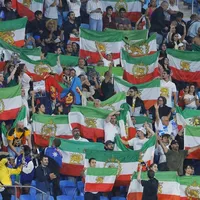
Iran’s lion-and-sun flag at center of FIFA row before 2026 World Cup
1

Iran’s lion-and-sun flag at center of FIFA row before 2026 World Cup

2

Iran’s partial internet return exposes rift inside ruling system

3

Iranian students in Canada caught between blackout, debt and fear of return

4
SPECIAL REPORT

Witnesses describe gunfire, blocked exits and deadly market fire in Rasht

5
INSIGHT

How four Khamenei family names map the Islamic Republic’s inner circle

Banner
Banner

Spotlight

  • Iran factions clash over interim US deal as Trump weighs final call
    INSIGHT

    Iran factions clash over interim US deal as Trump weighs final call

  • Names of some Iran protest victims vanish from Tehran cemetery database

    Names of some Iran protest victims vanish from Tehran cemetery database

  • How four Khamenei family names map the Islamic Republic’s inner circle
    INSIGHT

    How four Khamenei family names map the Islamic Republic’s inner circle

  • Witnesses describe gunfire, blocked exits and deadly market fire in Rasht
    SPECIAL REPORT

    Witnesses describe gunfire, blocked exits and deadly market fire in Rasht

  • Iran’s lion-and-sun flag at center of FIFA row before 2026 World Cup

    Iran’s lion-and-sun flag at center of FIFA row before 2026 World Cup

  • Iran’s partial internet return exposes rift inside ruling system

    Iran’s partial internet return exposes rift inside ruling system

•
•
•

More Stories

Tehran and Washington betting the other side blinks first

May 19, 2026, 21:32 GMT+1
•
Behrouz Turani
Tehran and Washington betting the other side blinks first
100%
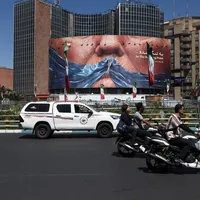
People walk by an anti-US mural in Tehran, Iran, May 18, 2026

The competing narratives surrounding the latest US-Iran standoff have become so stark that even basic questions—who is deterring whom, who wants talks and who fears escalation—now produce entirely different answers depending on which capital is speaking.

On Monday, President Donald Trump said he had halted plans to attack Iran following requests from Qatar, Saudi Arabia, the UAE “and some others in the region.”

The same day, Iran’s state television claimed Trump had backed down from threatening military action “at least five times in recent weeks” because he feared Iran’s “firm response.”

On Tuesday, Trump again underscored the volatility of the standoff, saying the United States “may have to give them another big hit” and claiming Tehran was “begging” for a deal.

Rahman Ghahramanpour, a Middle East politics expert, told Tehran-based Khabar Online that both Tehran and Washington increasingly see the confrontation as a “competition over resilience,” with each believing renewed brinkmanship could strengthen its negotiating position.

Khabar Online journalist Mohammad Aref Moezzi described the current dynamic as a familiar “neither war nor peace” scenario: sustained pressure and confrontation without a clear decision to escalate into full conflict or pursue a comprehensive agreement.

Both sides, he argued, still believe they can force concessions without paying the cost of war.

For Iran’s leadership, the overriding objective remains survival and persuading Washington to abandon any notion of regime change.

Ghahramanpour argues that Tehran is trapped in a struggle for survival while Washington faces what he calls a “credibility trap.” The United States wants a visible strategic victory; the Islamic Republic increasingly treats simple endurance as success.

Despite striking numerous military targets in Iran, Washington has yet to achieve a major political breakthrough. In the United States, particularly amid partisan rivalries, that is often framed as a failure for Trump. In Iran, the same reality is presented as proof the Islamic Republic withstood American pressure.

He also noted that many in Israel believe Trump’s presidency may represent the best opportunity to secure full US cooperation against Iran, adding to pressure for a more decisive confrontation before political circumstances change.

The widening gap between Iranian and American perceptions has effectively frozen negotiations.

Although some hardliners in Tehran advocate pre-emptive action, the government appears unwilling to be seen as the side that starts a war.

Washington, meanwhile, continues tightening sanctions and maintaining pressure while also signaling that military action remains an option if diplomacy stalls.

Another Iranian scholar, Ali Asghar Zargar, told Fararu on Tuesday that neither side benefits from the current deadlock.

He described the standoff as a mix of attrition, geopolitical rivalry and competing political narratives in which Iran remains under heavy pressure while the United States has yet to achieve its core objectives.

Zargar also argued that Washington cannot realistically use the Strait of Hormuz as a unilateral pressure tool given the global dependence on the waterway, warning that the longer the impasse continues, the greater the risk of escalation or miscalculation.

What increasingly unites both Iranian and American analysts is the sense that the current stalemate may be unstable, and that neither side has yet found a credible path out of it.


Trump held meeting on Iran war plans after halting attack - Axios

May 19, 2026, 19:42 GMT+1

US President Donald Trump convened a meeting on Iran with his top national security team on Monday evening that included a briefing on military options, Axios reported citing two US officials.

The meeting came hours after Trump announced he was suspending attacks he said had been planned for Tuesday.

Axios cited US officials as saying Trump had not made a final decision to strike Iran before announcing the pause, though some officials had expected him to decide on military action at the meeting.

The report cited US officials and regional sources as saying Trump held off partly because several Arab leaders raised concerns about possible Iranian retaliation against oil facilities and infrastructure.

A US source close to Trump cited by Axios said that Iran hawks who spoke to the president believed “he is in the mood of cracking their head open to get them to move in the negotiations.”

US seizes Iran-linked oil tanker in Indian Ocean - WSJ

May 19, 2026, 19:30 GMT+1

The United States seized an Iran-linked oil tanker in the Indian Ocean overnight as President Donald Trump threatened to resume military strikes on Iran, the Wall Street Journal reported, citing three US officials.

The tanker, Skywave, was sanctioned by the US in March for transporting Iranian oil, the report said.

Ship-tracking data showed the vessel sailing west of Malaysia on Tuesday after transiting the Malacca Strait, according to the WSJ.

The vessel was likely carrying more than 1 million barrels of crude loaded at Iran’s Kharg Island in February, the report said, citing brokers and Lloyd’s List Intelligence data.

Egypt FM says possible US-Iran memorandum could pave way for future talks

May 19, 2026, 18:23 GMT+1

Egypt’s Foreign Minister Badr Abdelatty said the United States and Iran were discussing a possible memorandum of understanding that could set the terms for future negotiations, in an interview with CNN’s Christiane Amanpour.

“What we are talking about now is hopefully to sign a (memorandum of understanding) between the US and Iran,” Abdelatty said.

“That could lead the way for setting the parameters, the principles, that would be subject to negotiations later on,” he added.

Hormuz traffic rises despite US blockade - Lloyd’s List

May 19, 2026, 18:05 GMT+1

Traffic through the Strait of Hormuz rose sharply last week as Iran-linked trade increased despite the US blockade, Lloyd’s List reported, citing vessel-tracking data.

At least 54 ships transited the strait between May 11 and 17, up from 25 the previous week, according to Lloyd’s List Intelligence.

The vessels included 10 China-owned ships after Tehran said Chinese vessels would be permitted to transit, two LPG carriers leaving the Persian Gulf for India, and an ADNOC-owned LNG carrier entering the waterway via dark transit.