• العربية
  • فارسی
Brand
  • Iran Insight
  • Politics
  • Economy
  • Analysis
  • Special Report
  • Opinion
  • Podcast
  • Iran Insight
  • Politics
  • Economy
  • Analysis
  • Special Report
  • Opinion
  • Podcast
  • Theme
  • Language
    • العربية
    • فارسی
  • Iran Insight
  • Politics
  • Economy
  • Analysis
  • Special Report
  • Opinion
  • Podcast
All rights reserved for Volant Media UK Limited
volant media logo

Canada 'losing its moral clarity' on Iran, Senate opposition leader says

Apr 28, 2026, 21:31 GMT+1

“We say we stand with the people of Iran, but at the United Nations and here at home, our actions tell a very different story," Leo Housakos, Leader of the Opposition in the Senate of Canada, told Iran International.

"Canada has gone soft on a regime that understands only strength," he said, criticizing the Ottawa government for allowing Iran's regime operatives to find Canada a safe haven.


Most Viewed

Iran's top security council holds meeting over fears of renewed protests
1
EXCLUSIVE

Iran's top security council holds meeting over fears of renewed protests

2
EXCLUSIVE

New intelligence exposes IRGC-linked network targeting Israeli, Western sites

3
INSIGHT

US talks trigger unprecedented rift in Iran’s hardline camp

4
ANALYSIS

Three layers of mistrust behind US-Iran deadlock

5
ANALYSIS

Why a blockade would not halt Iran’s oil overnight

Banner
Banner

Spotlight

  • Tehran is pricing out its daughters
    TEHRAN INSIDER

    Tehran is pricing out its daughters

  • US talks trigger unprecedented rift in Iran’s hardline camp
    INSIGHT

    US talks trigger unprecedented rift in Iran’s hardline camp

  • Calls for secrecy in Tehran reflect divisions over US talks
    INSIGHT

    Calls for secrecy in Tehran reflect divisions over US talks

  • Three layers of mistrust behind US-Iran deadlock
    ANALYSIS

    Three layers of mistrust behind US-Iran deadlock

  • Iran’s water crisis: Mafia or destruction by design?
    SPECIAL REPORT

    Iran’s water crisis: Mafia or destruction by design?

  • Iran’s foreign trade suffers wartime collapse
    ANALYSIS

    Iran’s foreign trade suffers wartime collapse

  • Why a blockade would not halt Iran’s oil overnight
    ANALYSIS

    Why a blockade would not halt Iran’s oil overnight

•
•
•

More Stories

US talks trigger unprecedented rift in Iran’s hardline camp

Apr 28, 2026, 21:12 GMT+1
•
Maryam Sinaiee

A widening split over how to deal with the United States has reached the deepest layers of Iran’s hardline establishment, surfacing in state-linked media and among factions that have long presented a united front under the banner of revolutionary loyalty.

The divide became unusually public this week as several ultraconservative MPs refused to sign a letter backing Iran’s negotiating team. The dispute then spilled into hardline media, triggering an unprecedented public clash between Raja News and the Revolutionary Guards-linked Tasnim News Agency.

The confrontation largely pits supporters of former nuclear negotiator and National Security Council member Saeed Jalili against allies of his longtime rival, parliament speaker Mohammad Bagher Ghalibaf, who recently led Iran’s delegation in talks in Islamabad.

On Monday, Iranian media reported that 27 members of parliament—including seven affiliated with Jalili’s ultraconservative camp—refused to sign a letter backing the negotiating team and Ghalibaf’s leadership in the Islamabad talks.

One of them, Mahmoud Nabavian, who had traveled to Islamabad with the delegation, later claimed that Mojtaba Khamenei’s “red lines” had been violated. He alleged that negotiators had engaged with the United States on nuclear issues against those guidelines.

In recent days, hardline lawmakers and commentators have increasingly criticized the negotiating team.

Jalili himself appeared to escalate tensions when he called on Mojtaba Khamenei to clarify publicly whether ongoing actions reflected his directives. In a now-deleted post, he wrote that if no such message was issued, “there is one hundred percent a ‘sedition of officials,’ and all these statements are written by the coup plotter himself.”

The remark was widely seen as aimed at Ghalibaf.

The feud escalated further after a Tasnim editorial said demanding the United States lift all sanctions or agree to a comprehensive ceasefire with Iran’s armed allies in the region amounted to unrealistic expectations like a “magic beanstalk.”

The article also argued that negotiations with the United States should not be seen as a final solution and that “the power of the people in the streets” could serve as Iran’s main leverage.

Raja News published a harsh response.

Tasnim later removed the article, saying it had republished it from another outlet, but responded in an unusually sharp tone, accusing Raja of inciting division and acting against national security.

It said the outlet was “seeking to complete Trump’s project in Iran” and noted that some individuals had recently been arrested over “suspicious movements to undermine sacred unity.”

A Telegram post by Saberin News, a channel linked to security institutions, went further, labeling the Paydari Party as the Kharijites—a historical term for extremist dissenters who opposed and ultimately assassinated Imam Ali, the first Shia imam.

The post accused them of “sowing division on the battlefield” and “playing in favor of Israel and the United States.”

Iran’s state broadcaster (IRIB) has also come under scrutiny for alleged bias. Its deputy for cultural affairs, Vahid Jalili, is Saeed Jalili’s brother.

Moderate outlet Khabar Online reported that by its count, 8 out of 10 of pundits appearing on IRIB during the recent conflict have been conservatives, with 15 percent linked to the ultraconservative Paydari Front.

“The problem is not just the elimination of reformists; the data shows that even moderate conservatives or critical insiders have almost no presence in these programs,” the outlet wrote.

Raja News later said it would avoid prolonging the dispute in public and would instead pursue legal action. But as the stakes rise—whether through renewed talks with Washington or a return to war—it may prove difficult to put the genie back in the bottle.

US warns of Hormuz ‘toll’ sanctions risk as it targets Iran 'shadow banking'

Apr 28, 2026, 20:56 GMT+1

The United States warned on Tuesday that payments to Iran or the IRGC for transit through the Strait of Hormuz could trigger sanctions, as it unveiled sweeping measures targeting Tehran’s “shadow banking” system.

The 35 entities sanctioned by the Treasury are accused of helping move billions of dollars tied to sanctions evasion and support for militant groups, the Treasury Department said.

The measures, announced by the US Department of the Treasury’s Office of Foreign Assets Control, target networks that the Treasury says enable Iran’s armed forces, including the IRGC, to access the global financial system, finance illicit oil sales and procure sensitive materials for weapons programs.

“Iran’s shadow banking system serves as a critical financial lifeline for its armed forces, enabling activities that disrupt global trade and fuel violence across the Middle East,” Treasury Secretary Scott Bessent said.

“Financial institutions are on notice: Any institution that facilitates or engages with these networks is at risk of severe consequences.”

Treasury said the action is part of its broader “maximum economic pressure” campaign, adding that nearly 1,000 Iran-linked individuals, vessels and aircraft have been sanctioned since February 2025.

Officials also warned that making “toll” payments to Iran or the IRGC for transit through the Strait of Hormuz could expose companies and financial institutions to sanctions risk.

Trump hits out at Merz, says US doing ‘what others should have done’ on Iran

Apr 28, 2026, 20:29 GMT+1

US President Donald Trump criticized German Chancellor Friedrich Merz over his remarks about Tehran, saying the German leader “thinks it’s OK for Iran to have a Nuclear Weapon”.

“He doesn’t know what he’s talking about!” Trump wrote in a post on Truth Social. “If Iran had a Nuclear Weapon, the whole World would be held hostage.”

“I am doing something with Iran, right now, that other Nations, or Presidents, should have done long ago,” he said, before linking his criticism to Germany’s broader situation: “No wonder Germany is doing so poorly, both Economically, and otherwise!”

Trump's remarks came after Merz said on Monday the US was being “humiliated” by Iran.

US Marines board vessel suspected of violating Iran blockade

Apr 28, 2026, 20:29 GMT+1

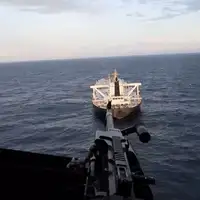
US forces on Tuesday boarded a commercial ship in the Arabian Sea suspected of attempting to violate the blockade on Iranian ports, before allowing it to continue after determining it was not bound for Iran, according to a statement from United States Central Command.

“Earlier today in the Arabian Sea, US Marines from the 31st Marine Expeditionary Unit boarded M/V Blue Star III… [and] released the vessel after conducting a search and confirming the ship’s voyage would not include an Iranian port call,” the statement said.

CENTCOM added that US forces “continue to operate and enforce the blockade across the Middle East,” noting that 39 vessels have so far been redirected to ensure compliance.

Israeli military destroys Hezbollah tunnels, triggering earthquake alerts

Apr 28, 2026, 18:44 GMT+1

Israeli forces demolished two Hezbollah tunnels in southern Lebanon using hundreds of tons of explosives, triggering earthquake alerts across parts of northern Israel in an unusual aftermath of the operation.

According to Israeli military officials, the tunnels were built “to Iranian standards,” with Iran directly involved in their planning and funding.

In a statement, the Israel Defense Forces said its troops dismantled the tunnels in the Qantara area, adding that the network stretched roughly two kilometers in total and was destroyed using more than 450 tons of explosives.

The military said the tunnels contained over 30 rooms used for lodging and operational planning, as well as around 30 shafts.

Residents in northern Israel had been notified ahead of the blasts, but the scale of the detonation still triggered earthquake warning systems, according to initial reports.