Trump orders Navy to ‘shoot and kill’ boats laying mines in Hormuz

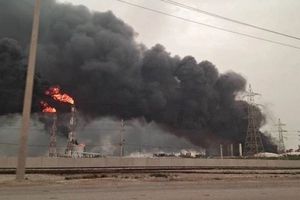
US President Donald Trump said he has ordered the Navy to “shoot and kill” any boats attempting to lay mines in the Strait of Hormuz.
“I have ordered the United States Navy to shoot and kill any boat… that is putting mines in the waters of the Strait of Hormuz. There is to be no hesitation,” Trump said in a post on Truth Social.
He added that US mine-clearing operations in the waterway would continue at an increased pace, saying they would be carried out “at a tripled up level.”








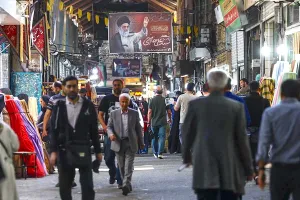
“Prices here have increased tenfold and rice and cooking oil are hard to find,” one resident wrote from Zahedan in southeastern Iran, pointing to worsening access to staple goods.
Other citizens described the rapid erosion of purchasing power. “We go to sleep and wake up to everything being twice as expensive,” one message said, reflecting widespread concern over accelerating inflation.
Food costs climb, access narrows
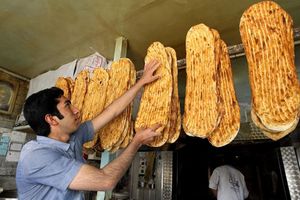
Messages from multiple cities highlighted steep increases in the cost of everyday items. Citizens said even the most basic foods were becoming unaffordable, with eggs, rice and cooking oil among the hardest hit.
“Eggs have become so expensive they are being removed from our tables,” one citizen wrote, describing the shrinking range of affordable protein options.
Restaurant prices were also cited as an indicator of inflation. Citizens said a single serving of kebab now costs between 5,000,000 and 6,000,000 rials (about $3.10 to $3.75), while a plate of chicken with rice ranges from 3,000,000 to 4,000,000 rials (about $1.90 to $2.50). Soft drinks were reported to exceed 1,000,000 rials (about $0.60).
Based on an exchange rate of around 1,600,000 rials per dollar, the new minimum monthly wage of 162,550,000 rials is equivalent to roughly $104. This comes as annual inflation had already exceeded 70 percent before the start war on February 28, reaching its highest level since World War II.
As of late 2025/early 2026, average Iranian incomes have contracted to roughly $200 per month.
Shortages compounded the problem. Messages described difficulty finding chicken in distribution centers and limits on purchasing cooking oil in shops. Others pointed to disruptions in supply chains linked to industrial slowdowns and rising production costs.
Economic journalist Arash Azarmi said the surge in food prices was hitting lower-income households hardest. “Eggs priced at 200,000 rials ($0.12) each are shocking. This is a basic food item, especially for lower-income households, and it is effectively being pushed out of their consumption basket,” Azarmi said.
Official data, he added, already showed food inflation exceeding 112 percent, with some categories such as cooking oil rising by more than 200 percent.
Iran’s monthly minimum wage for workers is set at one of the lowest levels compared to many countries in the region. Among Oman, Saudi Arabia, Turkey, Iraq, Qatar, Pakistan and Lebanon, the lowest minimum wage belongs to Pakistan, where workers earn at least the equivalent of $133. This figure is about $201 in Lebanon, around $275 in Qatar, about $345 in Iraq, and $625 and $585 in Turkey and Oman, respectively.
Pressure spreads beyond food
Beyond rising prices, citizens said financial obligations continued to tighten during and after the conflict period, adding to the strain on households and businesses.
“During the war there was no tax relief, insurance was taken in full from the private sector, and all loans faced late penalties despite earlier promises,” one message said, describing continued pressure on businesses.
Another citizen pointed to mounting banking enforcement and legal follow-up tied to unpaid debts. “All checks were bounced, accounts were closed and legal action started. Loan installments were either collected with interest or deducted from guarantors,” the message read.
Business owners described a cycle of rising costs and falling demand. A clothing seller said prices for goods were increasing by around 35 percent each week, while customers’ ability to pay continued to decline.
Jobs scarce, costs rising
Citizens also pointed to a lack of job opportunities and growing difficulty in covering basic living expenses, including rent and utilities.
“There is no work and our savings are gone,” one citizen said, describing limited options for supplementing income.
Others reported rising bills even as businesses slowed or shut down. “We cannot pay rent, we cannot work,” another citizen wrote, pointing to disruptions affecting daily commerce.
Small business owners said they were increasingly operating at a loss. One restaurant operator said higher meat prices and reduced customer demand were pushing the business toward closure. “If this continues, we will shut down and pay rent from our own pockets,” the message read.
Experts warn of accelerating inflation
Economist Mohammad Machinechian said the pace of price increases had reached a point where monthly inflation was more relevant than annual figures.
“I’m no longer talking about annual inflation, but monthly inflation, and that is the reality we’re dealing with,” Machinechian said. “Even in the best-case scenario, inflation could average at least 5 percent a month, meaning prices rise around 80 percent over a year.”
Machinechian added that in a prolonged stalemate scenario, prices could triple over the year, while renewed conflict could push monthly inflation above 20 percent, leading to annual increases approaching 500 percent.
Azarmi described the situation as a “modern famine,” where goods remain available but are increasingly unaffordable for many households.
The accounts from citizens across the country depict an economy where rapid price increases, supply constraints and falling incomes are converging, leaving many struggling to secure even the most basic necessities.
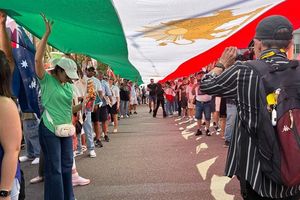
The move follows a period of intense pressure on the establishment. Hundreds of thousands of Iranians took to the streets globally to protest the government following a mass killing of protesters in January.
Tehran, currently facing a severe economic crisis and the rising costs of war, appears to be targeting the financial and legal identities of those it labels as "enemy collaborators."
Pursuing assets across borders
In a significant escalation of rhetoric, the Chief Justice of Ilam Province told the judiciary-linked Mizan news agency on Thursday that officials are examining the legal dimensions of "confiscating the property" of Iranians abroad within their countries of residence.
While the state has already begun identifying and freezing assets within Iran, this official called for international judicial mechanisms to target property held in the West. "Generally, the legal possibility for these actions exists," he said, adding that success would depend on "legal coordination with the country where the assets are located."
This follows a directive from Gholam-Hossein Mohseni-Ejei, the head of the Judiciary, to accelerate the seizure of property belonging to those linked to "overseas services and subversive networks."
By framing political dissent as "material support for hostility," a cash-strapped Tehran is attempting to create a legal pretext to pursue the private wealth of its citizens globally.
Citizenship as a political tool
In addition to financial threats, some officials are calling for the removal of the most basic legal tie between the state and the diaspora: Iranian citizenship.
Hassanali Akhlaghi Amiri, a member of parliament from Mashhad, said earlier this month that cooperation with "hostile countries" should lead to the revocation of a person's national identity.
"The punishment for cooperating with hostile countries against national security and interests begins with the confiscation of property and may even include the revocation of citizenship," Akhlaghi Amiri said.
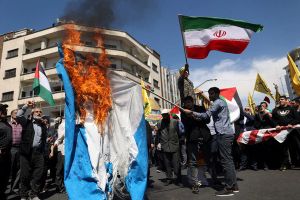
The suggestion has sparked a heated debate within Iran. The moderate outlet Rouydad24 argued that the constitution treats citizenship as an absolute right that cannot be taken away.
The outlet warned that treating a national identity as a "revocable privilege" to be traded for political loyalty is a dangerous shift that makes the law a matter of "personal taste."
'Stray' citizens: Deprivation of consular services
While the legal debate over formal revocation continues, many Iranians abroad are already experiencing a de facto loss of citizenship through the denial of consular services.
Maryam Ebrahimvand, an independent filmmaker and activist also known as Maryam Taher, recently said that the Iranian consulate in Paris has repeatedly informed her that her "citizenship has issues." Ebrahimvand said that her identity documents were previously seized and have not been returned.
"For the third time, they verbally told me my citizenship is problematic," Ebrahimvand said in a video message. "When they say my citizenship has a problem, it means I have been stripped of it... I have no passport from any country. I am in a state of statelessness."
A globalized crackdown
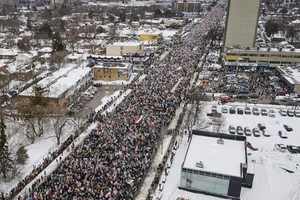
The escalation comes as the government faces unprecedented opposition from the diaspora. Since the January massacre, massive rallies in cities across Europe and North America have drawn millions of people, marking the largest Iranian opposition movement in decades.
Authorities in Tehran have also alluded to the stance some members of the diaspora have taken regarding the recent military conflict with the US and Israel.
While the topic is delicate, officials have increasingly used "wartime protocols" to justify harsher punishments for those they accuse of siding with foreign adversaries during a time of crisis.
By threatening to seize assets, withholding consular services, and discussing the formal cancellation of passports, the government is attempting to create a climate of fear for protesters who previously felt safe beyond Iran’s borders.
These measures signal a government that no longer sees its people as citizens with rights, but as assets to be seized or enemies to be erased.