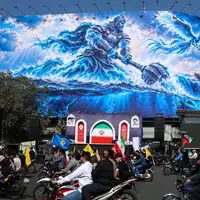
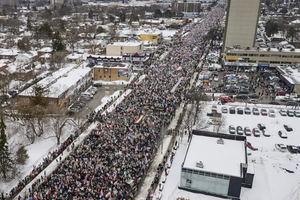
The move follows a period of intense pressure on the establishment. Hundreds of thousands of Iranians took to the streets globally to protest the government following a mass killing of protesters in January.
Tehran, currently facing a severe economic crisis and the rising costs of war, appears to be targeting the financial and legal identities of those it labels as "enemy collaborators."
Pursuing assets across borders
In a significant escalation of rhetoric, the Chief Justice of Ilam Province told the judiciary-linked Mizan news agency on Thursday that officials are examining the legal dimensions of "confiscating the property" of Iranians abroad within their countries of residence.
While the state has already begun identifying and freezing assets within Iran, this official called for international judicial mechanisms to target property held in the West. "Generally, the legal possibility for these actions exists," he said, adding that success would depend on "legal coordination with the country where the assets are located."
This follows a directive from Gholam-Hossein Mohseni-Ejei, the head of the Judiciary, to accelerate the seizure of property belonging to those linked to "overseas services and subversive networks."
By framing political dissent as "material support for hostility," a cash-strapped Tehran is attempting to create a legal pretext to pursue the private wealth of its citizens globally.
Citizenship as a political tool
In addition to financial threats, some officials are calling for the removal of the most basic legal tie between the state and the diaspora: Iranian citizenship.
Hassanali Akhlaghi Amiri, a member of parliament from Mashhad, said earlier this month that cooperation with "hostile countries" should lead to the revocation of a person's national identity.
"The punishment for cooperating with hostile countries against national security and interests begins with the confiscation of property and may even include the revocation of citizenship," Akhlaghi Amiri said.
The suggestion has sparked a heated debate within Iran. The moderate outlet Rouydad24 argued that the constitution treats citizenship as an absolute right that cannot be taken away.
The outlet warned that treating a national identity as a "revocable privilege" to be traded for political loyalty is a dangerous shift that makes the law a matter of "personal taste."
'Stray' citizens: Deprivation of consular services
While the legal debate over formal revocation continues, many Iranians abroad are already experiencing a de facto loss of citizenship through the denial of consular services.
Maryam Ebrahimvand, an independent filmmaker and activist also known as Maryam Taher, recently said that the Iranian consulate in Paris has repeatedly informed her that her "citizenship has issues." Ebrahimvand said that her identity documents were previously seized and have not been returned.
"For the third time, they verbally told me my citizenship is problematic," Ebrahimvand said in a video message. "When they say my citizenship has a problem, it means I have been stripped of it... I have no passport from any country. I am in a state of statelessness."
A globalized crackdown
The escalation comes as the government faces unprecedented opposition from the diaspora. Since the January massacre, massive rallies in cities across Europe and North America have drawn millions of people, marking the largest Iranian opposition movement in decades.
Authorities in Tehran have also alluded to the stance some members of the diaspora have taken regarding the recent military conflict with the US and Israel.
While the topic is delicate, officials have increasingly used "wartime protocols" to justify harsher punishments for those they accuse of siding with foreign adversaries during a time of crisis.
By threatening to seize assets, withholding consular services, and discussing the formal cancellation of passports, the government is attempting to create a climate of fear for protesters who previously felt safe beyond Iran’s borders.
These measures signal a government that no longer sees its people as citizens with rights, but as assets to be seized or enemies to be erased.