The question on most minds is this: how did we get here? And where are we going?
In about ten months we have lived through a huge protest, a deadly crackdown and two wars. Both, from where most of us stand, utterly futile.
Leaders in Washington and Tel Aviv may declare victory. The rulers in Tehran—whoever truly holds power right now—will say they have been vindicated. Exiled opposition figures urge people inside Iran to fight again.
But people here are exhausted. Completely spent, at least for now.
The economic shock is already visible. Layoffs are spreading and prices keep rising. Inflation has reached the point where people joke that of course the shops are full of basic goods because no one can afford to buy them.
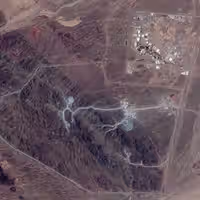
It is still unclear how badly steel plants and petrochemical facilities have been damaged in US-Israeli strikes. But these so-called “mother industries” sit at the heart of Iran’s economy. If they falter, the disruption will soon ripple everywhere.
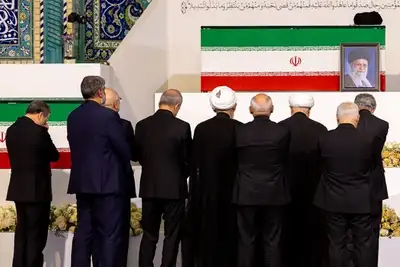
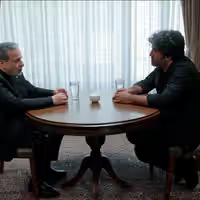
Meanwhile diplomats and besuited Revolutionary Guards commanders haggle over uranium enrichment and the fate of the Strait of Hormuz, supposedly on our behalf, but without ever asking whether we are willing to pay the price for these grand strategies.
Even the language we once used to describe life here has begun to feel worn out. Talking about the “struggle for subsistence” sounds almost hackneyed now.
Last year I wrote that when people in Iran speak about the future they usually mean tomorrow, or perhaps next week at best. Now even that horizon has shrunk.
The future, psychologically, has been shut down as a coping mechanism. People do not want to imagine more bombs. And they want even less to imagine the Islamic Republic surviving all this—perhaps harsher and more unified after two rounds of war.
President Trump says Iran’s capabilities have been “obliterated.” From where we stand, the only thing truly obliterated is morale. He says “regime change” is complete. Here, we have not even seen it begin.
The authorities and their supporters appear firmly in control of the streets. Night after night they stage loud displays of celebration—part rally, part carnival—proclaiming victory and, implicitly, daring anyone who disagrees to come outside.
Even if a grand bargain emerges somewhere between capitals and diplomats, ordinary people here are not on anyone’s agenda.
I have no figures, but I suspect fewer than one in a thousand people currently has any meaningful internet access. And even that connection is so slow that voice messages barely work.
Almost no one outside seems to notice how isolated we have become. Soon, they say, even text messages will be capped. The country is being sealed off, one piece of red tape at a time.
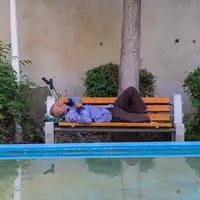
And still life goes on. People go to work—the lucky ones. People eat, drive, hang out. But when you look into their eyes, there is often very little soul behind them.
That does not mean things will never improve. They might. But we have stopped hoping.