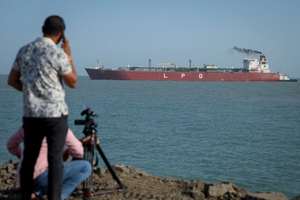
US says it boarded sanctioned stateless tanker in Indo-Pacific
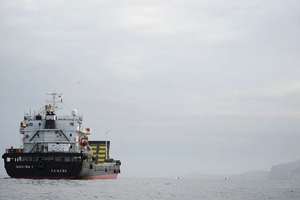
US forces conducted a maritime interdiction and boarding of the stateless sanctioned tanker M/T Tifani overnight without incident in the Indo-Pacific, the Department of War said on Tuesday.
The department said in a post on X that the operation was a right-of-visit boarding and formed part of wider maritime enforcement efforts against illicit networks providing material support to Iran.
“As we have made clear, we will pursue global maritime enforcement efforts to disrupt illicit networks and interdict sanctioned vessels providing material support to Iran—anywhere they operate,” the post said. “International waters are not a refuge for sanctioned vessels. The Department of War will continue to deny illicit actors and their vessels freedom of maneuver in the maritime domain.”
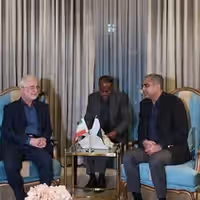
Iran’s embassy in London told Britain to “drop the low-cost statements” and join calls to hold the United States and Israel accountable.
The embassy’s post on X came in response to British Home Secretary Yvette Cooper, who said the end of a two-week ceasefire was approaching and described the moment as critical for diplomacy.
“Drop the low-cost statements and join the global public opinion to hold the US and Israel regimes accountable for their war crimes,” read the Iranian embassy’s post.
Cooper had said she had traveled through five countries over six days and spoken with more than a dozen foreign ministers and counterparts to maintain international pressure to reopen the Strait of Hormuz.
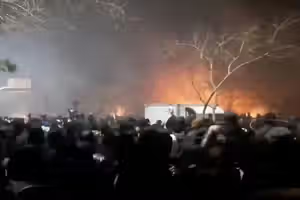
Protesters gather in northeastern Mashhad during anti-government demonstrations in January.
A 32-year-old protester in Mashhad, northeastern Iran, stood in the street as the lights flickered out and the mobile network went dead, believing he had only a one-in-five chance of making it out alive.
"I want this account recorded so that if I live, I can testify in any court, and if I do not, this narrative tells part of the crime that happened in those two nights in Mashhad... Our war with the Islamic Republic continues in the streets. I estimate my chances of staying alive in the coming days at about 20 percent."
These were the last words the young man shared with Iran International before he went missing a few days after the January massacre. There has been no news of his fate for more than eight weeks while the Iranian government continues to cut internet and phone lines.
Witness accounts and reports reaching Iran International describe a coordinated massacre in the city on January 8 and 9, as security forces used a communications blackout to open fire on crowds with live ammunition.
Snipers on rooftops
On Tabarsi Street in Mashhad, members of the Revolutionary Guard took positions on rooftops starting at 9 p.m. Witnesses said they fired directly into the crowds. Plainclothes agents moved through the smoke of tear gas to kill protesters with handguns.
"From 10 p.m. onwards, the number of dead bodies lying on the ground was so high that the smell of blood was clearly felt in the air," one witness told Iran International. He added that security forces attacked an ambulance at midnight and killed or wounded protesters with "finish-off" shots.
At Behesht-e Rezvan cemetery in Mashhad, a source familiar with the matter said the head of the facility reported that more than 400 bodies arrived on the night of January 9. Many could not be identified because they were shot in the face and neck.
Reports indicate that authorities carried out mass burials. The source who was present at the cemetery told Iran International that about 400 people were buried together in a single instance because their faces were unrecognizable from gunshot wounds.
Orders to spread fear
A source within the Khorasan Razavi Governor’s Office told Iran International that provincial leaders met on the morning of January 9. The instruction from higher authorities was to suppress the protests at any cost.
"It was stated that it does not matter how many are killed: 'Just scare the people in such a way that on January 10, no one dares to come to the street and protest,'" the source said.
Firefighters killed for helping
The crackdown also hit emergency workers. Firefighters in Mashhad were ordered by the municipality to participate in the suppression, but many refused and helped the protesters instead.
Hamid Mahdavi, a firefighter and athlete, was shot and killed while helping protesters. Other firefighters who refused the orders have been arrested.
At Farabi Hospital in Mashhad, a nurse said staff issued 500 death certificates between midnight and 7 a.m. on January 10.
In the courtyard of the Chamran clinic, a woman searching for her husband described seeing bodies in black covers stacked in three rows. She said a large trailer arrived and workers with covered faces began throwing more bodies from the vehicle onto the courtyard floor.
The Iranian government has maintained an internet and phone blackout for more than eight weeks. Iran International reports that the Islamic Republic killed more than 36,500 protesters across Iran during the two nights of Jan. 8 and 9.
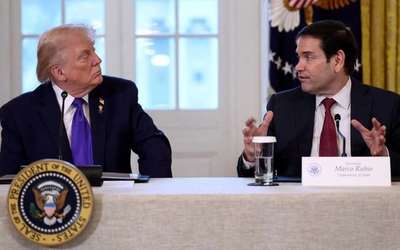
An Iranian police official said on Tuesday that Tehran would not back down until it had taken revenge on US President Donald Trump over the killing of Supreme Leader Ali Khamenei.
Ali Shirazi, head of the ideological-political organization of Iran’s law enforcement command, said Trump had committed an act no other US president had dared by ordering the killing.
“You killed our Imam. Do you know what the retribution for killing an Imam is? It is cutting you into pieces in front of the axis of resistance,” he said.
Ships and boats in the Strait of Hormuz off the coast of Musandam, Oman, April 20, 2026.
Fraudulent messages offering ships safe passage through the Strait of Hormuz in exchange for cryptocurrency have been sent to some shipping companies, Reuters reported on Tuesday, citing a maritime security firm.
Greek risk management firm MARISKS said unknown actors posing as Iranian authorities had contacted companies whose vessels are stuck west of the strategic waterway, asking for transit fees in Bitcoin or Tether in return for “clearance.”
"These specific messages are a scam," the firm said in an alert, adding the communications did not originate from Iranian authorities.
The warning comes as the United States continues a blockade of Iranian ports, while Iran has imposed restrictions on the Strait of Hormuz, a key chokepoint through which about a fifth of global oil and liquefied natural gas once passed before conflict disrupted flows.
Amid ceasefire talks, Tehran has suggested collecting tolls from vessels seeking safe transit, contributing to uncertainty among shipowners.
Hundreds of vessels and roughly 20,000 seafarers remain stranded in the Persian Gulf due to the disruptions, according to the firm.
On April 18, when Iran briefly allowed limited passage subject to inspections, several ships attempted to transit, but at least two vessels, including a tanker, reported that Iranian boats fired shots, forcing them to turn back.
MARISKS said it believed at least one ship that came under fire while trying to leave the strait on Saturday may have been affected by the fraudulent scheme.
The messages cited by the firm said vessels would need to submit documents for review by Iranian security services, after which a cryptocurrency fee would be set before transit at a pre-arranged time.