• العربية
  • فارسی
Brand
  • Iran Insight
  • Politics
  • Economy
  • Analysis
  • Special Report
  • Opinion
  • Podcast
  • Live TV
  • Iran Insight
  • Politics
  • Economy
  • Analysis
  • Special Report
  • Opinion
  • Podcast
  • Live TV
  • Theme
  • Language
    • العربية
    • فارسی
  • Iran Insight
  • Politics
  • Economy
  • Analysis
  • Special Report
  • Opinion
  • Podcast
  • Live TV
All rights reserved for Volant Media UK Limited
volant media logo
VOICES FROM IRAN

Lights out, then gunfire: Witnesses recount Mashhad protest crackdown

Hedieh Kimiaee
Hedieh Kimiaee

Iran International

Apr 21, 2026, 12:23 GMT+1Updated: 16:08 GMT+1
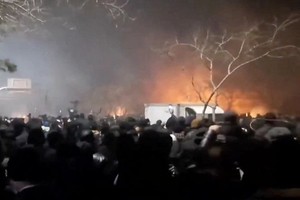
Protesters gather in northeastern Mashhad during anti-government demonstrations in January.

A 32-year-old protester in Mashhad, northeastern Iran, stood in the street as the lights flickered out and the mobile network went dead, believing he had only a one-in-five chance of making it out alive.


"I want this account recorded so that if I live, I can testify in any court, and if I do not, this narrative tells part of the crime that happened in those two nights in Mashhad... Our war with the Islamic Republic continues in the streets. I estimate my chances of staying alive in the coming days at about 20 percent."

These were the last words the young man shared with Iran International before he went missing a few days after the January massacre. There has been no news of his fate for more than eight weeks while the Iranian government continues to cut internet and phone lines.

Witness accounts and reports reaching Iran International describe a coordinated massacre in the city on January 8 and 9, as security forces used a communications blackout to open fire on crowds with live ammunition.

Snipers on rooftops

On Tabarsi Street in Mashhad, members of the Revolutionary Guard took positions on rooftops starting at 9 p.m. Witnesses said they fired directly into the crowds. Plainclothes agents moved through the smoke of tear gas to kill protesters with handguns.

"From 10 p.m. onwards, the number of dead bodies lying on the ground was so high that the smell of blood was clearly felt in the air," one witness told Iran International. He added that security forces attacked an ambulance at midnight and killed or wounded protesters with "finish-off" shots.

Mass burials in secret

At Behesht-e Rezvan cemetery in Mashhad, a source familiar with the matter said the head of the facility reported that more than 400 bodies arrived on the night of January 9. Many could not be identified because they were shot in the face and neck.

Reports indicate that authorities carried out mass burials. The source who was present at the cemetery told Iran International that about 400 people were buried together in a single instance because their faces were unrecognizable from gunshot wounds.

Orders to spread fear

A source within the Khorasan Razavi Governor’s Office told Iran International that provincial leaders met on the morning of January 9. The instruction from higher authorities was to suppress the protests at any cost.

"It was stated that it does not matter how many are killed: 'Just scare the people in such a way that on January 10, no one dares to come to the street and protest,'" the source said.

Firefighters killed for helping

The crackdown also hit emergency workers. Firefighters in Mashhad were ordered by the municipality to participate in the suppression, but many refused and helped the protesters instead.

Hamid Mahdavi, a firefighter and athlete, was shot and killed while helping protesters. Other firefighters who refused the orders have been arrested.

At Farabi Hospital in Mashhad, a nurse said staff issued 500 death certificates between midnight and 7 a.m. on January 10.

In the courtyard of the Chamran clinic, a woman searching for her husband described seeing bodies in black covers stacked in three rows. She said a large trailer arrived and workers with covered faces began throwing more bodies from the vehicle onto the courtyard floor.

The Iranian government has maintained an internet and phone blackout for more than eight weeks. Iran International reports that the Islamic Republic killed more than 36,500 protesters across Iran during the two nights of Jan. 8 and 9.

Most Viewed

US crackdown leaves much of Iran’s shadow banking untouched
1
EXCLUSIVE

US crackdown leaves much of Iran’s shadow banking untouched

2
ANALYSIS

Iran’s economy is a powder keg. Tehran is preparing for the spark

3

Iran drug shortages hit 800 medicines as costs could triple

4
INSIGHT

Five years ago, Iran’s planners put today’s crisis on paper

5

Iran should cut Persian Gulf internet cables, hardline newspaper says

Banner
Banner
Banner

Spotlight

  • If Britain backs US plan, Iran's London bank shuts down on October 22
    ANALYSIS

    If Britain backs US plan, Iran's London bank shuts down on October 22

  • US strikes deepen Tehran debate over compromise or confrontation
    INSIGHT

    US strikes deepen Tehran debate over compromise or confrontation

  • Xi snub reignites Iran’s doubts about China
    INSIGHT

    Xi snub reignites Iran’s doubts about China

  • Trump’s call for an Iranian uprising runs into a trust problem
    ANALYSIS

    Trump’s call for an Iranian uprising runs into a trust problem

  • Five years ago, Iran’s planners put today’s crisis on paper
    INSIGHT

    Five years ago, Iran’s planners put today’s crisis on paper

  • Women footballers came home under pressure. Now Iran wants them on camera
    ANALYSIS

    Women footballers came home under pressure. Now Iran wants them on camera

  • How images came to carry Iran’s protest dead

    How images came to carry Iran’s protest dead

  • 100 days on: why Iran’s January protests spread across social classes

    100 days on: why Iran’s January protests spread across social classes

  • A man, a dog, and a private wish turned public tragedy in Iran

    A man, a dog, and a private wish turned public tragedy in Iran