Bapco says no injuries after tank fire at Bahrain facility
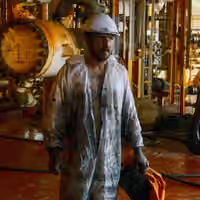
Bahrain’s Bapco Energies said an incident at one of its storage facilities on Sunday caused a tank fire following an Iranian attack.
The company said the fire had been fully extinguished, the situation was under control and damage was still being assessed. It added that no injuries had been reported.
Iran executed two men on Sunday over accusations that they tried to storm a military site and gain access to an armory during the January protests, according to Mizan, the judiciary’s news outlet.
Mizan identified the two as Mohammadamin Biglari and Shahin Vahedparast and said their death sentences had been upheld by the Supreme Court.
State media accused the two men of taking part in the protests in January 2026, entering a military site in Tehran, helping damage and set fire to the facility, and trying to reach its weapons storage area.
The report also said authorities accused a group involved in the case of trying to enter military and security sites, including police stations, Basij bases and other restricted locations, with the aim of stealing weapons and military equipment.
The two were among four defendants in the same case who had faced execution, according to Amnesty International.
On Saturday, Iran executed two men, Abolhassan Montazer and Vahid Bani-Amerian, over charges including “armed rebellion,” membership in the Mojahedin-e Khalq (MEK) opposition group and plotting attacks using rocket launchers.
Last week, Iran executed 18-year-old Amirhossein Hatami, who had been convicted in the same case linked to the nationwide anti-government protests that the Islamic Republic repressed in what became its broadest crackdown to date.
In a recent report, Amnesty said 11 men were at risk of imminent execution over participation in the protests. The rights group said they had been subjected to torture and other ill-treatment in detention before being convicted in grossly unfair trials based on forced confessions.
Reports late on Saturday and early on Sunday described explosions and warplane overflights across several Iranian provinces, including Isfahan, Alborz, Hormozgan, Khuzestan, Fars, Bushehr, Gilan, Mazandaran and Kohgiluyeh and Boyer-Ahmad.
In Isfahan province, including Isfahan city, Baharestan, Najafabad, Fooladshahr, Mobarakeh and Lenjan, residents reported repeated explosions and shaking buildings, especially in southern parts of the city. Some messages spoke of more than 10 successive blasts.
In Alborz province, four explosions were reported in the Sohailieh area of Karaj. In Hormozgan province, residents in Bandar Lengeh and Kish reported warplane overflights and explosions.
In Khuzestan province, Mahshahr saw three early-morning explosions, while reports from Andimeshk said vehicles carrying equipment had gathered there.
Other reports described a missile launch in Shiraz, warplane overflights in Kangan in Bushehr province, an explosion in Deylaman in Gilan, a missile sighting in Shirgah in Mazandaran, and reported operations around Basht in Kohgiluyeh and Boyer-Ahmad.
In Tehran, some northern and northeastern areas reported hearing distant explosions.
In a final twist to the US mission to recover a downed Air Force officer in Iran, American forces reportedly blew up two stranded transport planes after they became disabled at a remote base inside the country, The New York Times reported.
According to the report, the two aircraft had been due to carry the rescued officer, the other airman and the commandos involved in the operation to safety.
Commanders instead flew in three replacement planes to extract all US personnel, then destroyed the disabled aircraft rather than risk them falling into Iranian hands.
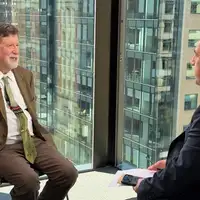
The UAE’s recent arrest of IRGC-linked money changers could expand into a broader crackdown on Iran’s shadow financial network, experts said on this week's episode of Eye for Iran podcast.
Earlier this week, UAE authorities detained dozens of money changers tied to financial entities linked to Iran’s Revolutionary Guards, shut down associated companies and closed their offices, sources familiar with the matter told Iran International.
The crackdown followed days of mounting regional tensions and came after other measures targeting Iranian nationals, including visa revocations and tighter travel restrictions through Dubai.
While the initial crackdown appears focused on exchange houses and foreign-currency procurement, the bigger question now is whether Emirati authorities are prepared to move deeper into the far larger ecosystem of front companies and free-zone entities that have long enabled Iran’s oil, petrochemical, metals and procurement networks.
That next step could determine whether this is a structural threat to one of Tehran’s most important offshore financial systems.
“It’s unclear, I think we’ve got to wait and see the extent of the crackdown,” Miad Maleki, former senior US Treasury sanctions strategist and a senior fellow at the Foundation for Defense of Democracies (FDD) said on Eye for Iran podcast.
“If it only has to do with the current crackdown....whether it’s really limited to IRGC's foreign currency procurement activities in Dubai, which is significant or it goes beyond that and they’re going after Iranian connected companies in free zones," said Maleki.
That distinction matters.
For years, Dubai’s exchange houses were only the most visible layer of Iran’s shadow economy. Beneath them sits a much deeper network of shell firms, nominee ownership structures, commodity brokers and free-zone companies often run by third-country nationals.
According to Maleki, many of those firms were designed precisely to hide any direct Iranian fingerprints.
“Usually, the connections to Iran are nothing. There are no Iranian hands or fingerprints over these companies,” he said.
“There are third country nationals, Indians and Pakistani nationals who are running these companies and you have an Emirati national who is only on paper as the owner.”
That architecture has allowed Iranian petrochemical, petroleum and metals businessmen to move funds, settle transactions and procure goods while remaining beyond the immediate reach of sanctions enforcement.
Daniel Roth, research director at United Against Nuclear Iran, said the sophistication of those structures is exactly what makes the next phase of enforcement so consequential.
“It has been a sophisticated operation to the extent that anybody working in just the general compliance AML unit, say in the west wouldn’t necessarily know that this is,” Roth said on Eye for Iran.
He warned that seemingly generic corporate branding can make sanctions-linked entities difficult to detect.
“If I’m going to be a little bit more clever than that, and obviously I’m getting to use a name like some generic name, some boilerplate name.”
Roth added that the opacity of Dubai’s business ecosystem has historically made ownership trails difficult to establish.
“The Dubai environment or the financial system, it is quite opaque.”
That opacity becomes even more important when looking beyond money changers and toward the free-zone corporate structures that may still remain untouched.
Mohammad Machine-Chian, a senior journalist covering economic affairs at Iran International, said the economic stakes of a broader move into shell companies could be enormous.
“So all in all, I think it’s fair to estimate around $8 to maybe $15 billion a year,” he said, referring to the Dubai channel’s role in supplying hard currency.
“In this scenario, they’re expected to lose much more, maybe between at least $15 to $20 billion.”
If authorities expand the crackdown into those deeper layers, the consequences for Tehran could extend far beyond exchange houses.
It would raise the cost of moving oil proceeds, complicate hard-currency conversion, threaten procurement channels, and strike at the free-zone companies that have long helped disguise Iranian-linked exports.
For now, that remains the unanswered question.
The arrests have exposed the first layer of Iran’s financial architecture in Dubai.
Whether the UAE is prepared to absorb the economic and political costs of moving against the deeper shell-company maze may determine whether Tehran’s most important offshore pressure valve is merely disrupted or fundamentally dismantled.
You can watch Eye for Iran on YouTube or listen on any podcast platform of your choosing.
US President Donald Trump said a second crew member from a downed American fighter jet in Iran has been rescued and is injured but "safe and sound,” following what he described as a "miraculous" military operation deep inside Iranian territory.
In a post on Truth Social, Trump said US forces carried out “one of the most daring search and rescue operations in US history” to recover the officer, a colonel, who had been behind enemy lines in mountainous regions of Iran.
He said the airman had sustained injuries but “will be just fine,” adding that US personnel had monitored his location continuously while planning the mission.
Trump also revealed that another pilot had been rescued earlier, but the operation was not immediately disclosed to avoid jeopardizing the second extraction.
He said both rescues were conducted without any American fatalities and described the missions as evidence of “overwhelming air dominance” over Iranian skies.