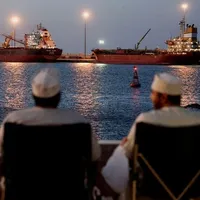
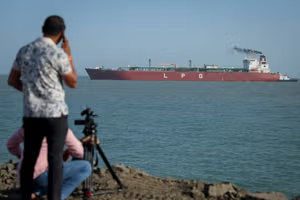
Yahya Al-e Es’hagh, head of the Iran-Iraq Joint Chamber of Commerce, said Iran could theoretically generate $70 billion to $80 billion a year from the Strait of Hormuz by charging for services provided there.
Speaking to ILNA, he said Iran could “at least” collect a 10% fee under maritime law for services in the strait, which he said covers 20% to 30% of global trade.
The figures were presented as a potential estimate rather than an announced policy.
At least two vessels transiting the Strait of Hormuz paid Iran for safe passage, Lloyd’s List Intelligence reported in March, adding that commercial traffic is increasingly diverting into Iranian territorial waters through what has been dubbed the “Tehran Toll Booth.”
A letter attributed to Iran’s Supreme Leader Mojtaba Khamenei was posted on his Telegram channel, pledging continued support for Hezbollah and its leadership.
The letter, dated two days ago, praised “resistance and steadfastness” against the United States and Israel and said Iran’s policy “is based on continuing support for the resistance.”
It also expressed confidence in Hezbollah leader Naim Qassem, saying he could “defeat the plans of the Zionist enemy” and restore “peace and pride” to Lebanon.
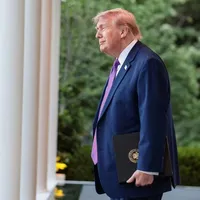
US President Donald Trump has been talking more with hawkish advisers on Iran in private, even as he signals a possible withdrawal from the conflict, Axios reported.
The report, citing advisers and current and former US officials, said Trump has been speaking more with figures such as Lindsey Graham and commentator Mark Levin than with longtime confidants who oppose escalation.
Advisers told Axios there is uncertainty inside the administration about Trump’s strategy, with some officials saying he is keeping options open and shifting between escalation and a possible exit.
Axios added that some US officials believe that if an April 6 deadline passes without a deal, Trump could order a “final blow” of heavy bombing on Iranian infrastructure and nuclear facilities before withdrawing.
The arrest of dozens of IRGC-linked money changers in the United Arab Emirates is one of the most serious blows yet to Tehran’s sanctions-evasion network, laying bare how heavily the Islamic Republic has depended on Dubai as an economic lifeline.
Sources familiar with the matter told Iran International that UAE authorities detained dozens of money changers tied to financial entities linked to Iran’s Revolutionary Guards, shut down associated companies and closed their offices.
The crackdown follows days of mounting regional tensions and comes after other measures targeting Iranian nationals, including visa revocations and tighter travel restrictions through Dubai.
For years, Dubai has served as Iran’s main offshore financial artery, where oil proceeds, petrochemical revenues and rial conversions were turned into dollars, dirhams and euros beyond the reach of the country’s battered domestic banking system.
“This is going to be a real problem for Tehran because Dubai was an economic lung for the Iranian regime,” Jason Brodsky of United Against Nuclear Iran told Iran International.
“That is economic pressure and diplomatic isolation in a way that the UAE is able to employ against the Iranian regime, and it will have a very considerable impact.”
'Most critical hub'
According to Miad Maleki, a former senior US Treasury sanctions strategist and now a senior fellow at FDD, the UAE is not just one sanctions-evasion hub among many.
“The UAE is the single most critical jurisdiction in the Iranian regime’s sanctions-evasion architecture,” Maleki said.
Dubai’s exchange houses have long given the IRGC and the Quds Force access to the hard currency needed to finance proxy groups including Hezbollah, Hamas, the Houthis and militias in Iraq.
The detention of trusted IRGC-linked money changers threatens networks that took years to build.
“These trust-based sarraf (money changer) relationships, bank accounts and corporate structures are not quickly replaceable,” Maleki said.
He added that even exchange houses untouched by the crackdown were now likely to think twice before processing Iran-linked transactions, sharply raising both the cost and the risk of doing business with the Guards.
The pressure comes as Iran’s domestic economy is already under severe strain.
Foreign reserves, once estimated at around $120 billion in 2018, had fallen below $9 billion by 2020, leaving Iran increasingly reliant on offshore currency channels.
Mohammad Machine-Chian, a senior economic journalist at Iran International, said the UAE remains Iran’s most important economic conduit after China.
“The UAE is Iran’s most critical economic lifeline after China,” he said.
He said Dubai’s free zones host hundreds of Iranian-linked shell companies used to mask oil and petrochemical sales, launder proceeds and channel hard currency back to Tehran.
Bilateral trade has hovered between $16 billion and $28 billion in recent years, with Iranian non-oil exports alone reaching roughly $6 billion to $7 billion annually, according to Machine-Chian.
A sustained crackdown could cost Tehran tens of billions of dollars in revenue streams while severing what he described as Iran’s “USD cash lifeline.”
Dubai has also functioned as a transit point for illicit Iranian funds moving onward to North America, including transfers routed to the United States and Canada through correspondent banking and hawala networks.
As Maleki put it, “Dubai is the washing machine: Iranian oil proceeds and rial conversions go in, sanitized dirham and dollar transactions come out.”
From diplomacy to backlash
Beyond the financial damage, analysts say the crackdown reflects a broader political rupture between Tehran and the Persian Gulf states.
Brodsky said Iran’s attacks on neighboring countries had transformed the strategic environment in the region.
“The relationship between Iran and the GCC countries is not going to go back to the way it was before Operation Epic Fury,” he said.
Where Persian Gulf states had once pushed for diplomacy, Iran’s retaliation has instead driven them closer to Washington and Israel.
For years, Tehran sought to encircle Israel in what it called a “ring of fire” through regional proxies.
Now, Brodsky said, the Islamic Republic has reversed that dynamic.
“They wanted to encircle Israel in a ring of fire,” he said. “Now they are basically encircling themselves in a ring of fire because they’ve been angering their neighbors with all of their attacks.”
He said that reversal could carry long-term consequences, including deeper Persian Gulf-Israel security coordination and new openings for the Abraham Accords.
“The missile threat and drone threat have become paramount in this conflict,” Brodsky said. “That could drive these countries even closer to the US and Israel.”
'Collapse within weeks'
The UAE crackdown comes as signs of mounting economic distress are mounting inside Iran.
Sources previously told Iran International that President Masoud Pezeshkian had warned senior officials that without a ceasefire, the economy could face collapse within weeks.
Across major cities, ATMs have been running short of cash, banking services have faced intermittent disruptions and government workers have reported months of delayed salary payments.
With inflation in essential goods already above 100 percent before the war, the loss of Dubai’s financial channels could deepen the regime’s crisis.
For Tehran, the arrests in the UAE are more than a financial disruption.
They may signal that one of Iran’s most dependable external pressure valves is starting to close.
British Prime Minister Keir Starmer said Britain will not be drawn into the Iran conflict and called for closer ties with the European Union as the war drives an energy crisis.
“We will not be drawn into this conflict,” Starmer said in an address to the nation.
He added that “our long term national interest requires closer partnership with our allies in Europe and with the European Union,” warning the war would “impact the future of the UK” as energy costs rise.