Explosions, air defense activity heard in Iran’s Mashhad
The sound of explosions and air defense activity was heard in the northeastern Iranian city of Mashhad on Thursday evening, locals told Iran International.

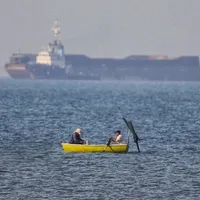


France’s armed forces chief held a videoconference with 35 countries to discuss restoring navigation through the Strait of Hormuz, the defense ministry said on Thursday.
The ministry did not name participants.
“This initiative, independent of the ongoing military operations in the region, is strictly defensive in nature. Its purpose is to organize the resumption of shipping through the Strait of Hormuz once hostilities have ceased,” it said in a statement.
President Donald Trump said Iran had made what he described as a gesture during ongoing discussions with Washington by allowing oil tankers to pass through the Strait of Hormuz.
“We have very substantial talks going on with respect to Iran, with the right people,” Trump said.
He said Iranian officials had indicated they would allow eight tankers to transit the strategic waterway, which Tehran had previously restricted during the conflict.
“They said, to show you the fact that we're real and solid and we're there, we're going to let you have eight boats,” Trump said.
Trump added that the number later increased to ten vessels.
“I guess we deal with the right people,” he said, describing the move as a signal amid continuing diplomatic contacts.
US War Secretary Pete Hegseth said Washington is open to reaching a deal with Iran but signaled that military operations will continue while diplomacy unfolds.
“We pray for a deal, and we welcome a deal,” Hegseth said, adding that President Donald Trump was the “ultimate deal maker” who could make it happen.
“But in the meantime, as I said yesterday, the Department of War will continue negotiating with bombers,” he said.
Hegseth asserted that US operations are ahead of schedule, saying more than 10,000 targets have been destroyed and over 150 naval vessels sunk.
US envoy Steve Witkoff said Washington has presented Tehran with a 15-point framework intended to form the basis of a potential peace agreement.
“I can report to you today that we have, along with your foreign policy team, presented a 15-point action list that forms the framework for a peace deal,” Witkoff said during a televised Cabinet meeting.
He said the proposal had been circulated through the Pakistani government, which is acting as a mediator, and had prompted what he described as “strong and positive messaging and talks.”
Witkoff added that the discussions remain sensitive and that the administration intends to keep the details confidential rather than negotiate publicly.
“We have delivered that message, sir, along with the 15 points for peace,” he said. “Finally, we have told Iran one last thing: don’t miscalculate again.”
US Secretary of State Marco Rubio said Iran’s leadership remains dangerous even as the country faces what he described as its weakest moment.
“The people that run this country are radical Shia clerics. These are religious fanatics,” Rubio said, warning that Tehran’s current actions demonstrate the risks posed by the Islamic Republic.
“Look what they are doing now at their weakest point. This is the weakest Iran has ever been,” he said. “They’re attacking embassies. They’re attacking hotels.”
Rubio said the situation highlights why the United States considers Iran obtaining nuclear weapons “an unacceptable risk for the world.”
