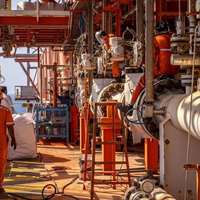
Safe houses struck in several Tehran districts


Several safe houses in Tehran were targeted in attacks early on Monday, Iran International has learned.
The strikes hit sites in different parts of the capital, including Aghdasieh, Majidiyeh and Chizar.
It was not immediately clear who had been staying in the buildings at the time of the attacks.
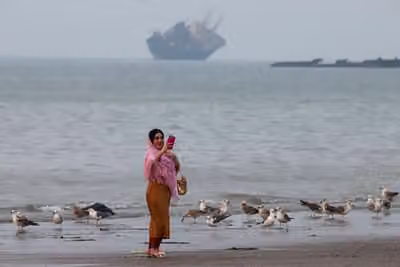



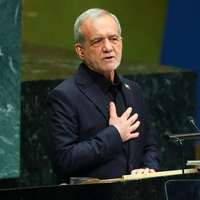

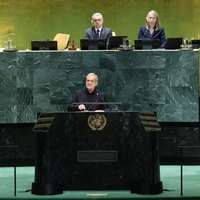
An attack on Iran’s southern coasts or islands would lead to maritime routes being cut across the Persian Gulf through the laying of sea mines, the country’s Defense Council said on Monday, after US President Donald Trump threatened strikes if the Strait of Hormuz is not reopened.
“Any attempt to attack Iran’s coasts or islands will cause all access routes… to be mined,” the statement said, adding the Persian Gulf could be placed in a situation “similar to the Strait of Hormuz” for a prolonged period.
The council also warned of “decisive and destructive” retaliation against attacks on Iran’s energy and nuclear infrastructure, referring to recent strikes including on South Pars.
“The only way for non-hostile countries to pass through the Strait of Hormuz is coordination with Iran,” it said.
Trump has said the United States would “hit and obliterate” Iranian power infrastructure if Tehran does not reopen the waterway within 48 hours.
The United States is considering options targeting Kharg Island, Iran’s main oil export hub, including possible seizure or blockade if shipping disruptions continue, according to Axios.
British Prime Minister Keir Starmer and US President Donald Trump agreed in a call on Sunday that the Strait of Hormuz must be reopened to resume global shipping, Downing Street said.
A spokesperson for the British government said the two leaders discussed the situation in the Middle East and agreed that reopening the strait was essential for stability in the global energy market.
The spokesperson said Starmer and Trump would speak again soon.
The funeral of Mohammad Ghanbari, a bodyguard for Ali Shamkhani, will be held on Monday in Juybar, according to an Instagram story posted by Mahdieh Shademani, the daughter of a killed commander of Iran’s Khatam al-Anbiya Central Headquarters.
The timing suggested Ghanbari’s body was recovered nearly a month after the strikes in which he was killed.
Ali Shamkhani, secretary of Iran’s Supreme Defense Council, was killed in US and Israeli strikes on February 28.
A loud steam release at the Montazer Ghaem power plant in Fardis, near Tehran, was caused by a technical fault and not an attack, a local official said on Sunday.
The governor of Fardis said the noise came from high-pressure steam released due to a defect in one of the plant’s boilers.
He added that there was no problem in the area and no cause for concern, and said any incidents requiring public awareness would be announced through official channels.
Montazer Ghaem is one of the five major plants around Tehran along with Damavand, Rajaei, Roudshour (Rudshur), and Mofatteh, which play a central role in supplying electricity.
Security deployments, Basij patrols and checkpoints were reported in several parts of Iran from late Sunday into early Monday, according to eyewitness accounts sent to Iran International.
In Tehran, security forces were reported stationed in Park-e Shahed, with a possible checkpoint expected in the Sardar Jangal area. Witnesses also said white Samand cars with green license plates were moving through the city after removing their plates and marking the vehicles as “Basij Patrol,” creating a heavy security atmosphere.
In Arak, in Iran’s central Markazi province, nighttime checkpoints were reported at the entrances to the industrial town.
In Rudsar, a city in Gilan province on the Caspian coast, checkpoints were said to be in place at all entrances to the city. In Sari, the capital of Mazandaran province in northern Iran, witnesses reported that IRGC forces and equipment were moved from Imam Square to the Red Crescent building on Imam Reza Boulevard.