US struck more than 90 targets on Iran's Kharg Island, CENTCOM says
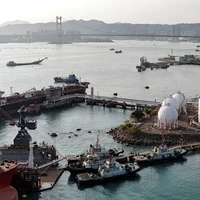
The commander of the United States Central Command said on Monday that US forces carried out a large-scale precision strike on Iran's Kharg Island last week, hitting more than 90 military targets including storage sites for naval mines and missiles.
Admiral Brad Cooper said in a video briefing that US and partner forces had flown more than 6,000 combat flights over the past 16 days and were maintaining air superiority over Iranian skies.
He said the strikes were aimed at eliminating Iran's ballistic missiles, drones and naval threats and dismantling what he described as the country's defense industrial base.
Cooper said US and partner forces had also destroyed more than 100 Iranian naval vessels and were working to reduce Iran's ability to threaten shipping in and around the Strait of Hormuz.
He also said Iran had launched more than 300 attacks across the region over the past two weeks, targeting civilian areas.
Australian club Brisbane Roar said on Monday it had welcomed Iranian players Fatemeh Pasandideh and Atefeh Ramezanisadeh to train with its A-League Women squad after the two applied for asylum in Australia.
The players had been part of Iran’s women’s national team delegation competing abroad before leaving the team and seeking protection in Australia.
In a statement posted on social media, chief executive Kaz Patafta said Brisbane Roar was committed to providing a supportive environment for the players while they considered their next steps.
The crisis surrounding the team began earlier in the month when the players refused to sing the Iranian national anthem before their opening match against South Korea in AFC Women's Asian Cup.
The silent protest came shortly after the escalation of war involving Iran and the killing of Supreme Leader Ali Khamenei, and was quickly condemned by state media in Tehran as an act of “wartime treason.”
In the days that followed, several members of the Iranian delegation sought asylum in Australia. But according to informed sources, pressure from Iranian authorities soon intensified, with messages relayed to the players through members of the team’s own staff urging them to abandon asylum plans and return to Iran.
One member of the technical staff, Zahra Meshkinkar, who had also sought asylum, has been relaying messages from Iranian football officials to players, encouraging them to withdraw their requests and rejoin the team.
Remaining members of the squad were later moved to Kuala Lumpur, where sources say the players have been kept under tight supervision in a hotel.
Journalists and outside visitors have been barred from entering, and some players have had their mobile phones confiscated or are allowed to use them only under the supervision of officials linked to the Iranian Football Federation.
Members of the Iranian women's national soccer team stand at Kuala Lumpur International Airport as they prepare to leave Malaysia on March 16, 2026.
Despite the earlier asylum requests, several players have now withdrawn their applications and are en route to return to Iran, after what sources described as sustained pressure on the team and warnings that their families could face consequences if they refused to go back.
Human rights groups have warned that athletes involved in the anthem protest could face punishment upon their return.
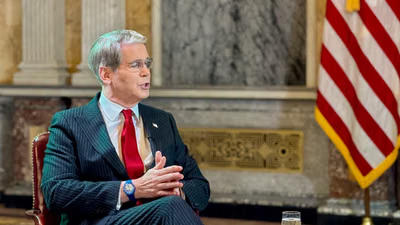
The United States is "fine" for now with some Iranian, Indian and Chinese fuel ships moving through the Strait of Hormuz, Treasury Secretary Scott Bessent said on Monday.
Bessent told CNBC that more fuel tankers were beginning to transit the key waterway and said Iranian vessels had already been leaving to supply global markets.
"We are seeing more and more of the fuel ships start to go through," he said, adding that Indian ships and some Chinese vessels had also departed the Persian Gulf.
Bessent said the movement of ships could help reopen the route naturally before any naval escort missions are deployed in the region.
He added that any US action to mitigate higher energy prices from the war would depend on how long the conflict lasts.
Iran is not seeking a ceasefire but war with the United States and Israel must end, the country’s foreign minister said on Monday, adding that the Islamic Republic will continue fighting until future attacks are prevented.
He made the comments during the foreign ministry’s final press conference of the Iranian calendar year, also attended by ministry spokesman Esmail Baghaei.
“We don’t ask for ceasefire, but this war must end, in a way that our enemies never again think about repeating such attacks,” Araghchi said, adding that Iran was prepared to continue the fight as long as necessary.
He said Iran had endured a difficult year but had resisted what he described as attempts by its adversaries to force Tehran into an unconditional surrender.
“They now understand what kind of nation they are dealing with,” Araghchi said, adding that Iran was ready to “take the war wherever necessary.”
‘Strait of Hormuz is open but under Iran’s control’
Foreign ministry spokesman Esmail Baghaei said the Strait of Hormuz had not been closed despite tensions, but Iran was controlling ship movements through the strategic waterway.
“Ships from some countries passed through the Strait of Hormuz in coordination with the Islamic Republic of Iran,” he said.
He added that Iran has “always been the guardian of the Strait of Hormuz and the safe passage of ships.”
The spokesman said heightened security measures in the strait were a response to what he described as a war imposed on Iran.
‘US assets in region could be targeted’
Baghaei also warned that Iran could strike US military assets located in regional countries if those facilities were used for attacks against Iran.
He said Tehran had warned regional states months earlier not to allow their territory to be used for military operations against Iran.
“We have no hostility toward regional countries,” Baghaei said. “What we target are American bases and assets.”
Since the war began, Iran has launched missiles and drones against targets across much of the Middle East, striking or threatening sites in countries including Saudi Arabia, the United Arab Emirates, Kuwait, Jordan, Oman and Iraq.
‘Iran never trusted US’
Baghaei said Iran had never trusted the United States during diplomatic negotiations and had conducted talks in what he described as an atmosphere of “absolute distrust.”
Iran entered the negotiations with “open eyes,” he said, accusing Washington of ultimately undermining diplomacy.
Tehran had engaged in talks in part to demonstrate to the international community that it was not responsible for the conflict, he added.
‘EU calls to end war are ridiculous’
Baghaei also rejected calls from European leaders for Iran to end the conflict, saying it was unreasonable to ask a country under attack to halt the war.
“Asking a country that has been attacked militarily to end the war is ridiculous,” he said. “Iran did not start this war.”
He made the comments in response to German Chancellor Friedrich Merz, who said on Friday that Berlin was pursuing diplomatic efforts to end the conflict with Iran, warning that a prolonged war poses serious risks to European security and economic interests.
‘False flag ops in California’
The Iranian spokesman also suggested that claims by US officials that Iranian drones could reach the US West Coast might be laying the groundwork for a “false flag” operation.
He said Iranian drones did not have the range to travel from the Persian Gulf to California and accused Washington and Israel of previously using such tactics.
Iran’s armed forces openly acknowledge the targets they strike, he said, and do not claim attacks they did not carry out.
The FBI warned police departments in California recently that Iran could retaliate for US strikes by launching drones at the US West Coast, ABC News reported, citing an alert sent to law enforcement agencies.
‘US not capable of hosting the World Cup’
Baghaei also raised doubts about whether the United States could ensure security for major international events, including the FIFA World Cup 2026, in which the Iranian national team is taking part.
He said international football authorities would need to address concerns about the country’s ability to provide adequate security.
Iran is scheduled to play in Group G of the 2026 FIFA World Cup against New Zealand, Belgium and Egypt, with its group-stage matches set to take place in Los Angeles and Seattle in the United States.
Sports Minister Ahmad Donyamali said on Wednesday that Iran would not take part in the tourney following airstrikes by the US and Israel.
Iran warned Romania on Monday it would respond politically and legally if the country allowed the United States to use bases on its territory for operations against Iran.
Foreign Ministry spokesperson Esmaeil Baghaei said Tehran was urging countries not to become involved in the war.
"If Romania makes its bases available to the United States, it would amount to participation in military aggression against Iran," Baghaei told a weekly news conference.
He said such a move would be unacceptable under international law and would carry international responsibility for Romania.
Iran’s authorities carried out a sweeping crackdown during recent nationwide protests, UN human rights rapporteur on Iran warned, citing widespread arrests, violence against demonstrators and severe restrictions on freedoms of expression, assembly and information.
In a report to the UN Human Rights Council, Mai Sato, the special rapporteur on the situation of human rights in Iran, concluded that restrictions on freedom of expression, assembly and association leave many Iranians effectively unable to protest lawfully.
The report also called on Tehran to amend laws governing protests and national security offences, release individuals detained for exercising basic rights and investigate alleged violations linked to demonstrations.
“The protection of protesters lies at the intersection of several fundamental rights,” the report said, warning that people must be able to express grievances peacefully “without fear of reprisal… intimidation, harassment, injury, torture or killing.”
Sato said laws regulating the use of force also give security forces wide discretion to disperse gatherings. The report added that lethal force should be used only as a last resort under international standards but said in practice it has repeatedly been used during protests.
“In practice, lethal force has been a consistent feature of the state’s response to protests over decades,” the report said, referring to past demonstrations in which security forces used assault rifles or shotguns firing metal pellets.
Beyond the immediate response on the streets, the report said pressure often continues against protesters, their families and those expressing solidarity with them.
According to the report, detainees have reported forced confessions broadcast on state television, while lawyers defending protesters face harassment, arrest or professional sanctions.
“Artists, writers and journalists who use creative expression as a form of resistance… face criminal punishments,” the report added, saying that some people have been ordered to attend “behavioral management classes.”
Digital crackdown
The report also describes extensive restrictions on online activity, with major social media and messaging platforms blocked or filtered and new governance policies expanding the authority of security bodies over internet infrastructure.
These measures have “significantly narrowed the space for online expression, civic mobilization and independent journalism,” the report said.
It also called on the international community to support efforts to document violations and pursue accountability.
Drawing on testimony submitted to her mandate, Sato said demonstrations in Iran reflected grievances shared across many parts of society.
“The protests were, in this sense, genuinely nationwide,” the report said, describing participants as representing “a cross-section of Iranian society, united by a desire for a different future.”
Sato further urged Iran to cooperate with international human rights mechanisms and allow UN investigators access to the country.
The rapporteur said Iran’s legal framework makes it extremely difficult to organize demonstrations legally. Public gatherings require prior authorization, and applications can only be made by officially recognized political groups, while broadly defined national security offences can criminalize participation in unsanctioned protests.
As a result, the report said, “almost all forms of unsanctioned protest” risk being treated as criminal activity.