• Iran Insight
  • Politics
  • Economy
  • Analysis
  • Special Report
  • Opinion
  • Podcast
All rights reserved for Volant Media UK Limited
volant media logo
  • العربية
  • فارسی
Brand
  • Iran Insight
  • Politics
  • Economy
  • Analysis
  • Special Report
  • Opinion
  • Podcast
  • Iran Insight
  • Politics
  • Economy
  • Analysis
  • Special Report
  • Opinion
  • Podcast
  • Theme
  • Language
    • العربية
    • فارسی
EXCLUSIVE

Source says IRGC bulldozers sent to rebuild missile sites destroyed

Mar 14, 2026, 12:29 GMT

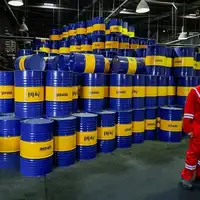
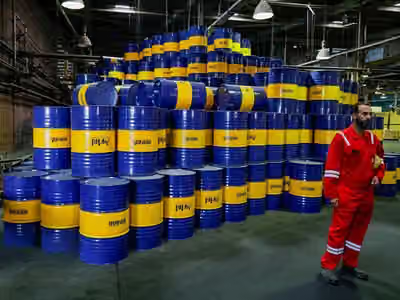
More than 60 bulldozers belonging to Iran’s Islamic Revolutionary Guards Corps (IRGC) that were intended to rebuild missile storage sites were destroyed in Israeli strikes, a source in the Israeli Air Force told Iran International.

The heavy equipment, the source said, was being prepared to repair and restore missile facilities damaged in recent attacks.

IRGC personnel responsible for launching missiles are expected to return to the sites in an attempt to resume operations, according to the source.

“Members of the Revolutionary Guards who are responsible for firing missiles will return to these locations and will try to launch missiles.”

Asked whether Israeli forces would target personnel returning to the facilities, the source said the Israeli Air Force would continue striking individuals it considers a threat to Israel.

Most Viewed

Trump says regime change in Iran will happen but not ‘immediately’
1

Trump says regime change in Iran will happen but not ‘immediately’

2
ANALYSIS

Iran raises ‘human shield’ fears by rallying supporters to the streets

3
EXCLUSIVE

Iran pays Lebanon parliament speaker $500,000 a month to maintain influence

4

IRGC threatens harsher crackdown if protests return

5
OPINION

Russia gains from Iran war but risks more if it drags on

Banner
Banner

Spotlight

  • Why Iran's Kharg Island is central to Strait of Hormuz security
    INSIGHT

    Why Iran's Kharg Island is central to Strait of Hormuz security

  • Iran pressuring women footballers who defected in Australia to return
    EXCLUSIVE

    Iran pressuring women footballers who defected in Australia to return

  • Iran raises ‘human shield’ fears by rallying supporters to the streets
    ANALYSIS

    Iran raises ‘human shield’ fears by rallying supporters to the streets

  • Russia gains from Iran war but risks more if it drags on
    OPINION

    Russia gains from Iran war but risks more if it drags on

  • Allies rally, rivals brace after Mojtaba Khamenei’s rise
    INSIGHT

    Allies rally, rivals brace after Mojtaba Khamenei’s rise

  • Checkpoint attacks open new front in Iran war
    INSIGHT

    Checkpoint attacks open new front in Iran war

•
•
•

More Stories

Iran pressuring women footballers who defected in Australia to return

Mar 14, 2026, 10:40 GMT
•
Raha Pourbakhsh

A member of Iran’s women’s national football team staff who sought asylum in Australia along with several of her players is trying to persuade the others not to follow suit but instead return to Iran, informed sources told Iran International.

Sources said Zahra Meshkinkar, a member of the team’s technical staff, has been relaying messages from Iran's football authorities to players in an effort to convince them to abandon asylum plans and return home.

The effort comes after several members of the Iranian delegation sought protection abroad during the AFC Women’s Asian Cup in Australia.

The team’s equipment manager, known as “Flor,” and player Mohaddeseh Zolfi were among the latest members of the delegation to apply for asylum, following five other players who had already taken similar steps.

The remaining members of the squad later traveled to Malaysia, where they are currently staying while officials consider possible routes for their return to Iran amid the US-Israeli airstrikes.

Semi-official news agency ISNA on Saturday posted an image of players Mona Hamoudi and Zahra Sarbali as well as the coaching staffer Zahra Meshkin-Kar apparently minutes before traveling to Malaysia to join their team members.

"These three, after withdrawing their asylum request in Australia, will join the rest of the national team players tonight," the report said.

Sources previously told Iran International that players have been kept under tight supervision at their hotel in Kuala Lumpur.

Journalists and outside visitors have been barred from entering, and several players have had their mobile phones confiscated. Others were allowed to keep their phones only under the supervision of security personnel linked to the Iranian Football Federation.

Pressure on the players began before the team left Iran and continued during the tournament and afterward. Mohammad Rahman Salari, a member of the football federation’s board, has played a central role in enforcing restrictions and repeatedly collecting and inspecting the phones of players and staff.

Fatemeh Bodaghi, traveling with the delegation as the team’s manager, has also been described by sources as monitoring players’ social media activity and reporting developments to officials in Tehran. Zeinab Hosseinzadeh, the team’s physiotherapist, has also been cited as among those exerting pressure on players.

The crisis surrounding the team began earlier in the tournament when the players refused to sing the Iranian national anthem before their opening match against South Korea. The silent protest occurred shortly after the escalation of conflict involving Iran and the killing of Supreme Leader Ali Khamenei.

  • Iran women’s football team kept under tight security in Kuala Lumpur

    Iran women’s football team kept under tight security in Kuala Lumpur

State media quickly labeled the act as “wartime treason,” and officials warned the players they could face serious consequences if they refused to return to Iran.

The Iranian judiciary also issued a statement urging the athletes to return to the country “for the sake of their families,” a warning widely interpreted as indirect pressure on the players through their relatives.

Farideh Shojaei, the vice president for women’s affairs at the Iranian Football Federation, is also accompanying the delegation. She previously said officials were exploring possible routes for the team’s return to Iran amid ongoing US-Israeli airstrikes, including the possibility of traveling overland through Turkey after attempts to fly through the United Arab Emirates failed.

The developments have drawn international attention and concern from human rights groups, which warned that the players could face punishment if forced to return to Iran after their protest during the tournament.

Clerics question Khamenei Jr’s leadership role

Mar 13, 2026, 12:13 GMT

Iran new Supreme Leader Mojtaba Khamenei’s physical condition and inability to maintain regular communication with officials have prompted criticism and political maneuvering among some ruling clerics, according to information received by Iran International.

Ali Asghar Hejazi, deputy chief of staff to the former Supreme Leader, and Alireza Arafi, a member of the Guardian Council and a member of Interim Leadership Council are among clerics who have raised concerns about Mojtaba Khamenei’s health and managerial capacity, sources told Iran International.

They are pushing for authority at the top of the Islamic Republic to return to a temporary leadership council.

Hejazi and Arafi are also among influential clerics who have criticized the growing power of the Islamic Revolutionary Guards Corps and the increasing dominance of its commanders over government decision-making during the war.

Divisions between political officials and ruling clerics on one side and Revolutionary Guards commanders on the other have deepened following the killing of Iran’s former leader, particularly after Mojtaba Khamenei was introduced as the new head of the Islamic Republic.

Iran pays Lebanon parliament speaker $500,000 a month to maintain influence

Mar 13, 2026, 02:48 GMT

Lebanon’s Parliament Speaker Nabih Berri receives more than $500,000 per month from the Islamic Republic in order to support Tehran's interests and those of its allied group Hezbollah in Lebanon, informed sources told Iran International.

Officials in Tehran say the sums are meant to “buy” unity among Lebanon’s Shiite leadership to ensure that they “act in accordance with Iran’s interests, not Lebanon’s interests.”

Nabih Berri did not respond to Iran International’s request for comment. One of his advisers said that Berri would not comment on the matter at this time.

Berri has not publicly opposed Hezbollah’s attacks on Israel in support of Iran, the sources said, because he does not want to risk losing his financial resources.

The 88-year-old politician heads Lebanon's Amal Movement and holds significant sway in Lebanon’s domestic and foreign policy.

The Shiite organization, formed in the 1970s, remains one of the country’s main political actors. It maintains close political ties with Hezbollah, and both belong to Lebanon’s Shiite political camp.

On March 1, Hezbollah targeted Israel in support of Tehran. Israel launched a new military operation in retaliation.

The sources said Berri has been unwilling to support efforts by the Lebanese government to disarm Hezbollah because, in exchange for receiving large sums from Tehran, he must “advance measures in the Lebanese parliament that align with Tehran’s interests.”

In recent months, Lebanon’s President Joseph Aoun and Prime Minister Nawaf Salam have tried to pressure Hezbollah to disarm in order to reduce tensions with Israel and the international community.

Army forces have confiscated Hezbollah weapons in parts of southern Lebanon, but senior Lebanese officials have said that fully implementing the plan could trigger internal tensions, as Hezbollah has refused to hand over its entire arsenal.

Hezbollah Secretary-General Naim Qassem and officials of the Islamic Republic have repeatedly opposed disarming the group.

Following Hezbollah’s attack on Israel, the Lebanese government announced that the group's military activities would be banned.

On March 6, Israeli Defense Minister Israel Katz warned the Lebanese government that if it remains unable to fulfill its commitments regarding Hezbollah’s disarmament, Lebanon will “pay a very heavy price.”

Tehran considers Hezbollah one of the main pillars of the so-called Axis of Resistance—a term used by Iranian officials to refer to allied armed groups such as Hamas, Islamic Jihad, Hezbollah, Iraq’s Popular Mobilization Forces, and the Houthis in Yemen.

The Wall Street Journal reported in November 2025 that Tehran transferred hundreds of millions of dollars in oil revenue to Hezbollah in the preceding year through exchange offices, private companies and a financing network in Dubai.

Israel’s Kan network reported in December 2025 that Tehran had agreed to pay $1 billion to Hezbollah.

Neither report can be independently verified by Iran International.

The office of the Speaker of Lebanon’s Parliament, in a statement issued after the article was published, called the claim "false and baseless."

Two Iranian diplomats apply for asylum in Denmark, Australia

Mar 12, 2026, 15:14 GMT

Two diplomats of the Islamic Republic in Denmark and Australia have applied for asylum, informed sources told Iran International.

Alireza Sohbati, a diplomat at the Iranian embassy in Copenhagen, and Mohammad Pournajaf, a diplomat at the Iranian embassy in Canberra, have submitted asylum requests.

Pournajaf had previously served as the chargé d'affaires of the Islamic Republic’s embassy in Australia.

In recent months, amid escalating political and social developments linked to the Iranian national uprising, other cases of Islamic Republic diplomats abandoning their posts and seeking asylum have also been reported.

Iran International had previously reported that Alireza Jeyrani Hakamabad, a senior diplomat at the Iranian mission to the UN Office in Geneva, had left his workplace and applied for asylum in Switzerland.

Similarly, Gholamreza Derikvand, the chargé d'affaires of the Islamic Republic’s embassy in Austria, applied for asylum in Switzerland after leaving his post.

US President Donald Trump recently called on Islamic Republic diplomats around the world to distance themselves from the government and apply for asylum.

Iran women’s football team kept under tight security in Kuala Lumpur

Mar 12, 2026, 12:06 GMT
•
Raha Pourbakhsh

Members of Iran’s women’s national football team, after some delegation members sought asylum abroad, are being kept under tight security during a camp in Kuala Lumpur, Malaysia, Iran International has learned.

Players who arrived on Wednesday are being kept at a hotel where journalists and media are not allowed to enter, according to sources familiar with the situation.

Some players had their mobile phones confiscated, while others were allowed to keep them only under the supervision of security personnel from the Iranian football federation.

Sources told Iran International that pressure on the players began in Tehran and has continued during the team’s camp ahead of the 2026 Asian Championship.

Mohammad Rahman Salari, a member of the Iranian Football Federation’s board, played a central role in enforcing the restrictions and repeatedly collected and inspected the phones of players and staff after the team’s first match.

Fatemeh Bodaghi, who is traveling with the delegation as manager of Iran’s women’s national team, was described by sources as acting on behalf of the federation’s security apparatus under the leadership of federation president Mehdi Taj, monitoring players’ social media accounts and reporting their activities to authorities in Tehran.

Sources also said Zeinab Hosseinzadeh, the team’s physiotherapist, was among those involved in exerting pressure on players.

Farideh Shojaei, the women’s vice president of the football federation, is also accompanying the team. She previously said options for the team’s return to Iran amid US-Israeli airstrikes were being examined, including a possible land route through Turkey, after attempts to return via the United Arab Emirates did not succeed.

  • Inside the dramatic escape of Iranian women footballers seeking asylum

    Inside the dramatic escape of Iranian women footballers seeking asylum

  • Australia grants asylum to five players of Iran women’s football team

    Australia grants asylum to five players of Iran women’s football team

Players face pressure after anthem protest

The crisis surrounding the Iranian women’s national football team began on March 2, when the squad refused to sing the Iranian national anthem before their opening match against South Korea at the AFC Women's Asian Cup in Australia.

This silent protest, occurring shortly after the start of the Iran war and the killing of Supreme Leader Ali Khamenei, was immediately labeled an act of "wartime treason" by the state media. As the team progressed through the group stage, they were reportedly kept under strict surveillance by delegation minders, with international human rights groups and political figures warning that the athletes faced severe punishment, including the possibility of the death penalty, if they were forced to return to Tehran.

Six members of the delegation accepted humanitarian visas and remained in Australia to seek asylum, while the rest of the team boarded their flight to Malaysia.