Khamenei Jr’s continued absence from public view has fueled speculation among analysts and diplomats about how power is being exercised during the transition.
The message read on his behalf on state television on Thursday was viewed by some observers as closely aligned with the Revolutionary Guards (IRGC) messaging, prompting questions about the balance between formal leadership and the IRGC.
As expected, Tehran’s regional non-state allies in Iraq, Yemen and Lebanon have rallied around the new leader, calling him the “Leader of the blessed Islamic Revolution.” His ascendence to power is perceived by these armed groups as continuity in funding and weapons transfers.
Not many share this view in the region and beyond.
Arab neighbors
Across the Persian Gulf, Mojtaba’s appointment has been met with a mix of defensive military posturing, criticism, and calls for closer security coordination.
Tensions with Saudi Arabia rose sharply after his appointment when an Iranian strike hit a Saudi residential area. Prior reporting in US media, including The Washington Post, indicated Riyadh had privately urged Washington to use significant military force to prevent Iran from emerging stronger after the transition.
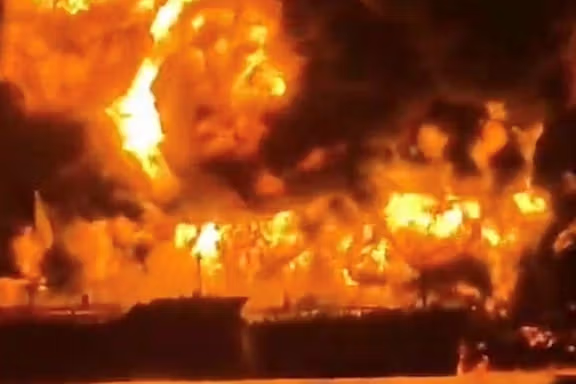
Elsewhere in the region, Tehran and its proxies have been blamed for strikes on civilian infrastructure—including a desalination plant in Bahrain.
Arab League Secretary-General Ahmed Aboul Gheit denounced Iran’s “reckless policy,” reflecting broader anxieties among smaller Gulf states.
Reactions from Qatar, Kuwait and the United Arab Emirates have reflected concern about escalation, as the leadership transition coincided with direct attacks on regional infrastructure.
Turkey
In Turkey, President Recep Tayyip Erdogan struck a supportive tone, calling Iranian officials “brothers” and expressing hope they would “get through this trap-filled period.”
Ankara has also criticized US strikes and appears likely to maintain pragmatic engagement with Iran’s leadership to avoid instability along its borders.
Russia, China and the EU
Russia’s President Vladimir Putin was among the first to respond, calling Ali Khamenei’s death a “cynical murder” and describing him as an “outstanding statesman.” His message to President Massoud Pezeshkian emphasized solidarity with Iran during the transition.
China adopted a more cautious tone, stressing respect for Iran’s sovereignty and opposing regime change. Chinese officials framed the succession as a constitutional matter and an internal Iranian process.
The European Union’s reaction has been more fragmented. Diplomats say some member states quietly hope the transition could open space for political change, while others fear instability could widen the conflict. Publicly, EU officials have emphasized de-escalation regardless of who leads Iran.
None of the three powers aligned with Tehran as the United Nations condemned IRGC-linked attacks on regional targets this week.
Israel
Israel was the only country in the region to explicitly question the legitimacy of Mojtaba’s appointment, describing it as a continuation of what it called the IRGC’s “terror regime.”
Even before the appointment, Defense Minister Israel Katz wrote on X that “any leader appointed to continue the plan to destroy Israel will be an unequivocal target for elimination.”
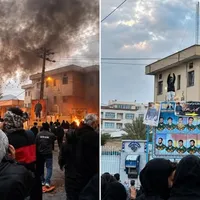
Public reactions across Iran and parts of the Arab world have been mixed. Some early expressions of relief at Ali Khamenei’s death gave way to concern about escalation as Mojtaba’s ties to the IRGC came into focus.
Across the region, officials and analysts say the leadership transition has reinforced fears that an already volatile conflict could widen further in the weeks ahead.