• Iran Insight
  • Politics
  • Economy
  • Analysis
  • Special Report
  • Opinion
  • Podcast
All rights reserved for Volant Media UK Limited
volant media logo
  • العربية
  • فارسی
Brand
  • Iran Insight
  • Politics
  • Economy
  • Analysis
  • Special Report
  • Opinion
  • Podcast
  • Iran Insight
  • Politics
  • Economy
  • Analysis
  • Special Report
  • Opinion
  • Podcast
  • Theme
  • Language
    • العربية
    • فارسی

UK Foreign Office staff celebrated Islamic revolution at Iran embassy - report
Mar 12, 2026, 19:07 GMT

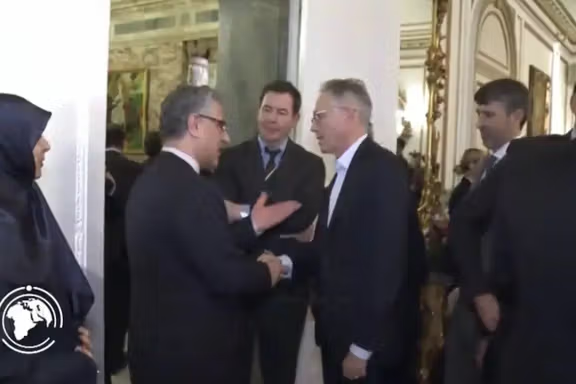
UK Foreign Office staff attended a reception at the Iranian embassy in London celebrating the anniversary of the Islamic Revolution just weeks after at least 36,500 protestors were massacred by security forces in Iran, The Telegraph reported.

The event took place on Feb. 12, with guests including British civil servants attending the embassy gathering in London.

The Telegraph citied a video released by the embassy showing guests mingling with Iranian officials shortly before the outbreak of war between Iran and the United States and Israel.

Images from the reception also showed a banner displaying portraits of Ayatollah Ali Khamenei and Ruhollah Khomeini, the report said.

At the London event, Seyed Ali Mousavi, Iran’s ambassador to the UK, delivered a speech praising the Islamic Republic and criticizing Western sanctions.

“For nearly half a century, Iran has faced relentless pressure; from the eight-year imposed war and severe sanctions to acts of sabotage and terrorism,” Mousavi said, according to the report.

“Nevertheless, by relying on domestic capabilities, national cohesion and empowered human resources, it has achieved significant progress.”

Priti Patel, Britain’s shadow foreign secretary, criticized the attendance of UK officials at the event, calling it “disgraceful” in comments to the newspaper.

“It’s disgraceful that in the wake of the Iranian government slaughtering tens of thousands of its own citizens … Foreign Office officials have been paying homage to the Islamic revolution in Iran,” she said, according to the report.

The UK Foreign Office defended the attendance, saying representation at such events was part of normal diplomatic engagement.

“It is the job of the Foreign Office to maintain diplomatic relations with countries across the globe, and it is standard practice as part of that engagement for the UK to be represented at these kinds of national day events,” a spokesperson said, according to the report.


Most Viewed

Iran keeps oil flowing to China as Hormuz pressure forces reserve release
1
INSIGHT

Iran keeps oil flowing to China as Hormuz pressure forces reserve release

2
EXCLUSIVE

Desertions, shortages and army-IRGC rift strain Iran’s military

3

US Senators urge probe of strike that killed scores of children in Iran

4

Iran’s unseen new leader issues first message in writing

5

Tehran checkpoints hit in reported drone attacks

Banner
Banner

Spotlight

  • Allies rally, rivals brace after Mojtaba Khamenei’s rise
    INSIGHT

    Allies rally, rivals brace after Mojtaba Khamenei’s rise

  • Checkpoint attacks open new front in Iran war
    INSIGHT

    Checkpoint attacks open new front in Iran war

  • Power vs piety: Khamenei Jr inherits legitimacy dilemma of Iran's theocracy
    ANALYSIS

    Power vs piety: Khamenei Jr inherits legitimacy dilemma of Iran's theocracy

  • Can widening the war save Iran’s rulers?
    ANALYSIS

    Can widening the war save Iran’s rulers?

  • Hormuz disruption tests limits of global energy markets
    ANALYSIS

    Hormuz disruption tests limits of global energy markets

  • Inside the dramatic escape of Iranian women footballers seeking asylum
    INSIGHT

    Inside the dramatic escape of Iranian women footballers seeking asylum

•
•
•

More Stories

Allies rally, rivals brace after Mojtaba Khamenei’s rise

Mar 12, 2026, 18:23 GMT
•
Behrouz Turani

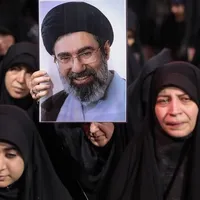
Regional reactions to the appointment of Mojtaba Khamenei as Iran’s new Supreme Leader have revealed growing anxiety about stability, with Tehran’s allies condemning the killing of his father and adversaries hardening their military posture.

Khamenei Jr’s continued absence from public view has fueled speculation among analysts and diplomats about how power is being exercised during the transition.

The message read on his behalf on state television on Thursday was viewed by some observers as closely aligned with the Revolutionary Guards (IRGC) messaging, prompting questions about the balance between formal leadership and the IRGC.

As expected, Tehran’s regional non-state allies in Iraq, Yemen and Lebanon have rallied around the new leader, calling him the “Leader of the blessed Islamic Revolution.” His ascendence to power is perceived by these armed groups as continuity in funding and weapons transfers.

Not many share this view in the region and beyond.

Arab neighbors

Across the Persian Gulf, Mojtaba’s appointment has been met with a mix of defensive military posturing, criticism, and calls for closer security coordination.

Tensions with Saudi Arabia rose sharply after his appointment when an Iranian strike hit a Saudi residential area. Prior reporting in US media, including The Washington Post, indicated Riyadh had privately urged Washington to use significant military force to prevent Iran from emerging stronger after the transition.

Elsewhere in the region, Tehran and its proxies have been blamed for strikes on civilian infrastructure—including a desalination plant in Bahrain.

Arab League Secretary-General Ahmed Aboul Gheit denounced Iran’s “reckless policy,” reflecting broader anxieties among smaller Gulf states.

Reactions from Qatar, Kuwait and the United Arab Emirates have reflected concern about escalation, as the leadership transition coincided with direct attacks on regional infrastructure.

Turkey

In Turkey, President Recep Tayyip Erdogan struck a supportive tone, calling Iranian officials “brothers” and expressing hope they would “get through this trap-filled period.”

Ankara has also criticized US strikes and appears likely to maintain pragmatic engagement with Iran’s leadership to avoid instability along its borders.

Russia, China and the EU

Russia’s President Vladimir Putin was among the first to respond, calling Ali Khamenei’s death a “cynical murder” and describing him as an “outstanding statesman.” His message to President Massoud Pezeshkian emphasized solidarity with Iran during the transition.

China adopted a more cautious tone, stressing respect for Iran’s sovereignty and opposing regime change. Chinese officials framed the succession as a constitutional matter and an internal Iranian process.

The European Union’s reaction has been more fragmented. Diplomats say some member states quietly hope the transition could open space for political change, while others fear instability could widen the conflict. Publicly, EU officials have emphasized de-escalation regardless of who leads Iran.

None of the three powers aligned with Tehran as the United Nations condemned IRGC-linked attacks on regional targets this week.

Israel

Israel was the only country in the region to explicitly question the legitimacy of Mojtaba’s appointment, describing it as a continuation of what it called the IRGC’s “terror regime.”

Even before the appointment, Defense Minister Israel Katz wrote on X that “any leader appointed to continue the plan to destroy Israel will be an unequivocal target for elimination.”

Public reactions across Iran and parts of the Arab world have been mixed. Some early expressions of relief at Ali Khamenei’s death gave way to concern about escalation as Mojtaba’s ties to the IRGC came into focus.

Across the region, officials and analysts say the leadership transition has reinforced fears that an already volatile conflict could widen further in the weeks ahead.

Israel releases footage of airstrikes on Basij checkpoints in Tehran

Mar 12, 2026, 18:10 GMT

The Israeli military on Thursday released footage of its drone attacks against Basij checkpoints and paramilitary forces in Tehran over the past 24 hours.

"In recent days, the Israeli military identified that Basij forces had established checkpoints at several locations across the city of Tehran. Following the identification of these deployments, the Air Force, guided by the Military Intelligence Directorate, carried out strikes over the past 24 hours targeting the checkpoints and the Basij forces stationed there, killing them," the IDF said in a statement.

"These armed forces are considered part of the Iranian regime’s security apparatus and in recent years have been responsible for carrying out terrorist plans and operations. The strikes were part of a phase aimed at deepening the blow to the core layers and key infrastructure of the Iranian terrorist regime.

Israel says anyone serving Iran’s regime not immune from attacks

Mar 12, 2026, 16:27 GMT

Anyone serving Iran’s regime is not immune from being attacked, an Israeli military spokesperson told a press conference for Persian-language media representatives on Thursday.

“Every individual, every figure, every institution, every organization, every group — anyone who is serving the regime — is not immune from attacks,” the spokesperson said.

The spokesperson referred to the recent Israeli drone attack on Basij and Law Enforcement checkpoints in Tehran, describing them as part of broader efforts to undermine the Islamic Republic's internal security apparatus.

“Every person who is serving them, whether in the Basij forces, the police, or the Revolutionary Guards, is certainly considered both a threat to Israel and to the people of Iran,” the spokesperson added.

The spokesperson said Israel achieved air superiority across Iran’s airspace within 24 hours of the strikes which began on Feb 28.

“Within 24 hours, air superiority across Iran’s entire airspace was achieved.”

So far more than 7,000 hours of operational flights have been carried out, the spokesperson said.

“The Israeli Air Force has carried out more than 4,200 strike sorties across Iran and attacked 3,400 targets, including 750 targets in Tehran. In total, more than 10,000 different types of munitions have been used in this operation.”

The spokesperson said more than two-thirds of Iran’s ballistic missile launchers have been destroyed and that most of Iran’s air defense capabilities are now out of action.

“Most of Iran’s air defense capabilities are now out of action and there is almost full freedom of action for air forces.”

The spokesperson said Iran has changed its missile launch strategy as its missile capabilities have weakened.

“Previously, a massive wave of ballistic missiles would be launched, but now the waves have been divided,” the Israeli military said. “Previously, tens of missiles would be launched in each wave, but now ten waves are carried out with one missile. In this way they want to show that they still have the capability.”

The spokesperson added that this is the reason for the intermittent sounding of warning sirens in Israel.

Khamenei's wife is alive, IRGC outlet says denying official reports

Mar 12, 2026, 15:44 GMT

Mansoureh Khojasteh Bagherzadeh, the wife of Iran’s slain Supreme Leader Ali Khamenei, is alive and earlier reports claiming she had been killed were incorrect, the IRGC-affiliated Fars News reported Thursday.

The report came after questions were raised earlier in the day when the new Supreme Leader, Mojtaba Khamenei, did not mention his mother’s death in his first statement.

In the days following Khamenei’s killing, several state media outlets had reported that his wife had also been killed.

Trump says Iran footballers should not attend World Cup for their own safety

Mar 12, 2026, 15:30 GMT

"The Iran National Soccer Team is welcome to The World Cup, but I really don’t believe it is appropriate that they be there, for their own life and safety," US President Donald Trump said in a post on Truth Social on Thursday.

Iran's sports minister said on Wednesday Team Melli will not participate in the 2026 World Cup after co-host the United States launched airstrikes alongside Israel that killed Iran’s Supreme Leader Ali Khamenei and triggered a wider regional conflict.

“Our children are not safe and, fundamentally, such conditions for participation do not exist,” the minister said.