• Iran Insight
  • Politics
  • Economy
  • Analysis
  • Special Report
  • Opinion
  • Podcast
All rights reserved for Volant Media UK Limited
volant media logo
  • العربية
  • فارسی
Brand
  • Iran Insight
  • Politics
  • Economy
  • Analysis
  • Special Report
  • Opinion
  • Podcast
  • Iran Insight
  • Politics
  • Economy
  • Analysis
  • Special Report
  • Opinion
  • Podcast
  • Theme
  • Language
    • العربية
    • فارسی

Missile hits Italian base in Erbil, no injuries reported

Mar 12, 2026, 06:50 GMT

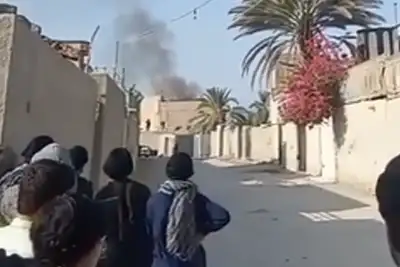
An Italian military base in Erbil in Iraq’s Kurdistan region was struck by a missile overnight, but no injuries were reported, Italy’s defense ministry said on Thursday.

The ministry said all Italian personnel were safe and Defense Minister Guido Crosetto was in constant contact with senior military commanders following the incident.

Foreign Minister Antonio Tajani also said in a post on X that Italian troops had taken shelter in a bunker and were safe.

Italy has around 300 troops in Erbil, where they are training Kurdish security forces, according to the defense ministry.

Most Viewed

Can widening the war save Iran’s rulers?
1
ANALYSIS

Can widening the war save Iran’s rulers?

2

Britain bans London Quds Day march run by pro-Islamic Republic group

3

Tehran checkpoints hit in reported drone attacks

4

US Senators urge probe of strike that killed scores of children in Iran

5
ANALYSIS

Power vs piety: Khamenei Jr inherits legitimacy dilemma of Iran's theocracy

Banner
Banner

Spotlight

  • Allies rally, rivals brace after Mojtaba Khamenei’s rise
    INSIGHT

    Allies rally, rivals brace after Mojtaba Khamenei’s rise

  • Checkpoint attacks open new front in Iran war
    INSIGHT

    Checkpoint attacks open new front in Iran war

  • Power vs piety: Khamenei Jr inherits legitimacy dilemma of Iran's theocracy
    ANALYSIS

    Power vs piety: Khamenei Jr inherits legitimacy dilemma of Iran's theocracy

  • Can widening the war save Iran’s rulers?
    ANALYSIS

    Can widening the war save Iran’s rulers?

  • Hormuz disruption tests limits of global energy markets
    ANALYSIS

    Hormuz disruption tests limits of global energy markets

  • Inside the dramatic escape of Iranian women footballers seeking asylum
    INSIGHT

    Inside the dramatic escape of Iranian women footballers seeking asylum

•
•
•

More Stories

Witnesses report explosions and troop deployments in Iran cities

Mar 12, 2026, 06:29 GMT

Explosions and the deployment of security forces were reported in several Iranian cities on Thursday, according to eyewitness accounts sent to Iran International.

Several loud blasts were heard around 2 am in the Azimiyeh district of Karaj, central Iran, while residents in Kashan, north-central Iran, reported multiple explosions around 4 am. A separate witness account said an attack occurred around 1 am in the port city of Bandar Sirik, southern Iran.

In Ahvaz, southwestern Iran, five explosions were reported around 7 am in a northern district, which witnesses said appeared to be linked to the area of the 92nd Armored Division. Three additional explosions were reported further south after the sound of fighter jets was heard. Witnesses also reported a missile strike on air defenses in the Persian Gulf island of Qeshm.

Witness accounts also indicated security forces had been deployed in public facilities. In Lahijan, northern Iran, equipment belonging to security forces was seen at Takhti stadium, while in Shiraz, southwestern Iran, witnesses said Imam Reza school was being used as a base for Basij forces.

In Malayer, western Iran, witnesses said IRGC forces moved from their base at Sepah Square to the Ebtekar technical school on Parastar boulevard, and security forces were seen gathering at locations along Saadi street.

Only Iranians can bring down Islamic Republic, Israel FM says

Mar 12, 2026, 05:19 GMT

Israeli Foreign Minister Gideon Sa’ar said on Wednesday that Israel cannot bring down Iran’s ruling system and that only the Iranian people can topple the Islamic Republic.

Speaking to The Times of Israel, Sa’ar said Iranians would need outside assistance if they were to succeed in regime change.

“Ultimately, we cannot topple the regime, only the Iranian people can,” he said. “At the same time, we must say that without external assistance they have no chance to topple the regime.”

Sa’ar added that there were “visible cracks” within Iran’s leadership, though he said hardline figures still controlled the government.

“Usually such things [as the fall of a regime] happen after the military campaign, less so when there’s a war,” he said.

The Israeli foreign minister said regime change was not an explicit goal of Israel’s, but that Israel sought to create conditions that could enable such an outcome.

UN to discuss Iran snapback sanctions on Thursday, US envoy says

Mar 12, 2026, 01:58 GMT

The United Nations Security Council is expected to hold discussions on snapback sanctions on Iran on Thursday, US ambassador to UN said on Wednesday.

"And then tomorrow again, what the heck is the UN good for? Well, tomorrow we're going to have them talking about snap back sanctions and keeping the maximum pressure up that President Trump put in place his first term and put back in place this second term," Waltz said on Fox News.

"So we're fighting the fight on all fronts, and this is the diplomacy that we can have on the world stage to match what our great war fighters are doing," he added.

Senator Fetterman backs aggressive action against Iran’s leadership

Mar 12, 2026, 01:47 GMT

Senator John Fetterman expressed strong support for US military strikes on Iran’s top officials, saying critics of recent operations “don’t understand” the threat posed by the Iranian regime.

Fetterman defended Washington’s campaign against Iran’s leadership, saying all including son of Ali Khamenei should be killed too.

Tehran steps up threats against critics at home and abroad

Mar 12, 2026, 00:31 GMT
•
Maryam Sinaiee

Threatening rhetoric on Iranian state television has intensified fears of renewed repression, as presenters and officials warn critics at home and abroad they could face confiscation of property, prison or even death.

On Tuesday, Reza Molaei, a presenter on Iran’s state-run Channel 3, delivered a sharply worded message directed at government opponents living abroad. “When the dust of sedition settles, we will grab you by the collar,” he said during the broadcast.

Footage widely shared online showed him going further, referring to an earlier warning from Iran’s prosecutor general and suggesting critics could face deadly consequences so that “their mothers would sit in mourning.”

The broadcast followed a statement Monday by Iran’s Office of the Prosecutor General warning Iranian citizens abroad they could face severe penalties—including confiscation of assets and even the death penalty—if they engage in what authorities describe as “cooperation with the enemy.”

Although framed in terms of espionage or intelligence activity, the warning has raised alarm among members of the Iranian diaspora who regularly organize anti-government protests in major cities worldwide.

Participants in those rallies say authorities could identify them through social media posts or videos from demonstrations and target them or their families inside Iran.

Inside the country, officials have issued similarly stark warnings.

Ahmadreza Radan, Iran’s police chief, said in a televised interview on March 9 that individuals who take to the streets “at the enemy’s behest” would be treated not as protesters but as hostile actors.

“If someone comes to the streets at the enemy’s behest, we do not see them as a protester—we see them as an enemy, and we will deal with them accordingly,” he said. “All our forces have their fingers on the trigger and are ready.”

The phrase appeared to reference calls by US and Israeli leaders urging Iranians to challenge the government.

The climate of intimidation has also extended to Iranian athletes abroad.

Several members of Iran’s women’s national football team sought asylum in Australia after declining to sing the national anthem before a match against South Korea, two days after the killing of Supreme Leader Ali Khamenei—a gesture many observers interpreted as protest against the crackdown.

During a television program, presenter Mohammad Reza Shahbazi denounced the players as “traitors in a time of war,” accusing them of disrespecting the country and calling for harsh punishment.

Legal advocacy group Dadban—run by volunteer lawyers in the Iranian diaspora—warned the rhetoric appearing on state media could legitimize violence against civilians.

“When such threats are aired by official media, it sends the message that deadly force against protesters may be considered legitimate,” the group said. “This seriously increases the risk of escalating violence against citizens.”

The threats come two months after the deadly suppression of nationwide protests in January, which left many in Iranian society still shaken and wary of renewed confrontation.

Some activists say the warnings will not deter them from opposing the government, while others have used the moment to highlight what they describe as decades of pressure on Iranian citizens both inside and outside the country.