• العربية
  • فارسی
Brand
  • Iran Insight
  • Politics
  • Economy
  • Analysis
  • Special Report
  • Opinion
  • Podcast
  • Iran Insight
  • Politics
  • Economy
  • Analysis
  • Special Report
  • Opinion
  • Podcast
  • Theme
  • Language
    • العربية
    • فارسی
  • Iran Insight
  • Politics
  • Economy
  • Analysis
  • Special Report
  • Opinion
  • Podcast
All rights reserved for Volant Media UK Limited
volant media logo

US has destroyed almost all of Iran's enrichment capabilities, Witkoff says

Mar 10, 2026, 16:41 GMT+0

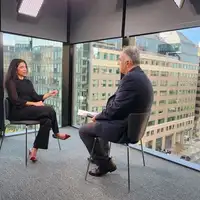
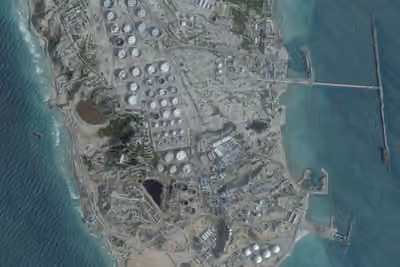
The United States has destroyed almost all of Iran’s uranium enrichment capability, White House Special Envoy Steve Witkoff told CNBC.

"Let's see if Iranians want to talk," he added.
Most Viewed

Iran's carpet exports collapse from $2.5 billion to near zero, official says
1

Iran's carpet exports collapse from $2.5 billion to near zero, official says

2

Iran has failed to export crude oil by sea for 28 days - TankerTrackers

3

Iran executes man over accusations of spying for Israel

4
SPECIAL REPORT

How one Tehran hospital became a window into Iran’s January massacre

5
VOICES FROM IRAN

Iranians told to post pro-government content to regain internet access

Banner
Banner

Spotlight

  • Tehran and Beijing close ranks as Trump heads to China
    INSIGHT

    Tehran and Beijing close ranks as Trump heads to China

  • Cambridge probes Iran scholar over alleged fabricated interviews

    Cambridge probes Iran scholar over alleged fabricated interviews

  • Iran looks to China for guarantees in future US deal
    INSIGHT

    Iran looks to China for guarantees in future US deal

  • How one Tehran hospital became a window into Iran’s January massacre
    SPECIAL REPORT

    How one Tehran hospital became a window into Iran’s January massacre

  • Iranians told to post pro-government content to regain internet access
    VOICES FROM IRAN

    Iranians told to post pro-government content to regain internet access

  • Fog of war meets fog of law in the Strait of Hormuz
    OPINION

    Fog of war meets fog of law in the Strait of Hormuz

•
•
•

More Stories

Iran releases footage of missile launches against Israel

Mar 10, 2026, 16:06 GMT+0

“I will spill the blood of Zionists to avenge the blood of my leader, Seyyed Ali,” a missile operator is heard shouting as he launches a ballistic missile toward Israel.

Iran’s IRGC said on Tuesday it fired Emad, Qadr, Kheybarshekan and Fattah missiles in its latest barrage.

Satire spreads online as Iranians await new leader unveiling

Mar 10, 2026, 15:08 GMT+0
•
Arash Sohrabi

Within hours of Mojtaba Khamenei being named Iran’s new Supreme Leader, state institutions responded with solemn messages of loyalty while Persian-language social media filled with satire, as many Iranian users reacted with disbelief, political frustration and dark humor.

Rather than confronting the official narrative head-on, many posts mocked the opaque and unusual circumstances of Mojtaba’s rise – especially the emergence of a leader who, for many Iranians, remains almost entirely unseen.

The jokes fall broadly into several recurring themes.

‘A leader no one has seen'

Many jokes focus on Mojtaba Khamenei’s near-total absence from public life.

Unlike most senior political figures, Mojtaba has rarely appeared in speeches or interviews, and only a handful of recordings of his voice are publicly known.

Some users turned this into a technological joke. One widely shared post said:

“There isn’t even enough audio of Mojtaba Khamenei for AI to train on to make a fake voice of him.”

Others simply pointed to the unusual situation more directly.

“We are entering the second day of Mojtaba Khamenei's leadership, and still nobody has seen him.”

Several posts framed the absence through humor about remote work – a concept familiar to many younger Iranian users.

“If you like working remotely, the best job is Supreme Leader of the Islamic Republic. Nobody asks where you are, what you’re doing, or even whether you’re alive.”

Another post used religious imagery to exaggerate the idea that he has remained invisible.

“We’re in a situation where the appearance of Mahdi is more likely than the appearance of Mojtaba.”

Mahdi – the messianic figure awaited in Shiite Islam – frequently appears in Iranian satire as a way of describing events considered extremely unlikely.

Another viral joke suggested Mojtaba’s leadership was almost abstract.

“In the phrase ‘Mojtaba’s leadership,’ the literary device being used is personification.”

The remark plays on a Persian rhetorical term used in literature classes, implying that leadership is being attributed to something that has not visibly acted.

'The only known quote'

Another recurring joke centers on how little Mojtaba Khamenei has publicly said.

One of the few widely circulated videos attributed to him shows him announcing that his religious classes would be canceled.

That short clip has now become a punchline.

One post summarized the situation: “The only existing quote from Imam Mojtaba Khamenei: ‘Next week there will be no class.’”

The post was accompanied by a parody image styled like the decorative wall murals commonly seen on schools and public buildings in Iran, where passages from religious figures and political leaders are often painted alongside floral designs.

In the satirical version circulating online, however, the wall bears only the mundane line about next week’s class being canceled – recasting an ordinary notice as the supposedly defining quotation of a newly appointed Supreme Leader.

Other jokes focused on Mojtaba’s lack of a public résumé. One post mocked the situation using corporate language:

“You don’t have a résumé, you want to work remotely, you got the job through connections – and you don’t even have a photo for your CV so they have to generate one with AI.”

Another user suggested that even performing a simple task could count as experience.

“At least bury your father so you can have one executive job on your résumé.”

‘Schrödinger’s Khamenei’

A darker strand of satire reflects the uncertainty and speculation that often accompany major political events in Iran.

Some jokes played with the idea that Mojtaba’s status remains ambiguous because he has not appeared publicly.

One widely shared post referenced the famous physics thought experiment known as Schrödinger’s cat:

“I think instead of Schrödinger’s cat we’re dealing with Schrödinger’s Khamenei. Until they show him, we don’t know whether he’s alive or dead.”

Some posts jokingly suggested that naming Mojtaba as leader could solve several political problems at once.

“Announcing Mojtaba as leader was actually smart. You can’t kill someone who’s already dead.”

Another post used similarly blunt humor:

“You know what’s better than one dead Khamenei? Two dead Khameneis.”

Other jokes focused on the strange overlap between the funeral of the late leader and the introduction of the new one. One user wrote sarcastically:

“Right now the Islamic Republic has two leaders on earth – one they won’t bury and another they won’t reveal.”

Even the burial itself became a subject of dark humor.

“The only reason they haven’t buried Khamenei yet is to save funeral costs – they’re waiting a few days to bury Mojtaba too.”

Iran says it arrested 30 people accused of spying for US, Israel

Mar 10, 2026, 14:17 GMT+0

Iran’s intelligence ministry said it had identified and arrested 30 people it accused of spying for the United States and Israel.

In a statement, the ministry said the suspects included alleged spies, domestic operatives and media-linked figures across several provinces.

"Over the past few days, 30 spies, domestic mercenaries and operational elements of the American-Zionist enemy were identified and arrested," the ministry said.

The mood inside Iran as Khamenei's son takes power

Mar 10, 2026, 14:16 GMT+0
•
Behrouz Turani

Mojtaba Khamenei’s rise to power amid a war with Israel and the United States—in which his parents, wife and a daughter were killed—has led many to wonder whether his leadership will be shaped more by vengeance than by strategy or reconciliation.

Inside Iran, political figures who disappeared from public view after the February 28 strike are gradually re-emerging through statements congratulating him on his elevation to leadership.

Among them are Mohammad Mohammadi Golpayegani, the former leader’s chief of staff, and Asghar Mirhejazi, his powerful security chief, who issued a rare joint message despite earlier reports that Mirhejazi had been killed in the attack.

Former President Mahmoud Ahmadinejad, also rumored to have died in a strike on his home, released a similar message.

These congratulatory notes appeared during one of the most solemn Shiite mourning periods, commemorating Imam Ali. At the same time, part of the country is mourning the former leader, while Mojtaba himself is grieving the loss of close family members.

State officials, including President Masoud Pezeshkian, Majles Speaker Mohammad Bagher Ghalibaf and security chief Ali Larijani, have recently appeared in simple, Zelensky-style military uniforms without insignia. All three have pledged allegiance to Mojtaba.

Social media has filled with dark humor about Ali Khamenei’s death and Mojtaba’s life expectancy.

More serious posts include the resurfacing of an old video circulated widely on X, reportedly with IRGC encouragement, in which reformist politician Faezeh Hashemi says she would prefer Mojtaba to the “fanatic elderly candidates” for leadership. Like others, she suggested he might introduce reforms.

Mojtaba’s record since 2005, however—particularly during elections and protest crackdowns—offers little evidence of reformist tendencies. Many analysts warn that Iran may become even more radicalized under his rule, noting his long-standing ties to vigilante groups involved in suppressing dissent.

Debate over hereditary succession has intensified. Critics argue that dynastic leadership contradicts the Islamic Republic’s founding principles. Others counter that hereditary succession mirrors the lineage of the Twelve Imams.

Members of the first group note that Khomeini’s son Ahmad was never allowed to inherit power—an argument echoed implicitly by some of Khomeini’s descendants, including his great-grandson Ali, on X.

Former IRGC commander Mohsen Rezaei and former state TV chief and tourism minister Ezzatollah Zarghami have both said they have been close friends of Mojtaba for years, describing him as “modest” and “simple.”

Rezaei, who appeared frequently on state television after Khamenei’s death, has promised to share more about Mojtaba in the coming days.

State TV’s IRINN channel has twice acknowledged that Mojtaba’s leadership faced serious resistance within the Assembly of Experts. In an unusual live broadcast comment, one analyst even suggested opposition to Mojtaba might emerge from within his own support base.

Some media outlets, including Khabar Online, cautiously suggested this week that Mojtaba’s rise could signal a more prolonged and unpredictable phase of conflict, reflecting broader uncertainty inside Iran’s political establishment over the direction his leadership may take.

Iranian cyber suspect wanted by FBI killed in US-Israeli strikes

Mar 10, 2026, 13:59 GMT+0

Mohammad Mehdi Farhadi Ramin, an Iranian man wanted by the Federal Bureau of Investigation over alleged cyberattacks, was killed last week in the city of Hamadan during joint US-Israeli strikes on Iran, a review by Iran International of state funeral announcements showed.

Farhadi had been wanted by US authorities since 2020 on accusations of taking part in cyber intrusions targeting entities in the United States and several other countries.

US documents accuse him and another suspect of illegally accessing computer systems and stealing hundreds of terabytes of data, including information related to national security, foreign policy, civilian nuclear research, aerospace data and unpublished scientific studies.

A funeral for Farhadi was held on Monday in Hamadan.