With officials apparently convinced that the Geneva talks would not satisfy Washington’s demands over Tehran’s nuclear and missile programs, the government rallied more than 500 Iranians—described as celebrities, academics and public figures—to sign a letter headlined “No to War.”
Many signatories were reformist figures of varying prominence, along with individuals whom Iranian lawyer Hassan Assadi Zeidabadi described in a post on X as “employees of the President’s Office, advisers to cabinet ministers, and staff of state-owned companies and government funds presented as political activists.” He called the initiative deceptive.
Published by the government-owned Iran newspaper and echoed by other outlets, the letter urged the public to press foreign powers to halt any planned attack before it materializes.
The appeal for restraint did not stem the flow of bravado from Iranian politicians and military commanders.
Former Foreign Minister Manouchehr Mottaki addressed the United States using slang associated with Tehran’s street toughs (jahel)—a coded signal that “this time, we mean it.” His remarks were widely mocked online.
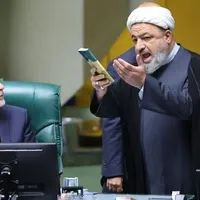
Hardline MP, Abolfazl Zohrehvand, warned Washington against targeting Khamenei or his son in coarse language. Only days earlier, he had declared: “Trump is not brave enough to attack Iran.”
As the Geneva talks began, several outlets openly acknowledged the risk of conflict.
The official IRNA news agency wrote that “if the negotiations fail, the situation will move toward dangerous ambiguity and a possible military conflict,” adding that “successful negotiation in Geneva is the only way to prevent a new war.”
Headlines in IRNA and Fararu were blunt: “If we do not reach an agreement today, we will be moving toward war.”
Later on Thursday, Oman’s foreign minister, Badr Albusaidi, announced that the third round of talks had concluded and would resume next week in Vienna.
Axios reported, citing a source familiar with the discussions, that chief US negotiators Steve Witkoff and Jared Kushner were “disappointed” by what they heard from Iran’s foreign minister during the morning session.
'At any price'
Meanwhile, economic outlets in Tehran spoke of “early alarms of high war risk.” Eghtesad News reported that traders were rushing to convert assets into foreign currency or gold “at any price” to hedge against a potential collapse in talks.
The unease spilled into consumer behavior. Iranians bought gas canisters, candles and emergency supplies amid fears of fuel shortages, power cuts or casualties. Fararu described the rush as a reflection of growing public anxiety.
Universities shifted classes online—officially to contain ongoing student protests, but also as a precaution against possible conflict. According to Nour News, even calm and remote provinces such as Yazd were affected.
Even Kayhan, closely aligned with Khamenei and typically focused on projecting stability, acknowledged that reports of US aircraft carrier deployments had unsettled public sentiment.
Still, it insisted that “although some 40,000 US troops have been deployed to the region, Iran is capable of inflicting serious harm on Israel and the United States, even at high cost.”
The oscillation between alarm and defiance points to a system projecting strength while betraying unease—an establishment at once threatening war and visibly anxious about it.