Iran experienced in January its most widespread and sustained unrest since the founding of the Islamic Republic, as protests spread across cities and provinces and authorities responded with an escalating crackdown that analysts say reflects a deepening crisis of legitimacy at the core of the state.
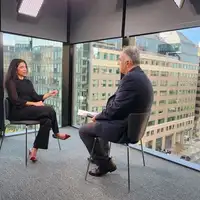
Speaking during a special Iran International Insight town hall on Wednesday, experts said the scale, persistence and decentralization of the unrest signal a structural rupture between state and society - one repression alone may no longer be able to contain.
In what participants described as one of the harshest security responses in recent years, tens of thousands have been killed, detained or interrogated. Rather than restoring order, panelists argued, the severity of the crackdown underscores mounting anxiety within the leadership about the durability of its authority.
A widening legitimacy gap
Political scientist Mohammad Ghaedi said each protest cycle deepens what he described as a structural legitimacy deficit.
“In democracies, when we ask why leaders should rule, the answer is because they are elected by the nation,” he said. “But if you ask that question of Iranians, there is no clear answer — because 47 years ago, Ayatollah Khomeini deceived the nation.”
According to Ghaedi, the leadership is fully aware of this vulnerability.
“They have to respond in a way that makes the nation unwilling to protest again. That explains the brutality of the repression,” he said.
From mega-triggers to permanent volatility
Bozorgmehr Sharafedin, a senior Iran analyst and Head of Digital at Iran International, said the protest landscape has fundamentally shifted.
“Iranian society has wisely moved from demonstrations triggered by mega-triggers to minor triggers,” he told the panel moderated by Gelareh Hon. “Minor triggers are very difficult for the government to contain because they're not centralized, they're unpredictable and they're emotionally charged.”
Instead of singular catalytic events driving nationwide mobilization, grievances now simmer across economic, social and political spheres — producing recurring, localized flare-ups that strain security forces and steadily erode the state’s ability to project control.
Sharafedin framed the crisis around three central actors: Ali Khamenei, Donald Trump and the Iranian public.
“The social contract between Khamenei and the people has expired,” he said. “Either the Supreme Leader reaches a deal with Trump at the expense of the people, or Trump sides with the people against the Islamic Republic. In both scenarios, Khamenei loses,”
Economic hardship and ideological erosion
Mohammad Machine-Chian, a senior journalist at Iran International and a former researcher at the University of Pittsburgh, argued that the unrest reflects both deep economic distress and mounting ideological rejection.
“Demanding a normal material life is in and of itself a rejection of Khomeinism — the whole ideology of the Islamic Republic, which prescribes abandonment of material life and demands sacrifice for the state” he said.
He cited soaring prices as a daily pressure reshaping public sentiment.
“Inflation is nearly 60%. Food inflation is about 72%. If we go deeper, it gets uglier — cooking oil around 200%, and red meat over 100%. This is the reality people are dealing with.”
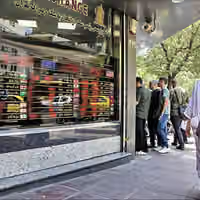
Beyond inflation, he said, the regime’s traditional pillars are weakening. The Islamic Republic was historically sustained by an alliance between the bazaar and the mosques — institutions that once anchored its social legitimacy.
“The bazaar is finally breaking completely with the Islamic Republic,” he said. “Mosques now have detention centers. They no longer serve a social or civil purpose in Iranian society.”
Panelists also highlighted what they described as a significant psychological shift within society: foreign assistance, once politically taboo, is now openly debated.
Audience questions addressed policy trade-offs in the United States, concerns in Turkey over possible regional escalation, and the apparent weakening of Tehran’s regional proxy network.
The town hall concluded that the Islamic Republic faces converging pressures — eroded legitimacy, weakened institutions, economic deterioration and a society increasingly detached from the ideological foundations of the state. While repression may buy the leadership time, panelists said it no longer restores authority or rebuilds public consent.