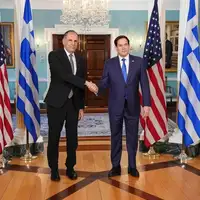
University in Tehran backs Prince Pahlavi for fostering national convergence


A student-linked newsletter at Iran’s Khajeh Nasir University of Technology said on Wednesday it backed exiled Prince Reza Pahlavi as a key figure for national convergence and political change, according to a statement published on its Telegram channel.
“The Khajeh Nasir Newsletter, in continuation of its previous positions and within the framework of its historical and national responsibility, announces its explicit and clear support for Prince Reza Pahlavi as one of the key alternatives for fostering national convergence, moving beyond the current situation, and rebuilding the governance structure in Iran,” read the statement.
The statement was released on 22 Bahman (11 February), the day the Pahlavi dynasty was overthrown, giving way to the establishment of the Islamic Republic.
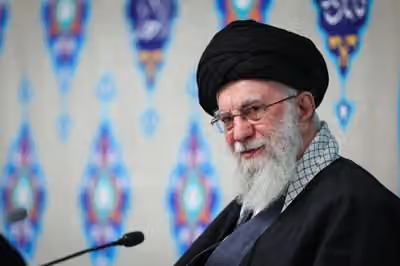

The arrest of several prominent reformist figures in Tehran appears less aimed at silencing dissent than at tightening control at a moment of acute vulnerability for the state, as Iran navigates renewed talks with the United States under the shadow of war.
The detentions, which have targeted senior members of the Reform Front of Iran and figures associated with President Masoud Pezeshkian, come as the Islamic Republic remains shaken by the deadliest crackdown in its history.
The protests, which gained momentum after a call by exiled Prince Reza Pahlavi, were crushed by the Islamic Republic’s live fire, leading to the massacre of at least 36,500 people.
The arrests also come at a time when Tehran’s theocracy is deeply uncertain about the trajectory of diplomacy with Washington.
Officials have framed the arrests as a response to “coordination with enemy propaganda” and efforts to undermine national cohesion—language that signals heightened sensitivity to any challenge to the state’s narrative at a time of external pressure.
With talks with the United States back on track, Iran’s leadership appears intent on closing ranks at home, moving to eliminate deviations from the official line, particularly among figures who until recently were tolerated as part of a tightly managed political spectrum.
Public statements by judicial and security bodies have offered little ambiguity. Those detained have been accused of promoting “surrenderism” toward the United States and acting in the interests of Israel.
The hardline daily Kayhan, whose editor is appointed by the supreme leader, described those arrested as extremists who had aligned themselves with “overthrowists,” effectively placing even moderate critics beyond the pale.
The detainees
Those detained include senior figures from the Reform Front and its largest constituent party, the Union of Islamic Iran People Party. Among them are Azar Mansouri, head of the Reform Front; Javad Emam, its spokesman; former diplomat Mohsen Aminzadeh; and the veteran politician Ebrahim , the leader of radical students who stormed the US embassy in 1980.
One case appears to reflect a clearer red line.
An audio recording that circulated online captured remarks by Ali Shakouri-Rad, a senior party figure, who rejected the official account of the recent protests and accused security forces of manufacturing violence.
“Security institutions in Iran, in every protest, have injected violence to use it as a pretext for repression,” he said. “It has been like this from the beginning, and it has gotten worse day by day.”
Yet for much of Iranian society—still grieving the mass killing of protesters in January—this confrontation within the political elite has the feel of an argument unfolding in a parallel universe.
The protests, which began over economic hardship and rapidly escalated into nationwide calls for the overthrow of the Islamic Republic, were met with overwhelming force. Tens of thousands were killed in a matter of days, according to internal assessments reviewed by Iran International.
In the aftermath, Pezeshkian and the moderate camp from which he emerged broadly aligned themselves with the state’s narrative, avoiding public confrontation with the security establishment.
That alignment proved decisive. For many Iranians, Pezeshkian’s election in 2024 represented a final, tentative wager on incremental change from within the system. His conduct during and after the crackdown extinguished that hope.
Against that backdrop, the latest arrests appear less a dramatic rupture than a belated narrowing of a political space that had already collapsed in the public mind.
The exception lies with a small group of activists who crossed a line the system still treats as inviolable. Several of those detained were linked to a January 2 statement signed by 17 political and civil figures declaring the Islamic Republic illegitimate and calling for a peaceful transition of power.
Unlike most reformist figures, the signatories explicitly rejected the framework of the existing order, underscoring where the authorities continue to draw their true red lines.
Figures associated with the 2009 Green Movement have also been swept up, including advisers and relatives of its leaders, Mir-Hossein Mousavi and Mehdi Karroubi. Mousavi, under house arrest for more than a decade, recently described the killing of protesters as a “black page in Iran’s history” and called on leaders to step aside.
As negotiations with the United States resume amid warnings of war, the leadership is signaling that internal discipline will take precedence over political pluralism — even of the carefully managed kind once associated with reformism.
For most Iranians outside the corridors of power, however, the arrests change little. Few still see themselves reflected in the state’s internal disputes.

The Canadian Senate held a hearing on Tuesday on a new immigration and border security bill with much of the discussion focusing on individuals allegedly linked to the Islamic Republic living freely in Canada.
The bill, dubbed C-12, introduces strict asylum filing deadlines, shifts many decisions to paper-based reviews, expands border officers’ powers to search digital devices without judicial oversight, and allows the government to suspend visas and permits for public interest reasons.
Among those who testified were Ardeshir Zarezadeh, a lawyer and president of the International Centre for Human Rights, Timothy McSorley, National Coordinator of the International Civil Liberties Monitoring Group; as well as representatives from Amnesty International and the UN Refugee Agency, UNHCR.
“Thousands of Iranians have been killed in the streets simply for protesting, while at the same time individuals affiliated with the Iranian regime are able to live comfortably in Canada and benefit from Canadian values,” Zarezadeh said.
He called the bill’s emphasis on asylum deadlines a “misdirection” and said Canada already has tools to identify and deport Islamic Republicagents — the failure is in “weak visa screening systems prior to entry.”
Other witnesses argued that rigid one-year claim deadlines disproportionately harm genuine refugees, especially those traumatized or suddenly displaced, while security threats often enter with fraudulent documents and evade such barriers.
While the government emphasizes the need for swift passage of the bill to address US border security concerns, the Senate committee is currently synthesizing these expert testimonies to prepare its final report.
Canada last week condemned the killing of protesters and use of violence by Iranian authorities after a video shared by Iran International showed an armored vehicle operated by Iranian security force running over demonstrators in Ardabil, northwest of Iran.
Human rights advocates in Canada are urging the country’s national police to gather evidence on Canadians linked to Iran’s repression apparatus after thousands of protesters were killed in January.
The push comes amid mounting demands for accountability after Iran International’s Editorial Board confirmed that more than 36,500 Iranians were killed by security forces during the January 8–9 crackdown, the deadliest two-day protest massacre in history.
Advocates say Canada must ensure perpetrators cannot find refuge abroad — and that Iranian Canadians have a direct avenue to report evidence.

US President Donald Trump told Fox Business on Tuesday he thinks that Iran wants to make a deal with the US on its nuclear and ballistic missile programs, and it would be "foolish" if they did not.
"I think they want to make deal, I think they'd be foolish if they didn't. We took out their nuclear power last time, and we'll have to see we take out more this time," Trump said in an interview with Larry Kudlow.
Asked if Iran could be trusted with any deal, Trump said he is not certain but said Tehran seems willing to make a deal.
"I don't know. I mean, I don't know. I know one thing, they want to make a deal. They wouldn't talk to anybody else, but they're talking to me. But, you know, it's a good question. A lot of people say no. And I would say that I'd rather make a deal. It's got to be a good deal. No nuclear weapons, no missiles, no this, no that, all the different things that you want," he said.
Trump criticized previous administrations approach to Iran, saying the 2015 nuclear deal with Iran was very weak.
"But some people worry that they've been very dishonest with us over the years, right? Very dishonest. Obama and Biden, what they did in terms of creating a monster with Iran was terrible. That Iran nuclear deal was one of the dumbest deals I've ever seen," Trump said.
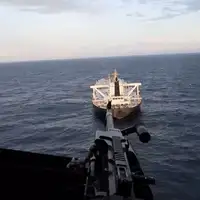
The Trump administration is weighing the seizure of foreign tankers transporting Iranian oil to ramp up economic pressure on Tehran, the Wall Street Journal reported on Tuesday.
Officials are discussing using US Navy or Coast Guard forces to intercept and confiscate vessels in international waters. The move would target ships often using ship-to-ship transfers and false documents to disguise Iranian crude.
The proposal, still under debate in the National Security Council and State Department, would escalate beyond current secondary sanctions on buyers and shipowners.
Mohsen Dehnavi, spokesperson for Iran’s Expediency Council, said Tehran rebuilt its missile power so rapidly after the 12‑day war with Israel and the US in June that it achieved a new level of deterrence and forced the other side back to the negotiating table.
“The enemies wish for Iran’s missile capabilities to return to pre‑12‑day‑war levels. But in warhead technology, air‑defense evasion, production volume, and stockpiling, we reached a level of deterrence in just a few months that brought the other side to negotiations,” official media cited Dehnavi as saying.
He added that Iran’s missile expertise is indigenous and cannot be destroyed.