Khamenei advisor warns of immediate countermeasures after EU move on Guards
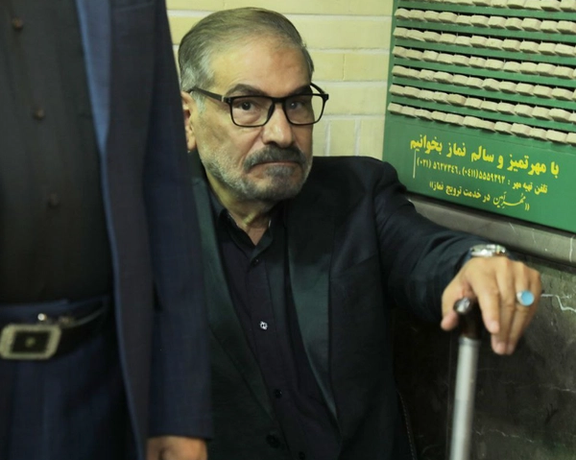

A senior adviser to Iran’s supreme leader warned on Friday that Tehran would take immediate countermeasures after the European Union designated Iran’s Islamic Revolutionary Guard Corps as a terrorist organization.
Ali Shamkhani said in an X post that the West was misusing the concept of terrorism, accusing the US and Europe of double standards.
“The West doesn’t define terrorism, it uses it,” Shamkhani wrote, adding that labeling the Guards while backing what he described as violence elsewhere showed how the concept had been distorted. “Countermeasures will be immediate,” he said.


Iran’s parliamentary education commission said some students under 18 were detained during recent protests and that police have yet to respond to questions about arrests and casualties among schoolchildren.
Alireza Monadi Sefidan, head of the commission, said it sent a letter to the national police asking whether any students were among those detained and seeking information on students killed or injured, according to the ILNA news agency.
“We have not yet received a response to this letter,” Monadi said, adding that the request was sent through parliament’s security office.
The commission’s deputy head, Farshad Ebrahimipour Noorabadi, said it was clear that “there are some students under 18 among those detained,” and that the education ministry should step in to address their cases.
Ebrahimipour said people under 18 are subject to specific legal procedures and that the aim was for them to return to their families as soon as possible.

Iran is reviewing possible steps in response to a European Union move to label the Islamic Revolutionary Guard Corps a terrorist group, the semi-official Mehr News Agency reported, citing a source familiar with the matter.
The source said four measures were being discussed and drafted for possible government action.
One proposal would shift protection of European diplomatic missions in Iran from the national police to the Revolutionary Guards, the source said.
Another would involve special inspections of commercial ships heading to European destinations by the Guards’ naval force, according to the report.
The source said authorities were also reviewing the collective expulsion of European military attachés from Tehran.
A fourth proposal would remove special airport protocols for European diplomats and subject them to inspections “like ordinary people,” the source said.
A senior official at Iran’s Medical Council confirmed on Friday that some doctors were arrested during recent protests, though no official figures were available.
“During the recent protests, regardless of the reasons or the number, there are some doctors who have been detained,” Mohammad Mirkhani, the council’s social and parliamentary deputy, was quoted as saying.
He said reliable and official data on detained doctors was difficult to obtain. “Most of this information comes from conversations with other colleagues who say a certain doctor has been arrested, and we are required to verify these reports,” he said.
Iranian Foreign Minister Abbas Araghchi arrived in Istanbul on Friday and said Tehran was holding close consultations with Turkey as regional tensions rise.
“There are serious challenges in the region, and the goals stated by the United States and others require closer consultations,” Araghchi said on arrival, according to state media.
He said he would meet his Turkish counterpart and President Tayyip Erdogan during the visit.
Araghchi also criticized Europe, saying its approach toward Iran was weakening. “Europe is in decline, and its action against the Islamic Revolutionary Guard Corps was a strategic mistake,” he said.
“They will soon realize that they made a mistake,” he added.
Britain is unlikely to take part in a US attack on Iran but could help protect allies in the Persian Gulf if Tehran retaliates, British sources told the Guardian, pointing to a recent deployment of RAF Typhoon jets to Qatar.
The Typhoon squadron was deployed at Qatar’s request to help defend the country against possible drone or missile attacks, the sources said. Qatar hosts the largest US air base in the region.
A first strike on Iran would be unlikely to align with Britain’s view of international law, but British forces could become involved if allies such as Qatar faced attacks in self-defense, the sources said.
Prime Minister Keir Starmer said on Thursday the priority was preventing Iran from obtaining nuclear weapons and working with allies toward that goal, declining to speculate on possible US military action.