Trump weighs Iran strike options to spur ‘regime change’ - Reuters


US President Donald Trump is weighing options against Iran aimed at creating conditions for “regime change,” including targeted strikes on security forces and leaders, two US sources familiar with the discussions told Reuters.
The sources said Trump wanted to inspire protesters after a crackdown crushed a nationwide protest movement earlier this month. Options under review included strikes on commanders and institutions Washington holds responsible for the violence, to give protesters confidence they could challenge the state, they said.
One source said advisers were also discussing a broader strike with lasting impact, possibly against Iran’s ballistic missile forces or nuclear enrichment facilities. Trump has not yet made a final decision, another source said.
Trump urged Iran last week to come to the table and make a deal on nuclear weapons, warning that any future US attack would be more severe than previous strikes, and describing US warships moving into the region as an “armada,” Reuters reported.
Lufthansa and its affiliated carriers said they will extend the cancellation of night flights to and from Tel Aviv’s Ben Gurion Airport through Feb. 3 due to the situation in the Middle East.
The Lufthansa Group, which includes SWISS, Austrian Airlines, Brussels Airlines and Eurowings, has been operating all Tel Aviv services as daytime flights since Jan. 15 and had planned to do so through Jan. 31 amid concerns over possible hostilities involving Iran.
The airline group said some canceled night flights would be rescheduled to daytime hours to ease travel for passengers, adding that flight crews would not remain overnight in Israel during the period.
Kayhan, a hardline Iranian newspaper overseen by a representative of Iran’s supreme leader, said Iran has a right to close the Strait of Hormuz and argued such a move would be legal under international law.
“Closing the Strait of Hormuz is our legitimate right,” Kayhan wrote. “This action is both legal and revolutionary.”
The newspaper said Western assertions that any Iranian action in the strait would breach international rules were part of “Western propaganda,” adding that a review of international conventions showed Iran had “full legal justification” to block the waterway.
Kayhan said decisions on whether passage through the strait was harmless rested with Iran as the coastal state, arguing that tankers linked to countries pressuring Tehran could not be considered “innocent passage.”
“If Iran cannot export its oil, no country in the Persian Gulf will be able to export its oil,” the paper said, calling the option of closing the strait a strategic and rational response to US pressure.
Iranian officials have repeatedly warned in the past that Tehran could disrupt shipping through the Strait of Hormuz, a key route for global energy supplies, if it comes under severe pressure.

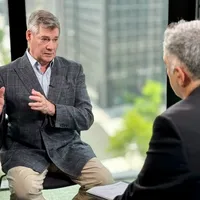
Iran is open to talks with the United States if negotiations are "genuine," the speaker of Iran’s parliament said, warning that Tehran would retaliate if it came under attack, according to an interview broadcast by CNN.
Mohammad Bagher Ghalibaf told CNN that Iran was ready to negotiate but questioned Washington’s intent. “We are ready for talks, but I do not think that is the kind of talk the president of the United States is after; he just wants to impose his will,” he said.
Speaking amid a buildup of US forces in the Middle East, Ghalibaf warned that Iran would respond to any military action. “Maybe Mr. Trump can start a war, but he doesn’t have control over how it ends,” he said.
Ghalibaf blamed foreign actors for unrest in Iran and said authorities would pursue those responsible for killing security personnel during the protests, while also pointing to US sanctions as a major cause of Iran’s economic problems, CNN reported.

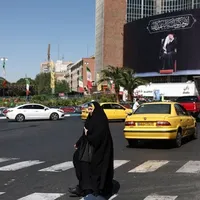
The possibility of US military action against Iran is eroding Iranians’ purchasing power and deepening their sense of insecurity, according to Iranian economic news outlets which provide a rare window into economic behavior amid an internet blackout.
Financial woes helped spark anti-government protests late last which which were crushed with deadly force, in a bloody crackdown in which security forces killed thousands.
The political uncertainty and a threat of attack by the United States has only deepened
Several economic publications, including Donya‑ye Eghtesad, the state‑run ISNA, and Tejarat News, published guidance on Tuesday advising citizens on how to protect their assets from devaluation, how to plan purchases to minimize the impact of price hikes and when to buy essential goods amid market volatility.
Reports indicate that many people are stockpiling non‑perishable items, viewing goods as safer than cash amid relentless inflation.
Those with savings, they noted, have increasingly turn to gold in any form, seeing it as a hedge against currency devaluation and a liquid asset that can be converted into cash at any time.
At the same time, households are keeping only small amounts of cash on hand, enough to cover basic needs in the event of internet outages that could disrupt ATMs and banking services.
The outlets warned that persistent inflation was fuelling panic buying of basic necessities that was distorting normal spending habits.
Economic malaise has festered as the Iranian rial currency again hit a new low this week and the internal crackdown suggests no near resolution to deep US and international sanctions along with persistent corruption and mismanagement.
US President Donald Trump on Tuesday suggested Iran would face a harsh attack if it did not accede to demands by Washington over its nuclear program and military posture.Iranian foreign minister Abbas Araghchi responded that Tehran was ready with “fingers on the trigger.”
The Shargh newspaper wrote that foreign policy news and not economic it is not economic fundamentals were driving market behavior and fears assets would devalue further.
The Economic dailies predicted that the impact on food and essential goods prices would be sharp and unavoidable.
As Donya‑ye Eghtesad observed, Iran’s economy is effectively in a state of suspended animation, with the key to stability lying in the hands of diplomats.
This prolonged uncertainty, the paper argued, is creating chronic anxiety among the public: a volatile mix of fear, despair, and anger that increasingly blames authorities deemed responsible for managing the crisis.
The European Union is likely to add Iran’s Islamic Revolutionary Guard Corps to its list of terrorist organizations, the bloc’s foreign policy chief Kaja Kallas said Thursday, ahead of a meeting of EU foreign ministers.
Speaking before the foreign affairs council, Kallas said the EU was preparing additional sanctions against Iran and expected the designation of the Revolutionary Guard to follow.
“We are putting new sanctions on Iran and I also expect we will list the Islamic Revolutionary Guard Corps as a terrorist list,” she said.