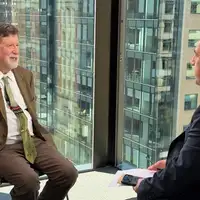
The transformation of funerals into celebrations is a deliberate act of resistance, said Siavash Rokni, an expert on Iranian popular culture.
“If you, the Islamic regime, are telling me that I need to cry at the deathbed of my child, I will laugh just to defy your existence," Rokni told Iran International
Rokni said the funerals-turned-celebrations strike at one of the clerical establishment's defining pillars, overturning the Islamic Republic’s long-standing use of grief and martyrdom as a galvanizing force.
With the internet crackdown still in place, footage from these funerals is only now beginning to surface.
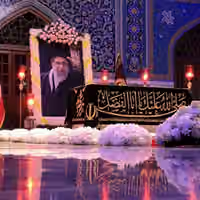
Traditionally in Iran, funerals are defined by grief: mournful music, Islamic sermons and Quranic recitations. But what is unfolding now looks completely different.
The songs being played are the kind usually reserved for weddings. People clap. They dance.
Across Iran, families are transforming burials into acts of resistance.
The relatives and close friends of slain protesters Mohammad-Hossein Jamshidi and Ali Faraji honored their memory with music and applause as they were laid to rest at Hesar Cemetery in Karaj, west of Tehran, according to a video obtained by Iran International.
In Lordegan, mourners chanted “Death to Khamenei” and “This is the final battle — Pahlavi will return” during the funeral of Ali Khaledi, with the pre-1979 Lion and Sun flag raised above the crowd.
Sina Haghshenas, a young florist from northern Iran, was also killed during the nationwide uprisings by the Islamic Republic. At his funeral, mourners celebrated his life even in death — refusing silence, and turning grief into a final act of pride and defiance.
It is not customary in Iran to hold funerals with dancing and clapping, but this has become a form of protest among families who have lost loved ones.
Holly Dagres, a senior fellow at the Washington Institute, said the scenes reflect a profound shift in Iranian society.
"For the Islamic Republic, that is a very worrying thing, that instead of these people mourning and being traumatized by what has happened, which they are to an extent, they're celebrating. And that means to me and signifies that this is a people that's no longer afraid of the Islamic Republic.”
By rejecting religious rituals and replacing them with wedding music, families are sending a clear and defiant message.
“Whether you're simply looking at the fact that Iranians are calling their martyrs, not martyrs but Javid Nam, or 'long-lived name,'" said Behnam Ben Taleblu, director of the Foundation for Defense of Democracies’ Iran Program.
"There are many, many signs that the Iranian population, even as they grieve are trying to push past the discourse imposed on them by the Islamic Republic," he said.
More than 36,500 Iranians were killed by security forces during the January 8-9 crackdown on nationwide protests, according to documents reviewed by Iran International's Editorial Board, making it the deadliest two-day protest massacre in history.
For many Iranians, the celebrations are not a denial of loss but a declaration that fear has broken.
In the face of mass killings, families are reclaiming the meaning of death from a theocratic system that has long weaponized mourning and turned funerals into acts of national resistance, where even in grief, their message of defiance is clear.