Billionaire investor Ackman urges Trump to attack Iran citing morgue film
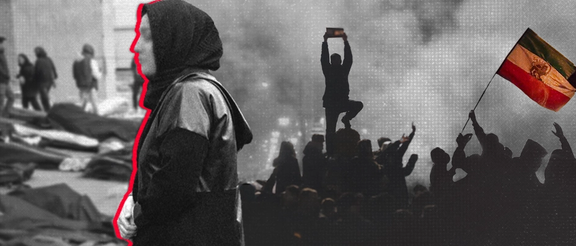
US billionaire investor and political donor Bill Ackman called on President Donald Trump on Tuesday to topple Iran's leadership, after sharing a documentary by Iran International on the January 2026 massacre that shows graphic footage of protesters’ bodies inside Tehran’s Kahrizak morgue.
"Leaving these monsters in control ... remains an extremely serious persistent and long-term existential threat to the United States and to the world at large," Ackman wrote in a long post on X.
"President Trump, you are a man of your word. You drew a red line about the regime killing protesters," he added. "President Trump, it is time to finish the job.
Ackman urged Trump, Secretary of State Marco Rubio and Secretary of Defense Pete Hegseth to watch the Iran International documentary “Iran’s 2026 Massacre: Inside the Kahrizak Morgue.”
“The film bears witness to one of the greatest crimes against humanity in recent decades,” Ackman said.
Conservative TV host Mark Levin, who has repeatedly called for a US military attack to overthrow Iran's theocracy, reposted the message.
Republican Senator Ted Cruz also shared the documentary, saying it is worth watching.




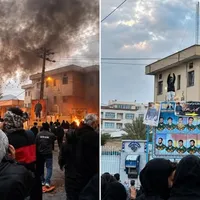
According to a message shared with Iran International from an alleged eyewitness, security forces in Mashhad stopped an ambulance during the January 7–9 protests and entered the vehicle.
Iran International could not immediately corroborate the veracity of the account amid an internet shutdown authorities imposed on Jan. 8 lingers.
The source says they then fatally shot five wounded protesters inside, reportedly including a 15‑year‑old girl, and threatened the ambulance driver and doctor to stop treating injured demonstrators.
The same source also said several people who were previously arrested alive were returned to their families about a week later shot dead.
Iranian authorities are arresting medical professionals for treating injured anti-government protesters, according to London-based oncology professor Shahram Kurdasti from King's College.
Named detainees cited by the professor include urologist Alireza Rezaei in Tehran, healthcare employee Matin Moradian in Mashhad, neurosurgeon Saber Dehghan in Sirjan, general surgeon Farhad Naderi in Gorgan, and Ameneh Soleimani in Ardabil.
The crackdown aims to intimidate healthcare workers and conceal evidence of violence against demonstrators, Kurdasti told Iran International, adding that medical neutrality is a core ethical duty and treating the injured is not a crime.
Former Iranian footballer Mohammad-Hossein Hosseini, who was detained amid nationwide protests earlier this month, has been charged with moharebeh or enmity against God, a charge that carries the death penalty under Iranian law, people familiar with the matter told Iran International.
The sources, who asked not to be named for fear of retaliation, said Hosseini was informed of the charges after being transferred to Vakilabad Prison in Mashhad and told that a court hearing would be held in the coming days.
They said authorities have not allowed him access to a lawyer. According to the sources, prison officials on Tuesday showed Hosseini a written notice listing additional charges of assembly and collusion, cultural propaganda against the system, damage to public property, and leading unrest.
Hosseini, 26, a former youth player for Persepolis and Sepahan from the northeastern city of Mashhad, was detained at around 4 p.m. on January 13, after security forces raided his home.
Hosseini has been arrested six times since 2022, the sources said. His previous detention before this case was linked to his attendance at the seventh-day memorial ceremony on Dec. 12 for Khosrow Alikordi, a lawyer and human rights activist.
The gathering turned into a protest against authorities whom attendees blamed for the jurist's death, leading to attacks on the demonstrators and many arrests.
As Iran’s authorities continue sealing off global internet access, thousands of Iranian volunteers abroad are helping users inside the country slip through what few narrow digital cracks remain.
Thousands of diaspora users have downloaded and run an application called Psiphon Conduit that allows them to securely share part of their bandwidth with the widely popular censorship circumvention tool Psiphon, helping users inside Iran maintain access to it.
By leaving unused phones or computers connected to home Wi-Fi networks and power, they have created small, fragile bridges that help keep Psiphon reachable from inside Iran.
In recent days, many Iranians who had been offline since the shutdown began January 8 have managed to contact relatives and friends via WhatsApp and Telegram or publish posts on social media after nearly two weeks of silence.
The closure coincided with two days of mass killings of protestors by security forces.
Psiphon
Much of the recent connectivity has been enabled by Psiphon Conduit, an application designed to function during severe censorship and shutdowns.
In recent days, many diaspora users with unlimited internet access have installed Psiphon Conduit and kept spare devices continuously connected. Inside Iran, users searching for a connection are automatically matched with these external helpers, allowing limited access to the global internet.
Each external user can enable access for roughly 25 people, albeit at low speeds.
The connection is considered relatively secure because traffic ultimately exits through Psiphon servers, meaning neither the Iranian user’s IP address nor the intermediary’s IP address is directly exposed.
According to Psiphon’s official website, Iran currently has more Psiphon users than any other country.
On January 22, more than half of the 2.8 million recorded Psiphon Conduit connection attempts originated from Iran. At the time of writing, more than 40,000 Iranian users were connected simultaneously, according to the site’s live data.
Other means, brief openings
Some users inside Iran report occasional success using the Tor Project’s Snowflake feature, Lantern’s unbounded mode, or WireGuard-based tools, though speeds are often extremely slow and unreliable.
Others say that, at times, unfiltered international internet access briefly becomes available on certain mobile operators in specific provinces. These short windows may be the result of technical glitches or testing of filtering methods, allowing users momentary passage through the state-imposed digital barrier.
The government has effectively sealed Iran’s internet by blocking international gateways and many VPN protocols. Under these conditions, traffic cannot normally leave the country, while limited domestic connectivity—such as banks, government services, and some content delivery networks—remains active.
Tools like Psiphon Conduit exploit narrow pathways that cannot be fully closed without disrupting the state’s own systems. They disguise encrypted traffic as ordinary web activity and route it through these small openings.
When shutdowns occur, users who already have the application installed do not need to download anything new; traffic begins flowing through whatever cracks remain.
This access, however, is far from comprehensive. Telegram or X may load sporadically, images and videos upload slowly, and connections frequently drop and reconnect.
Life online remains unstable
On Friday, Fars News Agency, which is affiliated with the Islamic Revolutionary Guard Corps, said global internet access would be restored within 24 hours. Still, the closure continues.
Currently, the only access provided to users inside the country is to a highly unstable, filtered intranet, largely cut off from the global network.
Users say even domestic websites and government-linked platforms frequently disconnect, making basic tasks such as banking or administrative work difficult and at times impossible.
One user wrote on X: “Living without internet access, confined to a handful of domestic media outlets and news agencies and a few foreign satellite channels, is one of the darkest human experiences."
Others say that while they are relieved to have escaped two weeks of digital darkness, gaining access to information and videos withheld during that period has also caused profound distress.
Dark days, costly workarounds
Following the internet and phone shutdowns on January 8—and the violence of that day and the next—some Iranians traveled to border regions, used SIM cards from neighboring countries or left Iran entirely to regain connectivity and share footage with the outside world.
The first video showing large numbers of bodies at the Kahrizak forensic medicine center reportedly reached media outlets days later, filmed by someone who said they had traveled more than 1,000 kilometers to access the internet. Others shared limited information using Starlink, despite significant personal risks.
According to the monitoring site Filterban (Filter Watch), more than 300 hours of internet disruption pushed international connectivity into a black market. Proxies and configurations were reportedly sold at inflated prices—up to $15 for 10 GB of access which is a huge sum in Iran—amid widespread fraud.
Economic damage
For many, internet access is not optional. Hundreds of thousands of small and home-based businesses—from handicrafts and agricultural products to online language and music lessons —have been severely disrupted or effectively shut down.
Officials have yet to present a clear plan for restoring connectivity.
Mohammad-Jafar Ghaempanah, the president’s executive deputy, has said the government itself suffers losses from internet shutdowns, acknowledged that filtering fuels public dissatisfaction, and apologized for the disruption.
At the same time, hardline figures such as Hossein Shariatmadari, editor of the Kayhan newspaper, continue to advocate for permanent use of the National Information Network— an intranet system designed to sever direct, universal access to the global internet.
A long video of an Iranian father's agonized trudge among the bloodied corpses of slain protestors in a Tehran morgue in search of his son has seared viewers with the enormity of the state's mass killings this month.
Its emotional sting is so sharp that Iranian state media is seeking to dismiss the heart-rending scene as a fake aimed at sapping national morale, in an effort that was refuted by online sleuths.
Filmed inside the Kahrizak forensic complex, the film shows rows of black body bags laid side by side spilling onto outside pavements on a blustery day.
The father calling out again and again to his missing son Sepehr as if he could answer as he navigates among hundreds of bodies and shrieking loved ones.
Over the course of nearly twelve minutes, the father moves through the nightmarish space, stepping past blood trails left by dragged corpses and parents opening body bags to discover slain sons.
His voice trembles as he calls out: “Sepehr, daddy's Sepehr, where are you, my son? Sepehr, get up, I’ve come for you! I’ll find you, son!”
Screams and sobs from disconsolate relatives punctuate his walk. “Khamenei, you bastard, may God curse you," he finally mumbles weakly. "Come and see what you’ve done … you’ve killed so many young people.”
The video never shows whether the father ultimately finds his son, intensifying the tragedy for many viewers.
State media pushback
Almost simultaneously with the video’s circulation, reports emerged of the death of another young protester, Sepehr Ebrahimi, a 19-year-old amateur boxer killed during protests in Andisheh town in the west of Tehran.
Iran’s state broadcaster, which has a long record of reshaping protest narratives and airing interviews with families under pressure from security agencies, aired a clearly scripted interview with Ebrahimi’s family. The segment framed the viral video as a fabrication by opposition media.
In the broadcast, Ebrahimi’s parents denied any connection to the 'Where are you, son' video, describing themselves as loyal supporters of the Islamic Republic.
His father said their son had left home only to go to a sports club and was killed “for the homeland and the Islamic system” by “rioters and terrorists.” He added that he was an active Basij member and that his brother had died in the Iran-Iraq war. Ebrahimi’s mother spoke of her son’s devotion to the Quran.
The broadcast immediately circulated online, where pro-government users used it to discredit critics and protest reporters.
One wrote: “They made Sepehr their symbol, but didn’t know he was religious, Quran-reading, an athlete — with a Basiji father and a martyr uncle. Now go look for a new project.”
Another added: “The counter-revolutionaries make a business out of people’s pain. But the voices of Sepehr’s parents were a strong slap in the face of this dark trade.”
For many Iranians, the episode recalled 2022, when state TV aired coerced statements from relatives of Nika Shakarami, a 16-year-old protester, to falsely claim she had committed suicide.
A longer cut emerges
In the initial version published by activist journalist Vahid Online, Sepehr’s surname is not mentioned. After the state TV broadcast, Vahid released a longer cut of the video containing additional audio.
In the longer cut, the father can be heard clearly saying the family name “Shokri” while searching among the bodies — confirming that the Sepehr in the video was not Sepehr Ebrahimi. Subsequently, photos of the 25-year-old Sepehr Shokri and footage of his funeral emerged on social media.
One X user noted: “The fact that the Islamic Republic could immediately find a Sepehr Ebrahimi to cover up the killing of another Sepehr shows how many bodies were there — enough to randomly pick one of the Sepehrs.”
Meanwhile, social media users examining Ebrahimi’s Instagram activity reported that he was indeed a protester and had liked posts by US-based exiled Iranian Prince Reza Pahlavi, contradicting claims that he was not a protester.
Efforts by Iran International to reach the family and ascertain whether Sepehr was found have not succeeded as an internet blackout in place since Jan. 8 persists.
For those who have watched his father's misery and shared his heartbreak, closure remains elusive.