President Trump received multiple US intelligence reports indicating that Iran’s government’s position is weakening, per people familiar with the information, the New York Times reported on Monday.
“While the protests have died down, the government remains in a difficult position. Intelligence reports have repeatedly highlighted that in addition to the protests, Iran’s economy is historically weak,” the report said.

Israel’s i24NEWS reported on Monday that the Trump administration is studying a naval blockade to choke off Iran’s oil exports, echoing the Venezuela playbook as US forces mass near Iranian waters.
“Among the options under review is a maritime cordon designed to stop Iran’s oil exports at sea,” the report said.

US President Donald Trump said the situation with Iran is “in flux” after he sent a “big armada” to the region but believes Tehran is eager to cut a deal, Axios quoted him as saying in an interview.
“We have a big armada next to Iran. Bigger than Venezuela,” Axios quoted Trump as saying.
“They want to make a deal. I know so. They called on numerous occasions. They want to talk.”
Axios reported that Trump declined to comment on the options presented to him by his national security team or which one he prefers.
Lebanese MP and Kataeb Party Leader Samy Gemayel on Monday replied to Hezbollah chief Naim Qassem's renewed pledge of allegiance to Iran and call for Israel's destruction, urging the Iran-backed armed movement to pursue any "suicide" mission alone.
"If you want to defend your master, go to him. If you want to commit suicide, do it alone, but leave Lebanon out of it," he wrote on X.

US President Donald Trump’s dramatic naval buildup in the Middle East appears to have generated more strategic uncertainty than clarity both in Tehran and in Washington.
Over the weekend, as the USS Abraham Lincoln carrier strike group moved closer to the Persian Gulf, US Central Command Commander Admiral Brad Cooper travelled to Israel—a visit widely interpreted as evidence of intensified coordination ahead of a potential move against Iran.
Trump has framed the possibility of intervention in explicitly humanitarian terms, warning Tehran against the killing of protesters and asserting that US pressure has already halted hundreds of planned executions.
Yet despite naval deployments, repeated warnings, and unmistakable signaling, no kinetic action has followed.
This restraint has endured even as credible estimates from human rights organisations and the United Nations place civilian deaths from the crackdown at over 20,000. Iran International’s editorial statement of January 25 cites a figure of 36,000 killed, making this the bloodiest episode in the Islamic Republic’s history.
Jurists and international lawyers have argued that the scale and systematic nature of the violence may fall within the jurisdictional scope of the International Criminal Court under the Rome Statute.
Washington’s response has followed a different rhythm: maximalist language paired with deliberate restraint. Carrier deployments have provided leverage; sanctions and tariffs have expanded; diplomatic and military signaling has intensified. But strikes—despite the scale of civilian killing—have not materialized.
Restraint as policy
What, then, is actually holding President Trump back?
Humanitarian concern looms large in Trump’s public messaging. But this framing sits in visible tension with the administration’s broader strategic doctrine.
The National Security Strategy of November 2025 reiterates an America First approach, prioritizing US interests while explicitly seeking to avoid committing American forces to conflicts that risk metastasizing into “endless wars.”
The 2026 National Defense Strategy adopts a markedly harsher register toward Iran. It accuses Tehran of having “American blood on its hands,” framing it not only as an abusive authoritarian regime but as an enduring strategic adversary.
And yet, in a notable departure from Trump’s instinctive aversion to foreign entanglement, he has drawn explicit red lines around the execution of protesters and the use of lethal force against demonstrators. Any prospective action, he has suggested, would be framed not as conquest or regime change, but as rescue.
The evidence, however, suggests that humanitarian imperatives function more as legitimizing rhetoric than as decisive drivers of policy. Had halting mass killing been the primary determinant, intervention might plausibly have followed the peak of repression in early January.
Instead, Trump has oscillated between “locked and loaded” warnings and expressions of hope that force will not be required.
Strategic calculations
The deeper constraints lie elsewhere—in hard strategic and political realities that humanitarian language alone cannot dissolve.
First, escalation risk dominates the calculus.
Tehran has made clear that any US strike would trigger retaliation across multiple theatres: Israel, American bases in the region, and potentially global energy routes. The prospect of asymmetric escalation—through ballistic missiles, proxy warfare, cyber operations, or disruption of the Strait of Hormuz—carries profound economic and security consequences.
Regional partners, including Israel, are widely reported to have urged caution, acutely aware that even a limited strike could spiral into a broader conflagration.
In this context, the “armada” functions less as a prelude to war than as a tool of coercive signaling: capability without commitment. Trump’s repeated insistence that he “would rather not see anything happen” reflects not humanitarian restraint, but an aversion to cascading costs that could rapidly exceed any political or strategic gain.
Second, domestic political calculations weigh heavily.
American fatigue with Middle Eastern military entanglements remains deep-seated. Polling consistently shows majority opposition to new wars, even when framed around humanitarian catastrophe.
Trump’s political identity remains rooted in rejecting the interventionist excesses of the post–Cold War era. Forceful rhetoric projects resolve, carrier deployments demonstrate action, sanctions impose pain—all without exposing U.S. forces to open-ended conflict.
Third, strategic leverage without war remains attractive.
The current posture weakens Iran indirectly. Pressure on the nuclear program intensifies. Economic isolation deepens through secondary sanctions and tariffs on third-party trade. Internal regime fissures may widen as elites confront the costs of isolation without the rallying effect of a foreign attack.
Humanitarian language helps justify this approach publicly, but the underlying strategy prioritizes containment, deterrence, and attrition—not Responsibility-to-Protect-style intervention.
All tabs open
Taken together, Trump’s posture reflects a president operating within a narrow corridor between moral outrage, strategic constraint, and political risk. Restraint, however, should not be mistaken for permanence.
The current alignment keeps open a range of options that could be activated rapidly should circumstances shift.
A limited, precision strike aimed at degrading Tehran’s capacity for internal repression would suggest a convergence between humanitarian rhetoric and coercive deterrence. A broader campaign would signal that strategic imperatives had finally eclipsed restraint.
For Iranians facing repression, this uncertainty itself exerts pressure—on the regime no less than on Washington.
For policymakers, the lesson is neither complacency nor inevitability, but clarity: intervention, if it comes, will arrive not as a moral reflex, but at the moment when humanitarian catastrophe, strategic threat, and political risk briefly align.
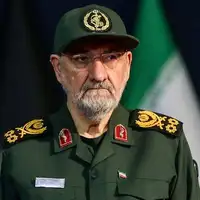
A senior Iranian military official said on Monday that the United States would not be able to mount a surprise or decisive blow against the Islamic Republic, state-affiliated Mehr News Agency reported.
The unnamed official at the Khatam al-Anbiya Central Headquarters, Iran's central military nerve center, was speaking as a US aircraft carrier, warships and fighter planes were arriving in the region.
US President Donald Trump is weighing options to attack the country after its mass killings of protestors, according to US media reports, and has favored overwhelming and decisive sharp blows against adversaries.
“The notion of carrying out a so-called limited, rapid and clean operation against Iran stems from incorrect assessments and an incomplete understanding of the defensive and offensive capabilities of the Islamic Republic,” the official said.
“Any scenario designed on the basis of surprise or controlling the scope of conflict will slip out of the control of its planners at the very early stages,” the official added.
“The maritime environment surrounding Iran is an indigenous and well-known environment and is fully under the oversight of the armed forces of the Islamic Republic,” he continued.
“The concentration and accumulation of extra-regional forces and equipment in such an environment is not a deterrent factor but rather increases vulnerability and turns them into accessible targets.”
The official said Iran’s armed forces track hostile activity before it reaches the operational stage.
“Any threat against Iran’s national security is being closely monitored, and appropriate decisions will be taken at the proper time,” he said.
“The armed forces of the Islamic Republic of Iran do not monitor enemy movements solely at the stage of action. Rather, the formation and early signs of any threat against the country’s national security are carefully monitored, and based on field assessments, appropriate decisions will be taken at the proper time,” he added.