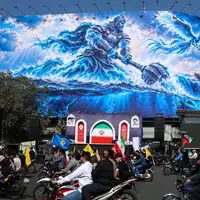
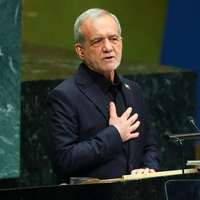
Iran's exiled Prince Reza Pahlavi said protests in Iran amounted to a genuine revolution but argued the country’s ruling authorities responded by turning their guns on the public.
Some members of the security forces, he told in an interview with the CNN, refused to report for duty, and added that several police officers who declined to take part in the crackdown were killed.
Iranians, Pahlavi said, wanted the world to understand they were not fighting only for themselves but for broader human freedom. Referring to warnings by Donald Trump about consequences for repression, he said decisive action could give protesters another chance to prevail.

Eyewitnesses from protests in the city of Dezful said security forces carried out widespread repression on January 8 and 9, firing directly at protesters’ heads and faces.
Local accounts described the clashes escalating into open street war, with anyone seen outside coming under fire.
Security forces, according to residents, used motorcycles to surround demonstrators and fired pellet guns, wounding large numbers of people.
Witnesses also reported the use of finishing shots and simultaneous aerial and direct gunfire to spread fear. One resident present in the city estimated the death toll at around 400, with thousands detained.

Iran's exiled Prince Reza Pahlavi emphasized the need for a secular democratic system in Iran anchored in free elections, presenting himself as a facilitator of a managed transition rather than a power seeker.
The outcome of any transition must be decided at the ballot box, he argued in an interview with Germany's ARD on Friday.
Pahlavi rejected holding or seeking office, describing his role as enabling change and ensuring autonomy and freedoms nationwide. He also pointed to visible public support inside Iran as evidence of broad backing for a democratic path.
Iran’s Supreme Leader Ali Khamenei ordered state media and security bodies to adopt a militarized approach toward controlling information, according to a new report by media freedom advocacy group DeFFI.
The Defending Free Flow of Information Organization (DeFFI) said its 2025 annual report documented 264 cases of intensified judicial and security pressure against journalists and media outlets, including arrests, interrogations, trials and operational disruptions.
The report says Iranian authorities now treat independent journalism as a security issue, framing the flow of information as a threat that requires a coordinated response by judicial, intelligence and media bodies.
Tehran’s increasingly combative official statements suggest its leaders may be taking US military deployments more seriously than Washington’s signals of diplomacy.
The aircraft carrier USS Abraham Lincoln, along with several destroyers and warplanes, is set to arrive in the Middle East in the coming days, Reuters reported on Thursday, citing two US officials.
Images and messages received by Iran International indicate that protesters in Karaj were killed by sniper fire during demonstrations, followed by the nighttime burial of victims, including a 16-year-old boy identified as Reza.
According to witness accounts on January 8 and at around 9:00 at night, Reza was shot dead in an alley in the Shahin Villa neighborhood. Witnesses said the shot was fired by a sniper positioned on the rooftop of a fruit shop.
Witnesses said Reza was moved after being shot into a nearby home’s parking area, where he died. After the situation calmed, his body was taken to a local clinic.
The following day, people close to the family were told that Islamic Revolutionary Guard Corps forces had buried the teenager’s body overnight and informed the family of the grave’s location.
According to residents, armed forces were deployed at Shahin Villa’s Eighth and Ninth bases and prevented people from approaching by firing live ammunition. Witnesses said at least six people were killed by gunfire on Shahin Villa Street alone, adding that the shooting appeared targeted, particularly against younger protesters.