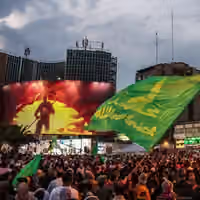
A group of Iranian artists, filmmakers and intellectuals including acclaimed director Jafar Panahi on Friday issued a statement condemning the mass killing of protesters by the Islamic Republic across Iran.
"We strongly condemn the widespread killing of Iranians by the Islamic Republic government during the nationwide uprising across Iran," the statement said.
“The killing and arbitrary detention of protesters constitute clear evidence of systematic violence against citizens and a serious violation of fundamental human rights, including the right to life and freedom of expression,” the statement says.
“We call on the international community, human rights organizations, global institutions and independent media to respond urgently, as lives of thousands of detainees are in serious danger and that silence at this moment could lead to irreversible and catastrophic consequences," the statement added.
The statement is signed by a number of high-profile cultural and academic figures, including Oscar-nominated actress Shohreh Aghdashloo, filmmakers Jafar Panahi and Mohammad Rasoulof, and Abbas Milani, a Stanford University historian and Iran scholar.
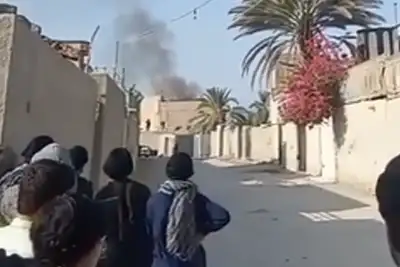

Recent statements by Iranian officials and their apparent acceptance by some foreign leaders have created a misleading sense of reassurance about the state’s response to the latest protests.
Foreign Minister Abbas Araghchi told Fox News on Wednesday that Tehran had “no plan to execute protesters.” President Donald Trump told reporters he had it “on good authority” that the killing of protesters had stopped.
White House Press Secretary Karoline Leavitt told reporters on Thursday that Tehran had halted 800 executions slated for the previous day following warnings by Trump.
Taken at face value, such statements by Iranian officialdom appear to mark official restraint. A closer look at the Islamic Republic’s record suggests otherwise.
Tehran has rarely—perhaps never—executed individuals under the formal charge of participating in an illegal gathering. Under Iran’s Islamic Penal Code, that offense does not carry the death penalty and is typically punishable by imprisonment.
In that narrow, technical sense, officials can plausibly claim that the state does not execute people for protesting. The distinction, however, lies in how protesters are subsequently defined.
Renaming protesters
Across successive protest movements, Iranian authorities have routinely reframed demonstrations by dividing participants into shifting categories: first “peaceful protesters” and “rioters,” and more recently “vandals,” “saboteurs” and “terrorists.”
These labels are not merely rhetorical. Each carries specific legal consequences.
“Security forces and the judiciary will show no tolerance whatsoever toward saboteurs," Iran's Supreme National Security Council said in a statement on Jan. 9.
The stark warning came a day after Supreme Leader Ali Khamenei said Tehran would accept legitimate economic protests but stop "rioters."
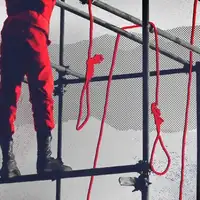
Once a detainee is removed from the category of protester, prosecutors gain access to a separate set of charges—including moharebeh (warring against God), efsad-fel-arz (corruption on earth), terrorism, armed action or collaboration with hostile states—all of which can carry the death penalty.
The underlying conduct may remain the same, but its legal classification changes.
In this way, the state’s claim that it does not execute protesters is technically consistent with its practice. Executions occur only after protest-related activity has been reclassified as a more serious offense.
The real danger
This approach is also reflected in the government’s longstanding assertion that it “recognizes the right to protest” while opposing only “chaos” or “violence.” In practice, independent demonstrations have not been permitted for decades.
Pro-government rallies, often organized by state institutions, proceed without restriction, while applications for lawful protests by independent political groups, civil organizations and even officially registered parties are routinely denied, regardless of legal compliance.
The result is a system in which the boundary between lawful protest and criminal conduct is not defined in advance, but determined after the fact. Legal terminology becomes flexible, allowing prosecutors to retrofit charges once arrests have been made.
This history helps explain why assurances based on terminology alone offer little protection.
In the absence of an independent judiciary, transparent trials or due process safeguards, commitments not to execute “protesters” leave ample room for coercive confessions, security-driven indictments and capital charges under different names.
The danger, then, is not that the Islamic Republic will execute people for protesting. It is that those who protest may still face execution once they have been renamed.

Venezuelan opposition leader Maria Corina Machado said on Thursday that the country's interim president was an ally of US adversaries including Iran as she makes a pitch for US backing in the wake of its capture of President Nicolas Maduro.
"I want to insist that Delcy Rodriguez, yes, she's a communist. She's the main ally and representation of the Russian regime, the Chinese and Iranians. But that's not the Venezuelan people," she told a gathering at the conservative Heritage Foundation think tank in Washington DC.
Rodriguez gave her recently-awarded Nobel Peace Prize to President Trump on Wednesday but CIA chief John Ratcliffe met with Rodriguez in Caracas on Thursday as the US administration says Venezuela is cooperating with its policies there.
"I always insist in the difference between Venezuela today compared to Middle East countries that went through change in governmental regimes," Machado added.
"We're talking about a society that is perhaps the most cohesive in the region, I would dare to say, even in the world ... There are not religious tensions between the Venezuelan society or racial or regional or political or social."
US President Donald Trump on Thursday said his Make America Great Again political movement was defined by dramatic and 'precision' actions like the surprise US attack on Iranian nuclear sites in June.
"Venezuela was so amazing. But I equate that to other things, because we can do other things like that. It doesn't always have to be a Minnesota where everything is corrupt," Trump told reporters in the White House in a discussion about rural health care as tensions fester with the Democratic-run state of Minnesota.
"Everybody likes MAGA. So we want to make this precision just like a Venezuela, just like the attack on Iran nuclear weapons which wiped that out, just like all of the other things we do with precision."
"The only way you can equalize the playing field is to help them have a better chance by weakening the regime's apparatus of repression, and these are mostly paramilitary institutions such as the IRGC," exiled prince Reza Pahlavi said in a news conference in Washington DC.
"IRGC has been the main instrument of the regime's repression at home and terror abroad. So clearly, any strike on those entities will facilitate our task," he said.
"I'm calling for a surgical strike on those targets. And I think it should be quite obvious to any of you, how do you weaken the regime's first and foremost means of instituting terror at home or terrorism abroad in all ties? The targets are quite obvious. You're not going to hit a factory or a school or a hospital. Clearly, it's obvious what the targets should be, and the regime knows it."

Iranian Prince Reza Pahlavi said US President Donald Trump is "a man of action" and he is confident he will "ultimately stand with the Iranian people."
"Unlike his predecessors that threw us under the bus one time, this President is not about to do the same thing and that's very encouraging and empowering," he told reporters.
"President Trump is a man of his word. How many days it might take? Who knows? Hopefully sooner than later. The quicker the action happens, the more lives can be saved, and the sooner we can see the regimes collapse," he said.
"So timing is, of course, important, and I would still believe in the President's commitment that help is on the way."