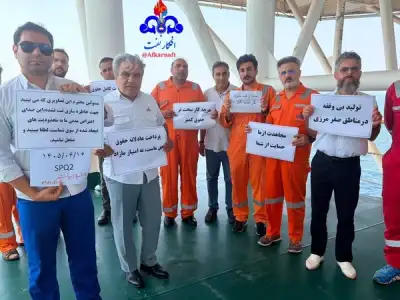
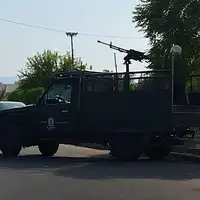
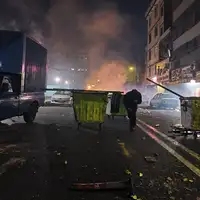
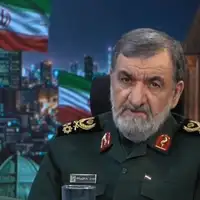
In recent weeks, millions have taken part in an unprecedented challenge to the Islamic Republic — and under a nationwide communications blackout, at least 12,000 people have been shot dead in what amounts to the largest mass killing of Iran’s contemporary history.
The collapse of the rial may have ignited the protests, but this wave of defiance runs far deeper than exchange-rate volatility. It reflects a society exhausted by decades of strategic deprivation.
The poverty pushing millions to the brink is not simply the result of policy error or mismanagement. It is the by-product of a conscious political choice: a calculated trade-off.
Tehran and its defenders routinely blame sanctions. Western analysts point to corruption or incompetence. Both explanations miss the governing logic at work.
What defines the Islamic Republic’s decision-making is not a lack of alternatives, but a rigid hierarchy of priorities: ideological integrity and regional reach consistently outrank broad-based prosperity.
In this calculus, economic crisis is not an unintended detour from the leadership’s path; it is the terrain on which that path has been chosen.
Fear of external influence and so-called “cultural invasion” reinforces this worldview. Supreme Leader Ali Khamenei has repeatedly framed material prosperity and deep integration with global markets as vulnerabilities that erode faith and weaken resistance.
His much-touted “Resistance Economy” is not designed to escape sanctions, but to endure them. It promises resilience, not growth; survival, not transformation.
That trade-off cascades through policy. The drive for agricultural self-sufficiency, promoted as revolutionary virtue, has drained aquifers and destabilized rural livelihoods, as water-intensive crops and inefficient irrigation exhaust already scarce groundwater.
Meanwhile, a maze of subsidies, multiple exchange rates, and import restrictions creates rents that enrich well-connected actors while suffocating independent enterprise. These distortions are tolerated—even sustained—because they preserve political control and reward loyalty over innovation.
Even when officials acknowledge the scale of failure, they remain bound by the same red lines that produced it.
The water crisis lays this contradiction bare. Faced with mounting shortages, authorities warn of “water bankruptcy” and champion desalination plants and transfer megaprojects as proof of resolve, while continuing to treat self-sufficiency in water-intensive crops as a strategic achievement rather than a structural mistake.
The result is improvisation without reform: capital flows to spectacular projects that buy time, while the incentives driving depletion and waste remain untouched.
In such a system, rising living standards are irrelevant. Economic pain does not trigger reform because reform risks undoing the political architecture that keeps the Islamic Republic intact.
On the streets today, that logic is meeting its reckoning. Protesters are not merely rejecting inflation or unemployment; they are rejecting the premise that their suffering serves a higher purpose.
In recent remarks, Khamenei praised young people who aspire to “meet their maker” and embrace sacrifice over material advancement. Yet the chants echoing across Iranian cities demand something else entirely: dignity over obedience, participation over submission, a future to build rather than one to forfeit.
Confronted with this unrest, the leadership retreats to its familiar narrative of foreign plots, dismissing protesters as agents of outside powers. That rhetoric cannot conceal the deeper confrontation underway: two visions of national purpose that cannot coexist within a single political order.
One demands a society willing to trade its welfare, opportunities, and youth for an ideological project. The other, facing bullets and batons, is signaling that this exchange—their lives for the regime’s vision—is no longer acceptable.
For a generation that refuses to be treated as collateral, the Islamic Republic and its leader have no answer.