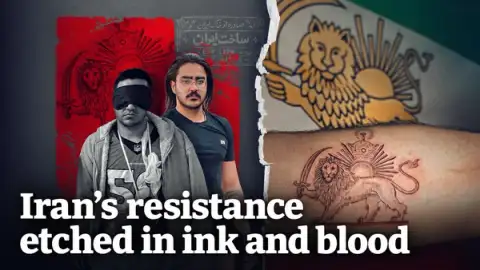
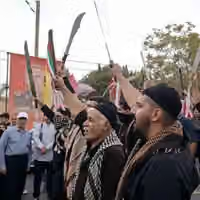
Popular unrest is not unfolding in isolation. It comes amid sustained external pressure, legal constraint and strategic exposure that have narrowed the Islamic Republic’s room for maneuver.
The protests are best understood not as a discrete domestic episode, but as the internal manifestation of a broader convergence: sanctions enforcement, legal isolation, military attrition and fiscal strain now intersect more directly with the regime’s ability to manage society.
At the center of this convergence lies a structural tension.
Tehran has long prioritized the maintenance of its coercive apparatus as the ultimate guarantor of regime survival, assuming it could continue to fund and mobilize those forces even as the wider population absorbed economic pain. The present unrest tests that assumption.
The question is no longer simply whether the state can repress protest—it has done so repeatedly—but whether it can sustain that approach under prolonged economic pressure.
The war that reshaped Iran’s strategic landscape
In June 2025, the Islamic Republic faced sustained direct military action against core elements of its nuclear and missile infrastructure, followed not by rapid diplomatic de-escalation but by heightened scrutiny and enforcement.
While Tehran avoided immediate escalation beyond the conflict, the war unsettled long-standing assumptions about deterrence, sanctuary and escalation control.
In its aftermath, the state’s survival was framed domestically as vindication. Yet continuity did not amount to recovery. Vulnerabilities exposed by the war could not be addressed simply through rebuilding or rhetorical reaffirmation.
Iran’s leadership has often equated endurance with strategic success. In this case, endurance masked erosion. The post-war environment became more constrained, not more permissive.
Sanctions and their toll
The reactivation of pre-2015 United Nations sanctions through the snapback mechanism in September 2025 constituted a second rupture—less visible, but no less consequential.
These measures reimposed binding legal constraints independent of the JCPOA framework.
Whatever Tehran’s posture toward negotiations, its obligations under revived Security Council resolutions and the Nuclear Non-Proliferation Treaty remain formally intact.
Iran’s refusal to comply with inspection-related understandings, alongside renewed threats to withdraw from the NPT, reflected a strategy of legal brinkmanship. But brinkmanship has limits.
Snapback has proven difficult to circumvent, constraining access to finance, insurance and energy markets. Even states inclined to engage Iran have struggled to shield it from the broader effects of renewed enforcement.
These constraints have translated into economic pressure. The protests now visible across Iran are therefore not only political acts; they are also the social consequence of legal and economic containment.
Missiles and strategic trade-offs
Under this pressure, Tehran has prioritized strategic reconstruction, particularly in its ballistic missile program. Facilities linked to missile development and solid-fuel production have shown signs of renewed activity, even as nuclear infrastructure remains under close scrutiny.
This reflects a belief that missile capability can restore leverage by raising the costs of external pressure.
Missile reconstruction aims to reconstitute coercive leverage and recover lost influence. Yet the strategic context has shifted. Measures once tolerated as incremental are now interpreted as preparatory, intensifying scrutiny and compressing decision timelines.
The domestic trade-offs are significant. Resources directed toward military-industrial reconstruction are resources unavailable for economic stabilization or social relief.
Iran’s rulers appear to have judged that sustaining coercive capacity outweighs the risks of popular discontent—a calculation that depends on continued loyalty within the security apparatus, even as economic conditions worsen.
A narrowing set of options
During the war, US President Donald Trump publicly raised the prospect of regime change—not as declared policy, but as a conceivable outcome should Iran prove unable to govern or stabilize the country.
While ambiguous, the remarks widened the range of interpretations available to Tehran.
As protests spread, that signalling evolved. In early January, Trump warned that violent suppression of peaceful protesters would provoke an American response. The emphasis shifted from missiles and enrichment to repression itself.
Taken together, these statements suggest a growing linkage in US rhetoric between Iran’s internal conduct and its external confrontation, though how far this would translate into policy remains uncertain.
For a system long reliant on compartmentalization—treating internal repression and external escalation as separate domains—this rhetoric further narrows room for maneuver.
Repression now carries not only domestic costs, but potential external risk.
Resilience—and its limits
None of this points to inevitability. The Islamic Republic has weathered previous crises, including acute pressure in 2009 and again in 2022, through repression, fragmentation of opposition and strategic patience.
Those precedents caution against linear narratives of collapse.
Yet the present unrest differs in one important respect: it is embedded in sustained economic degradation rather than episodic political mobilization. Repression can suppress protest, but it cannot substitute for economic viability indefinitely.
In 1978, prolonged disruption in Iran’s oil sector did not immediately bring down the state, nor did repression collapse. What faltered was the state’s capacity to function as revenues declined and administrative coherence eroded.
The parallel should not be overstated. But it underscores a familiar pattern: regimes rarely fail at the height of coercion; they falter when the material foundations of governance erode to the point that authority can no longer translate power into control.
Whether the Islamic Republic is approaching such a threshold remains uncertain. What is clearer is that its margin for error has narrowed. The 12-day war did not end Iran’s confrontation with its adversaries, it reshaped it.
The unrest now visible across the country is not separate from that confrontation—it is one of its most consequential domestic expressions.