Iran says food prices to jump as currency subsidies end

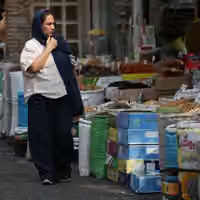
Prices of basic goods in Iran are expected to rise by 20% to 30% in the coming weeks, with sharper increases likely for chicken, eggs and cooking oil, government spokesperson said on Monday.

Prices of basic goods in Iran are expected to rise by 20% to 30% in the coming weeks, with sharper increases likely for chicken, eggs and cooking oil, government spokesperson said on Monday.
Fatemeh Mohajerani said the increase was the result of the government’s decision to end subsidized dollars for essential imports in an effort to stabilize the foreign exchange market and curb corruption, a move that has pushed up the local-currency cost of imports of goods and raw material.
“It is evident that by ending or reducing subsidized and preferential official foreign currency exchange rates, the prices of some items will rise,” she said.
Earlier on Monday, parliament said it had approved the general outlines of the budget for the next Iranian year, which begins in March, after the bill was initially rejected and subsequently amended by the government.
The government described the changes as reforms aimed at improving livelihoods, as authorities seek to ease ongoing anti-government protests and strikes.
The revisions are said to include a pay rise of up to 43% instead of 20%, a cut in value-added tax to 10% from 12%, and the allocation of $8.8 billion in subsidized foreign exchange to curb price rises for basic goods.
The budget was also reported to earmark funds for guaranteed wheat purchases to supply bread and for adjusting pensioners’ salaries.
Lawmakers approved the budget framework with 171 votes in favor, 69 against and six abstentions, out of 246 lawmakers present.
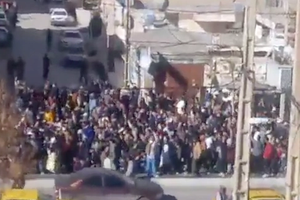
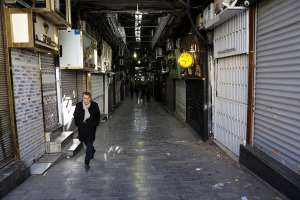
Meanwhile, nationwide protests entered a ninth day on Monday, with merchant strikes continuing in parts of the country.
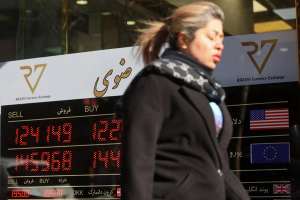
The unrest began after the rial fell to record lows in late December and has since broadened into a wider test of the government’s ability to manage a country under sustained economic strain.

Money held by Iran in Venezuela has already been withdrawn, the head of the Iran-China Joint Chamber of Commerce said on Monday, as questions grow over Iran’s investments following the arrest and transfer of Venezuelan President Nicolas Maduro by the United States.
“Anyone who had money in Venezuela has already taken it out,” Majidreza Hariri said, responding to concerns about Iranian assets worth an estimated two billion dollars.
He added that instability in Venezuela had been evident for at least five to six months, leaving ample time for Iranian funds to be withdrawn, and warned against attempts to use the crisis as a pretext to write off debts.


He said Iran-Venezuela Bank has not functioned as an effective commercial bank in recent years as financial transactions between the two countries were not conducted through this bank.
According to Iran’s foreign ministry on Monday, economic and diplomatic relations with Venezuela remain intact in the wake of Maduro’s arrest, and political developments do not automatically alter bilateral ties.
“Relations between states are based on mutual respect and interests,” said spokesperson Esmail Baghaei earlier in the day.
He said Iranian diplomats and citizens in Venezuela are safe and that Tehran continues to monitor the situation closely.

As protests continued across Iran for a ninth day, the foreign ministry on Monday accused the United States and Israel of interfering in Iran’s internal affairs and encouraging violence through their public statements.
Spokesperson Esmail Baghaei said statements by some American and Israeli officials amounted to interference in Iran’s internal affairs and incitement to violence under international norms and rejected what he described as foreign efforts to present themselves as supportive of the Iranian public.
“Actions or statements by figures such as the Israeli prime minister or certain radical and hardline US officials regarding Iran’s internal affairs amount, under international norms, to nothing more than incitement to violence, terrorism, and killing.”
Protests have been reported in 222 locations nationwide, including rallies in 78 cities across 26 provinces, according to the US-based Human Rights Activists News Agency (HRANA).
US President Donald Trump said on Sunday night aboard Air Force One that the United States is following developments in Iran very closely, warning: “If they start killing people like they have in the past, I think they are going to get hit very hard by the United States.”
Baghaei said Iranians remained deeply distrustful of Washington and Israel, citing past actions by the two countries and arguing that the public would not be swayed by what he called “deceptive rhetoric.”
He also said Iran would not base its security posture on remarks from Israeli officials, accusing Israel of misleading statements and signaling continued military vigilance.
“We are not going to trust or rely on the statements of officials from the Zionist regime,” he said. “The regime’s pattern of deception is clear to us.”
According to HRANA, at least 19 demonstrators and one member of security forces have been killed so far as the unrest continues.

A social media post by a prominent Silicon Valley investor has ignited an unusual discussion among global entrepreneurs: what it would take to invest in a future Iran after the fall of the Islamic Republic.
Josh Wolfe, co-founder of Lux Capital, a New York-based venture capital firm known for backing deep-tech companies in fields such as artificial intelligence, semiconductors, aerospace, and biotechnology, asked fellow investors on X whether they were prepared to deploy capital in a “free Iran” once political conditions change.
Addressing American investors, family offices, and asset managers, Wolfe urged them to begin thinking about how to support Iranian technologists and entrepreneurs when Iran is free and... opportunity is unleashed.”
The post quickly drew attention from senior figures across the technology and investment world, reflecting growing interest in frontier markets shaped by geopolitical transformation.
Among the most prominent responses came from Jeff Huber, a veteran Silicon Valley executive who previously led Google Maps and Google Ads before co-founding Triatomic Capital, an investment firm focused on infrastructure, energy transition, and advanced technologies.
Huber replied in Persian, writing simply, “Count on me,” a gesture that was widely shared among Iranian users as a sign of solidarity and intent.
Another notable response came from Michael Granoff, founder and managing partner of Maniv Mobility, an Israeli venture capital firm specializing in transportation and energy technologies.
Granoff pointed to his firm’s experience investing in the United Arab Emirates following the Abraham Accords, which normalized relations between Israel and several Arab states.
“We’d love to be the first to invest in a free Iranian startup,” Granoff wrote, explicitly linking potential investment in Iran to precedents set by rapid capital flows following political normalization elsewhere in the region.
The exchange also attracted responses from Iranian entrepreneurs in the diaspora, including business founders and professionals based in Canada, Australia, and Europe, many of whom offered to contribute expertise in healthcare, technology, and management during a future reconstruction phase.
While some users criticized the discussion as premature amid ongoing repression and protests inside Iran, the reaction from high-profile investors indicated a broader shift: the idea that Iran’s post-Islamic Republic future is no longer viewed solely through a political or security lens, but increasingly as a potential economic and technological opening.

Iran’s supreme leader on Saturday called the nationwide protests the work of foreign-backed agitators and urged a harsher crackdown, in his first public speech since demonstrations began seven days ago
“A number of agitated people, enemy mercenaries, had positioned themselves behind bazaar merchants and chanted slogans against Islam, against Iran and against the Islamic Republic,” Ali Khamenei said, according to state media.
“Protest is legitimate, but protest is different from rioting,” Khamenei added. “Officials should speak with protesters. Speaking with a rioter is pointless. Rioters must be put in their place,” he said.
The comments marked Khamenei’s first public response to the latest wave of demonstrations, which have intensified amid economic strain and currency volatility.
Khamenei’s language echoed his stance during earlier nationwide protests, including the 2022 “Woman, Life, Freedom” uprising and demonstrations in November 2019, when security forces used lethal force to suppress unrest.
At least eight protesters have been killed so far after being shot by security forces during the current unrest, according to human rights groups. Independent organizations, including Iran Human Rights Organization, previously documented 551 deaths – among them 68 children – during the 2022 protests.
Currency crisis blamed on ‘the enemy’
Khamenei also attributed the protests to economic grievances while assigning responsibility for the currency crisis to foreign adversaries. “These gatherings were mainly by bazaar merchants,” he said, adding that sharp and unstable exchange-rate swings were “not natural” and were “the work of the enemy.”
He accused unnamed actors of exploiting merchants’ complaints to cause “damage and insecurity,” saying such actions were “unacceptable.”
The remarks came as protesters in several cities have chanted for the overthrow of the Islamic Republic and mainly voiced support for the exiled prince Reza Pahlavi.
Confrontation with ‘the enemy’
Khamenei closed by insisting the Islamic Republic would not retreat. “The enemy will not sit quietly and uses every opportunity,” he said, adding that authorities “were and will be present in the field.”
On Friday, US President Donald Trump warned that if Iranian authorities shoot peaceful protesters, the United States would act to help the people.
"If Iran shots and violently kills peaceful protesters, which is their custom, the United States of America will come to their rescue. We are locked and loaded and ready to go," Trump wrote in a message published on his Truth Social account.
Iranian officials responded with warnings toward the United States and Israel.

As protests once again ripple across Iran, the country’s political establishment is moving quickly to revive an economic reform agenda that many Iranians say no longer speaks to the core of their anger.
While demonstrators chant against the entire system, the government of President Masoud Pezeshkian has focused its response on reshuffling economic managers and pressing ahead with long-delayed currency reforms, betting that technical fixes can still defuse a crisis that has increasingly become political.
The renewed unrest was triggered by a sharp bout of currency volatility that briefly pushed the U.S. dollar to around 1.45 million rials on the open market, intensifying already high inflation and accelerating the erosion of purchasing power.
“Protesting the dollar is protesting instability; protesting a life that cannot be planned,” wrote journalist Mustafa Danandeh in the daily Ettelaat. “People who do not know whether six months from now their rent will double, medicine will be available, or their job will survive.”
A new old face
In response, Pezeshkian reshuffled the leadership of the Central Bank of Iran, reappointing Abdolnaser Hemmati and reviving a controversial push toward a single exchange rate—an idea long advocated by economists but repeatedly stalled by politics, sanctions and entrenched interests.
Hemmati, a prominent centrist figure, had been forced out less than seven months into his tenure as economy minister after parliament impeached him over exchange-rate volatility.
His return—this time to a post that does not require parliamentary approval—has infuriated hardline lawmakers and highlighted widening rifts within the political elite.
“This explicitly ignores parliament’s vote and shows disregard for the will of representatives,” said Zeynab Gheisari, an ultra-hardline lawmaker from Tehran. Another hardline legislator, Amir-Hossein Sabeti, said the move demonstrated the government’s “disregard for the people and the country’s economy.”
In his first public remarks after the appointment, Hemmati laid out familiar priorities: controlling inflation, managing the foreign exchange market and tightening oversight of banks.
It’s the economy—or is it?
The reform effort centers on dismantling Iran’s multi-rate currency regime, a system dating back to the Iran–Iraq war of the 1980s, when preferential exchange rates were introduced to subsidize essential imports. Over time, the widening gap between official and market rates turned the system into a major source of rent-seeking, corruption and uncertainty.
As the business news outlet Tejarat News noted, the policy “failed to provide sustainable support for domestic producers and created severe uncertainty for investment and production planning.”
The Entekhab news site cautioned that in an economy burdened by sanctions, fiscal shortfalls and political distrust, inflationary expectations tend to regenerate quickly once short-term interventions fade.
On Thursday, the president announced the immediate elimination of the subsidized exchange rate of 285,000 rials per dollar for basic goods and animal feed imports, saying the subsidy would instead be transferred directly to consumers to eliminate “rent, bribery and corruption.”
In unusually blunt remarks, Pezeshkian acknowledged that public anger was directed at the state itself. Dissatisfaction, he said, was the government’s responsibility, adding that “there is no need to look for America to blame.”
Many protesters appear keenly aware that Pezeshkian’s authority is tightly constrained by entrenched power centers, a reality reflected in slogans that target the theocratic system itself and its supreme leader rather than the exchange rate.