US ready to intervene if Iran kills protesters, Trump warns

US President Donald Trump warned on Friday that the United States is “locked and loaded” if Iranian authorities use lethal force against protesters.

US President Donald Trump warned on Friday that the United States is “locked and loaded” if Iranian authorities use lethal force against protesters.
Washington would step in if protesters are violently killed, Trump said in a post on Truth Social.
“If Iran shoots and violently kills peaceful protesters, which is their custom, the United States of America will come to their rescue,” he wrote. “We are locked and loaded and ready to go.”
Protests turn deadly
Trump’s remarks came as protests in Iran reached a fifth consecutive day on Thursday, with at least seven protesters reported killed by security forces. Demonstrations spread to new cities, including the clerical stronghold of Qom, where crowds openly called for the downfall of the theocracy.
Earlier, a US official said the protests reflect deep public anger at years of government failure. In a written statement on Thursday, a spokesperson for the United States Department of State described the unrest as an expression of the Iranian people’s “understandable anger.”
“The protests reflect the understandable anger of the Iranian people at their government's failures and excuses,” the official said, accusing Tehran of neglecting the economy, agriculture, water and electricity for decades while “squandering billions on terrorist proxies and nuclear weapons research.” The statement also cited Iran’s involvement in acts of “terrorism against the United States and its allies.”
Demonstrations were reported across dozens of locations, from Tehran and Isfahan to Lorestan, Mazandaran, Khuzestan, Hamadan and Fars. Protesters chanted slogans directly targeting the ruling system and Supreme Leader Ali Khamenei.
Pro-monarchy slogans dominated many rallies, highlighting how the unrest has moved beyond economic grievances into open political defiance. Security forces used live fire in several cities, including Nurabad in Lorestan and Hamedan in western Iran, where videos showed officers shooting at demonstrators who remained in the streets despite the crackdown.

The fifth day of protests in Iran became the deadliest so far, with at least seven protesters killed by security forces, as rallies spread to new cities including the clerical stronghold of Qom, where protesters called for the downfall of the theocracy.
Demonstrations were reported across dozens of locations, from Tehran and Isfahan to Lorestan, Mazandaran, Khuzestan, Hamadan, and Fars, with protesters chanting slogans directly targeting the ruling system and the Supreme Leader Ali Khamenei.
For the first time in the past five decades, pro-monarchy slogans have come to dominate the chants.
Security forces used live fire in several cities, including Nurabad in Lorestan and Hamadan in western Iran, where videos showed officers shooting at demonstrators who remained in the streets despite the crackdown.
Protesters killed by security forces
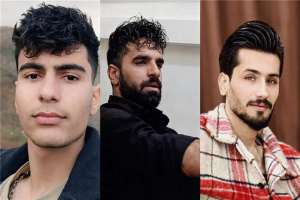
The US-based Human Rights Activists News Agency (HRANA) has so far documented the deaths of at least seven protesters, mostly killed on Thursday.
Iran International has managed to speak with the families of three victims.
In Lorestan, 28‑year‑old barber Shayan Asadollahi was killed after security forces in pickup trucks opened fire on protesters in the city of Azna on Thursday, a relative told Iran International.
Iran International also spoke with the relatives of Dariush Ansari Bakhtiarvand in Fooladshahr and Amir‑Hessam Khodayarifard in Kuhdasht, who were killed on Wednesday night.
The unrest has taken on a distinctly anti‑government tone, with protesters in Bandar Abbas chanting “Death to the entire system” and "Long live the Shah (King)”, while pro-monarchy graffiti and slogans appeared in Esfahan and Sistan and Baluchestan.
Recent reports said evening and nighttime demonstrations in multiple cities including Bandar Abbas, Azna, Hamedan, Qom, Qazvin and Babol.
In the restive southeast, a group of Baluch prisoners urged residents of Sistan and Baluchestan to join the “wave of freedom” and support demonstrations across the country, recalling that the province was one of the main hotspots of the 2022 Woman, Life, Freedom protests and repeatedly faced deadly crackdowns.
Iranian protesters chanted pro-monarchy slogans in Qom, a core stronghold of Shiite clerics and the Islamic Republic, signaling a major symbolic breach in a city long seen as politically untouchable.
Spectators at a football match in Esfahan were also filmed chanting “Reza Shah, may your soul rest in peace,” underscoring the prominence of pro‑monarchy slogans in this wave of protests.
They called on people to reclaim streets they said “belong to the people, not dictators,” and to make chants such as “Death to the dictator” and “Freedom, justice, Iranian republic” echo “like thunder across Iran.”
Caution and support
The Paris‑based Narges Foundation, run by the family of jailed Nobel laureate Narges Mohammadi, issued a statement on her official X account declaring that “silence is not an option” as streets once again see live fire, tear gas, beatings and mass arrests, and urging solidarity with families of those killed, detainees held incommunicado and the wounded denied safe treatment.
Former senior lawmaker Heshmatollah Falahatpisheh, who once headed parliament’s National Security and Foreign Policy Committee, warned in his own X post that “all the ideologies of the world are not worth the tears of one mother” and urged Iranians to ensure their hands “do not get stained with the blood of even one Iranian.”

As protests once again ripple across Iran, the country’s political establishment is moving quickly to revive an economic reform agenda that many Iranians say no longer speaks to the core of their anger.
While demonstrators chant against the entire system, the government of President Masoud Pezeshkian has focused its response on reshuffling economic managers and pressing ahead with long-delayed currency reforms, betting that technical fixes can still defuse a crisis that has increasingly become political.
The renewed unrest was triggered by a sharp bout of currency volatility that briefly pushed the U.S. dollar to around 1.45 million rials on the open market, intensifying already high inflation and accelerating the erosion of purchasing power.
“Protesting the dollar is protesting instability; protesting a life that cannot be planned,” wrote journalist Mustafa Danandeh in the daily Ettelaat. “People who do not know whether six months from now their rent will double, medicine will be available, or their job will survive.”
A new old face
In response, Pezeshkian reshuffled the leadership of the Central Bank of Iran, reappointing Abdolnaser Hemmati and reviving a controversial push toward a single exchange rate—an idea long advocated by economists but repeatedly stalled by politics, sanctions and entrenched interests.
Hemmati, a prominent centrist figure, had been forced out less than seven months into his tenure as economy minister after parliament impeached him over exchange-rate volatility.
His return—this time to a post that does not require parliamentary approval—has infuriated hardline lawmakers and highlighted widening rifts within the political elite.
“This explicitly ignores parliament’s vote and shows disregard for the will of representatives,” said Zeynab Gheisari, an ultra-hardline lawmaker from Tehran. Another hardline legislator, Amir-Hossein Sabeti, said the move demonstrated the government’s “disregard for the people and the country’s economy.”
In his first public remarks after the appointment, Hemmati laid out familiar priorities: controlling inflation, managing the foreign exchange market and tightening oversight of banks.
It’s the economy—or is it?
The reform effort centers on dismantling Iran’s multi-rate currency regime, a system dating back to the Iran–Iraq war of the 1980s, when preferential exchange rates were introduced to subsidize essential imports. Over time, the widening gap between official and market rates turned the system into a major source of rent-seeking, corruption and uncertainty.
As the business news outlet Tejarat News noted, the policy “failed to provide sustainable support for domestic producers and created severe uncertainty for investment and production planning.”
The Entekhab news site cautioned that in an economy burdened by sanctions, fiscal shortfalls and political distrust, inflationary expectations tend to regenerate quickly once short-term interventions fade.
On Thursday, the president announced the immediate elimination of the subsidized exchange rate of 285,000 rials per dollar for basic goods and animal feed imports, saying the subsidy would instead be transferred directly to consumers to eliminate “rent, bribery and corruption.”
In unusually blunt remarks, Pezeshkian acknowledged that public anger was directed at the state itself. Dissatisfaction, he said, was the government’s responsibility, adding that “there is no need to look for America to blame.”
Many protesters appear keenly aware that Pezeshkian’s authority is tightly constrained by entrenched power centers, a reality reflected in slogans that target the theocratic system itself and its supreme leader rather than the exchange rate.

Tehran’s response to the protests this week has looked markedly different, whether out of calculation or necessity, with Iranian media reporting on the unrest, the government striking a conciliatory tone and the internet remaining largely accessible.
The protests, triggered by rising prices, quickly moved beyond economic grievances. Slogans once again targeted the ruling system itself, with demonstrators openly calling for its downfall.
In both 2019 and 2022, when similar chants echoed across Iran, authorities moved swiftly to shut down the internet, cutting off communication with the outside world and crippling domestic news coverage. Protesters were rapidly branded as enemy foot soldiers, and state media framed the unrest almost exclusively as a foreign-backed security threat.
This time, the state broadcaster appears to have adopted a more cautious line, quoting hardline outlets on the causes of the protests while limiting its own commentary, perhaps to avoid provoking demonstrators—or to reclaim an audience long lost to social media and foreign-based Persian-language outlets.
‘Right to protest’
State television presenters have repeatedly asserted in recent days that “protesters have every right to protest rising prices.”
That framing mirrors President Massoud Pezeshkian’s recent assertion that “protesters do not need a permit to take to the streets under the Iranian Constitution.”
The statement was always legally correct, but no senior official or major outlet had previously expressed it so plainly.
At a December 31 press conference, government spokeswoman Fatemeh Mohajerani reiterated that the administration recognizes the public’s right to protest, adding that Pezeshkian has pledged to listen to citizens and resolve their problems.
The new central bank governor, Abdolnasser Hemmati, issued sweeping promises: to control inflation, end privileges for well-connected individuals and address banking irregularities, including unauthorized withdrawals from government accounts.
Hemmati previously held senior economic posts under Presidents Rouhani and Pezeshkian without achieving those goals, but on December 31 he insisted he now has “full authority” and is determined to deliver.
Cities shut down
At the same time, the government has taken steps to sap momentum from the streets.
Beginning December 31, schools and offices in 26 of Iran’s 31 provinces were closed for four days, a move widely seen as an attempt to replace open unrest with a fragile calm—particularly as the closures were announced amid unusually clear weather in the capital, rather than the pollution that has forced similar shutdowns in recent months.
As heavy smog over Tehran briefly lifted after months, some protesters remarked—almost incredulously—that Mount Damavand was visible again on the northeastern horizon, an unintended symbol of dissent long presumed dormant but never extinguished.
Yet an ominous sign looms as well.
Ali Fadavi, the IRGC’s deputy commander, has been replaced by Ahmad Vahidi, a figure known for harsher methods and strict loyalty to Supreme Leader Ali Khamenei. Reports already suggest that shootings at demonstrators and arrests increased on Thursday, the fifth day of unrest.
It remains to be seen whether Tehran sustains its current posture if unrest deepens—or reverts to its familiar factory settings of internet disruption and brute force.

Canada on Wednesday rejected Iran’s decision to designate the Royal Canadian Navy as a terrorist organization, calling the move baseless and politically motivated and reaffirming its sanctions and human rights pressure on Tehran.
John Babcock, a spokesperson for Global Affairs Canada, said the designation had “no basis in fact” and was a retaliatory response to Ottawa’s decision last year to list Iran’s Islamic Revolutionary Guard Corps (IRGC) as a terrorist entity under Canadian law.
“Iran’s announcement is a baseless political reaction to Canada’s lawful decisions regarding national security and international law,” Babcock said in a statement.
Iran’s foreign ministry said the move was taken under a 2019 Iranian law adopted in response to US sanctions, arguing that Canada’s June 2024 listing of the IRGC violated international law. Tehran said it was acting under the principle of reciprocity by applying its counter-terrorism legislation to the Canadian navy.
Canada said its decision to list the IRGC under the Criminal Code followed a “rigorous, evidence-based assessment” that found reasonable grounds to believe the force had engaged in terrorist activity, either directly or through proxies.
Ottawa maintains a policy of “controlled engagement” with Tehran, limiting official contact to Iran’s nuclear program, regional security, human rights and consular issues, Babcock said.
Canada has imposed sanctions on 215 Iranian individuals and 256 entities over what it describes as threats to international peace and security, human rights violations and support for terrorism.
The human rights situation in Iran remains deeply concerning, Babcock said, adding that Canada led a United Nations General Assembly resolution on Iran’s human rights record in 2025. Canada also imposed new sanctions on four senior Iranian officials in December over their alleged involvement in gross and systematic human rights abuses.
Babcock said Ottawa was monitoring reports of protests in Iran and urged Iranian authorities to respect freedom of expression and peaceful assembly.
Canada has no resident diplomatic mission in Iran and advises Canadians to consult official travel advisories before travelling there, citing limited consular capacity.

Nationwide protests were held in Iran for the fourth day in a row on Wednesday, with fresh rallies reported in multiple cities, a harsh response from security forces and growing calls for a regime change by both protesters and politicians across the world.
Demonstrators took to the streets in cities including Esfahan, Hamadan, Babol, Dehloran, Baghmalek and Pian, chanting slogans against Supreme Leader Ali Khamenei, backing exiled prince Reza Pahlavi, and commemorating slain protesters from previous uprisings such as teenager Artin Rahmani from Izeh.
In Esfahan, nighttime protesters were filmed chanting “Don’t be afraid, we are all together” and “Death to the dictator,” while in Dehloran and Baghmalek demonstrators shouted pro‑monarchy slogans including “This is the national slogan: Reza Pahlavi,” “Javid Shah” (“Long live the Shah”) and calls for Khamenei to be overthrown.
Acts of defiance
Security forces responded with force in several locations, with reports and footage of gunfire and tear gas in cities such as Nahavand, Asadabad and Hamadan, where residents were seen standing their ground, including one protester who faced down a water cannon.
In Babol, crowds intervened to stop security forces from arresting a demonstrator, while in Tehran a student leader at the University of Tehran, Sarira Karimi, was detained after a raid on her home, with her whereabouts unknown.
Voices of support
Prominent cultural and religious figures also weighed in, with top Sunni cleric Molavi Abdolhamid saying crushing living conditions and a political dead-end are driving the revolt, and acclaimed filmmaker Jafar Panahi describing the unrest as an uprising to “push history forward” now that “shared pain has turned into a cry in the streets.”
Western politicians continued to line up behind the protesters. US Senator Rick Scott said he was encouraged to see Iranians “calling for an end to the abusive Iranian dictatorship” and urged them to keep standing up to the “evil regime," while fellow Republican Senator Pete Ricketts called for more pressure on Tehran as people risk their lives in the streets.
Swedish MEP Charlie Weimers urged the EU to “stand on the right side of history” by cutting diplomatic ties with Tehran’s rulers, backing internet access for Iranians and engaging with opposition leaders about a “post‑Islamist Iran."