The funeral of Dariush Ansari Bakhtiarvand, a protester killed during demonstrations in Isfahan's Fooladshahr, was held on Friday.

Ansari Bakhtiarvand was shot dead on Wednesday, December 31, during protests in the city. He was killed by direct gunfire from government forces during nighttime demonstrations.
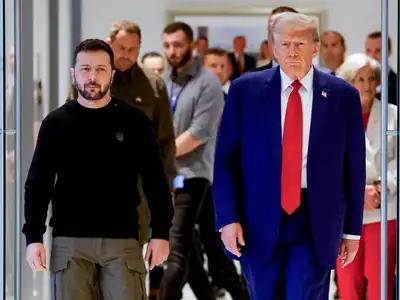

US President Donald Trump warned on Friday that the United States is “locked and loaded” if Iranian authorities use lethal force against protesters.
Washington would step in if protesters are violently killed, Trump said in a post on Truth Social.
“If Iran shoots and violently kills peaceful protesters, which is their custom, the United States of America will come to their rescue,” he wrote. “We are locked and loaded and ready to go.”
Protests turn deadly
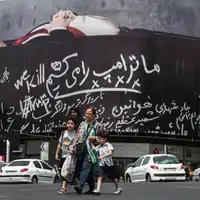
Trump’s remarks came as protests in Iran reached a fifth consecutive day on Thursday, with at least seven protesters reported killed by security forces. Demonstrations spread to new cities, including the clerical stronghold of Qom, where crowds openly called for the downfall of the theocracy.
Earlier, a US official said the protests reflect deep public anger at years of government failure. In a written statement on Thursday, a spokesperson for the United States Department of State described the unrest as an expression of the Iranian people’s “understandable anger.”
“The protests reflect the understandable anger of the Iranian people at their government's failures and excuses,” the official said, accusing Tehran of neglecting the economy, agriculture, water and electricity for decades while “squandering billions on terrorist proxies and nuclear weapons research.” The statement also cited Iran’s involvement in acts of “terrorism against the United States and its allies.”
Demonstrations were reported across dozens of locations, from Tehran and Isfahan to Lorestan, Mazandaran, Khuzestan, Hamadan and Fars. Protesters chanted slogans directly targeting the ruling system and Supreme Leader Ali Khamenei.
Pro-monarchy slogans dominated many rallies, highlighting how the unrest has moved beyond economic grievances into open political defiance. Security forces used live fire in several cities, including Nurabad in Lorestan and Hamedan in western Iran, where videos showed officers shooting at demonstrators who remained in the streets despite the crackdown.

A protester from Marvdasht was killed by direct gunfire from Iranian security forces during demonstrations in the city, according to information verified by Iran International.
Iran International identified the victim as Khodadad Sharifi Monfared, a resident of Marvdasht, who was shot dead on Thursday during protests on Taleghani Street. He was married and the father of two children. His burial is due to take place on Friday in Marvdasht.
Earlier, footage from the city showed protesters chanting slogans against the Islamic Republic and its leadership, while security forces fired directly at demonstrators.
Australia condemns violence by Iranian authorities and urges Tehran to respect the rights of peaceful protesters, a Department of Foreign Affairs and Trade spokesperson told Iran International.
Canberra said it continues to strongly advocate for the human rights of the Iranian people and reiterated that Iran remains a “do not travel” destination due to a volatile security situation and a high risk of detention, adding that Australia’s consular assistance capacity is extremely limited.
The government said it has taken strong action against Iran, including expanding its autonomous sanctions framework and sanctioning 200 Iran-linked individuals and entities since September 2022, nearly 100 of them linked to the Islamic Revolutionary Guards Corps.

Iran's exiled prince Reza Pahlavi praised protesters across Iran and honoured those killed in recent demonstrations, calling them “true heroes of this land” and urging Iranians to remain united until what he described as the country’s freedom.
In a message posted on X, Pahlavi saluted demonstrators “standing courageously across Iran,” listing provinces from Lorestan and Chaharmahal and Bakhtiari to Tehran, Khorasan and Hormozgan. “You are making history – history written by the courage, solidarity, and determination of a nation reclaiming its country,” he wrote.
Referring to those killed over the past two days, he said: “Their names and memories will live forever in our national conscience.” Pahlavi called on Iranians to honour them nationwide and abroad “so that we show their path and their purpose are shared by all of us.”
He ended with a call for perseverance: “Stay united. Stay focused on the goal. Victory will be ours.”


Looking back at Iranian films in 2025, one fact is hard to miss: it was underground cinema—not the country’s officially sanctioned productions—that defined the year internationally.
Independent Iranian films, made without permits and often in open defiance of compulsory hijab rules, dominated major festivals and prize lists.
The clearest signal came at Cannes, where the Palme d’Or crowned an underground Iranian production, sealing 2025 as an exceptional year for dissident cinema.
By contrast, Iran’s official films—produced with licences and strict ideological constraints—largely failed to gain traction abroad.
The standout was A Simple Accident by Jafar Panahi, which not only won the Palme d’Or but went on to become one of the most prominent titles of the global awards season, with realistic prospects at the Oscars and Golden Globes.
Youth, society and refusal
Many of the year’s most striking films explored Iranian society through the eyes of a younger generation increasingly at odds with official norms.
Sunshine Express by Amir-Ali Navaei, screened in the main competition at the International Film Festival Rotterdam, rejected conventional storytelling in favour of a disquieting, abstract journey that mirrors the layered complexity of contemporary Iran.
Also at Rotterdam, Jamaat by Sahand Kabiri, shown in the “Bright Future” section, sought to reclaim parts of Iran’s social history long absent from official cinema, offering an unvarnished portrait of a generation that openly rejects prescribed rules.
Berlin hosted A Thousand and One Frames by Mehrnoush Alia, an underground film made inside Iran featuring women without compulsory hijab. Its freer visual space aligns with its themes, even as such work risks being weaponised by hardliners who have long labelled Iranian cinema “corrupt”—a charge historically used to justify censorship and control.
Venice screened two underground social films: Divine Comedy by Ali Asgari, which uses subtle humour to depict the frustrations of filmmaking under censorship, and Inside Amir by Amir Azizi, a portrait of Tehran’s underground life.

Tehran on screen
Several films offered stark depictions of Tehran today.
Bidad by Soheil Beiraghi won the Special Jury Prize at the Karlovy Vary International Film Festival. It follows Sati, a Gen Z woman barred from singing publicly, who ultimately takes to the streets—turning personal defiance into a metaphor for a generation demanding its rights in public space.
Ali Behrad’s Tehran, Be With You, also screened at Karlovy Vary, presents an uncompromising portrait of young life in the capital and remains banned inside Iran.
Duality by Abbas Nezam-Doost (Tallinn) and Between Dream and Hope by Farnoush Samadi (Toronto) similarly set out to document everyday life in contemporary Tehran from different angles.
Experimentation and exile
Formal experimentation also marked the year. Shahram Mokri’s Black Rabbit, White Rabbit, shot in Tajikistan, sidesteps Iran’s restrictions and extends his signature style of long takes, interlocking narratives and circular storytelling.
Ali Farahmand’s debut Only the Voice Remains, screened in Beijing, is a black-and-white, dialogue-free work dense with cinematic references.
Filmmakers in exile were equally visible. Abdolreza Kahani’s The Mortician, shot on a mobile phone, stood out at the Edinburgh festival, following an Iranian mortician in Canada with ambiguous ties to the Iranian embassy.
Depth of Night by Farhad Vilkiji revisited Iran’s chain murders, while Sepideh Farsi screened her documentary Put Your Soul on Your Hand and Walk on Palestine at Cannes.

Memory and documentary
Themes of revolution and memory surfaced in Ah, What Happy Days They Were by Homayoun Ghanizadeh, premiered in Tallinn, which brings together Ali Nassirian, Navid Mohammadzadeh, Peyman Maadi, Golshifteh Farahani and Shirin Neshat in a fragmented conversation linking family history to revolution.
Documentary cinema also fared strongly. Saeed Nouri’s Tehran: An Unfinished History, assembled from pre-revolutionary films, screened at Rotterdam.
Mehrdad Oskouei won best film at IDFA for The Moon and the Pink Fox, about an Afghan girl in Iran seeking to reach Europe, while The Past Is a Continuous Future by Firoozeh Khosravani also received an IDFA prize.
Together, these films offered a portrait of Iranian cinema in 2025 that was defiant, experimental and overwhelmingly shaped by voices working beyond the state’s boundaries.