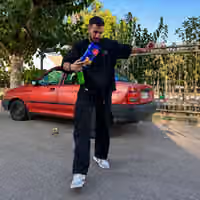
The University of Tehran said on Wednesday that all students detained during a protest on campus the previous day had been released.
Mohammad-Reza Taghidokht, executive deputy of the university president’s office, told ISNA that all detained students were freed by late Tuesday night following follow-up by the university’s president.
He said four students from the University of Tehran had been detained during the gathering.
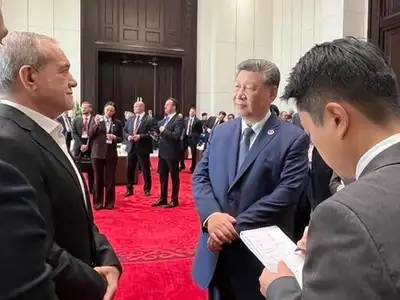
President Masoud Pezeshkian framed Iran’s economic strains as the product of foreign pressure and internal division on Wednesday, calling for greater unity within the establishment as protests and strikes continued in multiple cities.
Speaking at a Central Bank general assembly meeting, Pezeshkian said the country faced “external pressure from the enemies of the country” and argued that internal disputes were worsening the situation.
“Unfortunately, inside the country, instead of synergy and support, some positions and actions cause weakening and harm.”
Security vehicles were deployed outside Tehran’s Charsou shopping complex on Wednesday as authorities maintained a heavy presence in central parts of the capital.
Footage sent to Iran International showed multiple security vehicles stationed near the Charsou complex, a major commercial and cultural hub close to central Tehran streets that have seen protest activity in recent days.
The editor of Iran’s hardline Kayhan newspaper dismissed the ongoing protests on Wednesday, criticizing government remarks that described demonstrations as legitimate expressions of public pressure.
Hossein Shariatmadari, Kayhan’s editor-in-chief appointed by the Supreme Leader, wrote that the protests did not deserve to be heard, arguing they were driven by what he described as foreign-linked agitators rather than economic grievances.
He took aim at comments by government spokesperson Fatemeh Mohajerani, who had said authorities recognize peaceful protests and should listen when people raise their voices under economic pressure.
Shariatmadari said that protest slogans did not reflect economic demands and alleged that demonstrators had expressed support for what he called “killers” of Iranian citizens, accusations frequently leveled by hardline media against dissent.
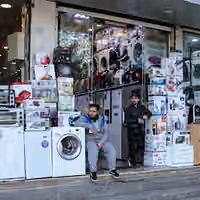
A Tehran bus workers’ union said on Wednesday it supports public protests, arguing that citizens have the right to demonstrate against economic pressure, repression and structural corruption.
In a statement, the Syndicate of Workers of Tehran and Suburbs Bus Company said disadvantaged people are entitled to take to the streets in response to what it described as repressive policies and government actions that have harmed livelihoods.
“The deprived people have the right to protest against repressive policies, the state’s attack on public livelihoods, structural corruption and widening class gaps,” the union said.
Protesters gathered in the cities of Isfahan and Kermanshah on Wednesday, according to videos received by Iran International, as demonstrations continued across multiple parts of Iran.
Footage from Isfahan showed groups of people assembling at Naqsh-e Jahan Square, one of the country’s most prominent public spaces and a recurring site of protest during periods of unrest.
Separately, video from the western city of Kermanshah showed demonstrators holding a protest and chanting “death to the dictator,” a slogan commonly used in protests critical of Iran’s leadership.