US Department of State on Tuesday shared a video of protesting students at a University in Tehran, saying “The future of Iran belongs to its youth.”
“University students across Iran are demanding their fundamental rights, even as security forces regularly confront them with intimidation and violence,” the State Department’s Persian account posted on X.
“These students represent some of the most educated and talented individuals in the country, but due to the failed policies of the Islamic Republic regime and its disregard for the basic rights of citizens, they have been deprived of the opportunity to build a good life,” the post added. “The future of Iran belongs to its youth.”

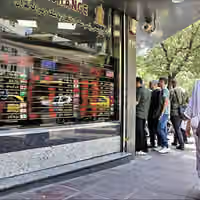
Demonstrations across Iran, initially sparked by economic hardship and the sharp fall of the national currency, continued for a third day on Tuesday, drawing in university students as authorities deployed force and made multiple arrests.
Protests spread across Iran on Tuesday, with universities and commercial districts emerging as key hubs amid a widening strike by shopkeepers in Tehran and other cities.
Human rights and student groups said at least 11 protesters were arrested near Tehran’s Shoush Square.
Five students were also detained at universities in the capital, four of whom were later released.
Student outlets reported that one student at Tehran’s Amirkabir University was severely injured during a campus crackdown after members of the Basij militia of the Islamic Revolutionary Guard Corps attacked their gathering.
Videos circulating on social media showed students chanting anti-government slogans, dismantling signs linked to the office of the Supreme Leader’s representatives and confronting security forces at campus gates.
In some clips, officers appeared to retreat as crowds advanced; in others, security forces were seen firing tear gas and, in several locations, shooting toward demonstrators.
The protests coincided with the government’s announcement that public offices would close in nearly 25 provinces, including the capital on Wednesday - a move officials said was necessary to conserve energy amid a severe cold snap. However, online weather data showed no significant drop in temperatures.
The unrest began Sunday after shopkeepers in several Tehran malls and later the Grand Bazaar launched a strike in response to the rial hitting a record low against the US dollar.
Since then, videos verified by Iran International have documented protests in Tehran, Karaj, Qeshm Island, Isfahan, Kermanshah, Shiraz, Yazd, Kerman and several other cities.
Government spokeswoman Fatemeh Mohajerani acknowledged widespread frustration, saying the protests reflected “intense economic pressure” and that peaceful assembly is recognized under Iran’s constitution.
President Masoud Pezeshkian said he instructed the interior minister to engage in dialogue with representatives of the demonstrators to hear their “legitimate” demands. He later attended a meeting with a handpicked group of trade officials on Tuesday.
Heavy security deployments were reported in Tehran, Mashhad, and Kermanshah, with residents describing checkpoints, constant patrols, and the presence of both uniformed and plainclothes officers.
In Hamadan, footage appeared to show security forces opening fire toward protesters, while riot police in Tehran and the nearby city of Malard used tear gas to disperse crowds.
Demonstrations were held on Tuesday night in several parts of Iran, and are expected to continue into a fourth day, with more Iranian businesses announcing on social media that they will close in solidarity with the movement.
Israeli Prime Minister Benjamin Netanyahu said on Tuesday he was recently briefed on intelligence suggesting Iran is conducting field exercises in which its forces are practicing launching ballistic missiles at Israel.
“I said, if you dare do that, you know the results would be devastating. So I hope Iran doesn't make that mistake,” Netanyahu told Fox News.
Echoing President Trump’s review of US strikes on Iran’s nuclear facilities in June, Netanyahu said the Fordow site had been “obliterated,” adding that Tehran is seeking to rebuild its missile capabilities and is considering resuming key nuclear activities.
“As far as the nuclear program, I think they're trying to do it. I'm not sure they've decided to cross the line because I think they heed President Trump's warnings, and also because they've just experienced something. You know, less than a year ago, they saw what it entails, and they have to choose. Look, we don't seek escalation. I hope they don't, but if they do, all bets are off,” Netanyahu said.

Israeli Prime Minister Benjamin Netanyahu said on Tuesday that the people of Iran are fighting to secure their rights and future, adding that any real change in the country must come from within.
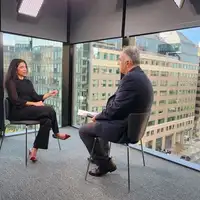
“You know, if you have a change, it will come from within. It's up to the Iranian people, and we understand what they're going through, and we're very sympathetic to them,” Netanyahu said in an interview with Newsmax.
“This tyrannical regime has oppressed the people of Iran. They are great people, enormously gifted with a great past, and they could have a great future. But this future has been taken over, really, by these theological thugs, the mullahs and the Ayatollah who’s on top of them,” he added.


A spokesman for Iran’s Revolutionary Guards and top state officials on Tuesday warned Israel and the United States against launching any new attack on Iran, vowing a harsher and unpredictable response.
“Israel should remember the blows it received in the recent war and take a lesson from the previous attack before thinking of entering a new one,” IRGC spokesman Brigadier General Mohammad Ali Naeini said.
“Iran’s power is increasing by the day, and Israelis only talk about a weak Iran in the media while they themselves know very well how strong our missile capabilities are,” Naeini said.
Trump said on Monday he would support possible Israeli strikes on Iran if the Islamic Republic develops its ballistic missile or nuclear programs, warning Tehran against rebuilding military capabilities destroyed in Israeli and American airstrikes in June.
Parliament Speaker Mohammad Bagher Qalibaf on Tuesday issued a separate warning, saying that Tehran’s defensive actions do not require external approval.
“Iran does not ask anyone’s permission to defend itself. The Iranian people’s response to any adventurism and wickedness will be broad, uncompromising and even unexpected,” he said.
“Iran’s decisions and actions to secure national interests and exercise its legitimate self-defense will not necessarily be predictable or similar to the past,” he added.
President Masoud Pezeshkian posted a message on X earlier on Tuesday saying the Islamic Republic’s response to any “tyrannical aggression would be harsh and remorse-inducing,” adding that any new attack “will make the enemy regret what it has done."
The United States held five rounds of negotiations with Iran over its nuclear program earlier this year, for which Trump set a 60-day deadline.
When no agreement was reached by the 61st day on June 13, Israel launched a surprise military offensive followed by US strikes on June 22 targeting key nuclear facilities in Isfahan, Natanz and Fordow.
The attacks killed nuclear scientists along with hundreds of military personnel and civilians. Iranian counterattacks killed 32 Israeli civilians and an off-duty soldier.
Iran denies seeking nuclear weapons and says its nuclear program is for peaceful purposes. Supreme Leader Ali Khamenei has said dealing with Trump is beneath the dignity of the Islamic Republic, while Iranian officials have rejected US demands to end uranium enrichment and curb missile capabilities.
The United States has long insisted that Iran must completely halt its uranium enrichment program, stop supporting its armed allies in the Middle East and accept restrictions on its ballistic missile program.
Tehran rejects the conditions as a non-starter for any talks.

The US Treasury on Tuesday imposed new sanctions on individuals and firms in Iran and Venezuela, accusing them of facilitating weapons transfers, including Iranian-made combat drones for Venezuela and procurement networks tied to Iran’s missile program.
The Treasury’s Office of Foreign Assets Control said it was targeting ten individuals and entities linked to Iran’s unmanned aerial vehicle trade with Venezuela, as well as separate actors involved in sourcing missile-related chemicals for Iran’s defense industry.
Treasury said the measures build on earlier nonproliferation designations made in October and November, following the September 27 reimposition of United Nations sanctions on Iran.
Officials said Iran’s UAV and missile programs threaten US and allied personnel in the Middle East, destabilize commercial shipping in the Red Sea, and undermine US interests in the Western Hemisphere through arms transfers to Caracas.
“Treasury is holding Iran and Venezuela accountable for their aggressive and reckless proliferation of deadly weapons around the world,” said Treasury Under Secretary for Terrorism and Financial Intelligence John K. Hurley.
An Iranian vice president on Tuesday defended Tehran’s ballistic missile capabilities as essential for deterrence, after the US president warned of further attacks if Iran moves to develop its missile program which was severely damaged in a June war.
"Iran must have missiles; without them, we would be defenseless. We must stand for Iran’s dignity," Vice-President for Executive Affairs Mohammad-Jafar Ghaempanah said.
State Department warning
US State Department on Tuesday warned Tehran against what it called the expansion of its combat drone fleet and the continuation of procuring missile-related items in violation of UN restrictions.
“As President Trump has made clear in a National Security Presidential Memorandum, the United States will take action to curtail Iran’s ballistic missile program, counter Iran’s development of other asymmetric and conventional weapons capabilities, deny Iran a nuclear weapon, and deny the Islamic Revolutionary Guard Corps (IRGC) access to assets and resources that sustain their destabilizing activities,” the statement said. “We will not hesitate to hold accountable anyone who supports Tehran’s proliferation activities.”
Non-proliferation concerns
According to Treasury, the action was taken under Executive Orders 13382 and 13949, which target weapons of mass destruction proliferators and Iran’s conventional arms activities.
The designations were also linked to National Security Presidential Memorandum 2, which directs US agencies to curb Iran’s missile program and deny the Islamic Revolutionary Guard Corps access to financial resources.
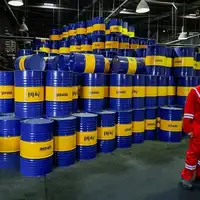
OFAC designated three Iran-based individuals for efforts to procure chemicals used in ballistic missiles for Parchin Chemical Industries, an element of Iran’s Defense Industries Organization responsible for chemical imports and exports. Treasury said the materials sought included sodium perchlorate, sebacic acid and nitrocellulose, all used in solid-propellant rocket motors.
Treasury identified Mostafa Rostami Sani as a key figure in the procurement network, accusing him of sourcing large quantities of sodium perchlorate and acting as a liaison between foreign suppliers and Parchin Chemical Industries. Rostami Sani is the chairman of Pardisan Rezvan Shargh International Private Joint Stock Company, which was also designated. The company’s managing director, Reza Zarepour Taraghi, was sanctioned as well.
OFAC also expanded sanctions on Iran’s defense-linked technology sector, designating entities and individuals connected to Rayan Fan Kav Andish Co, a holding company tied to firms producing components and software for the Islamic Revolutionary Guard Corps’ UAV and aerospace programs. Newly designated entities include Fanavari Electro Moj Mobin Company and Kavoshgaran Asman Moj Ghadir Company, along with executives Bahram Rezaei, Erfan Qaysari and Mehdi Ghaffari.