Holy irony: how a theocracy secularized Iran

Naeimeh Doostdar
Journalist and Iran analyst

Half a century of rule built on clerical authority has secularized Iran, available data suggests, with most still believing in God but not in the theocracy.
Journalist and Iran analyst
Half a century of rule built on clerical authority has secularized Iran, available data suggests, with most still believing in God but not in the theocracy.
The story is not the “death of religion,” as it may appear from social media snippets depicting once unheard of public concerts and women spurning the mandatory hijab, but a fundamental reordering of how Iranians relate to faith.
Recent surveys by the Netherlands-based Group for Analyzing and Measuring Attitudes in Iran (GAMAAN) found 68% oppose the continuation of the Islamic Republic. Support for its leader and revolutionary principles fell from 18% to 11% between 2022 and 2024.
A leaked culture ministry survey reported that 73% favor separating religion and state. A peer-reviewed article by Ali Sarihan of Maryland's St. Mary's College, published in the journal Religions puts support for a secular system at around 70%.
Yet other indicators show Iran is not secular in the familiar Western sense. The World Values Survey (WVS) still finds 96% identify as Muslim and only 1.3% as atheist.
Faith endures, it seems. It is political Islam that is losing ground.
Classic secularization theory imagined that modernization would push religion out of public life. Iran shows something more layered: personal belief can survive even as the political project built around it collapses.
Sociologist Asef Bayat has called this “post-Islamism”—a phase in which political Islam has exhausted its appeal, even as many Iranians retain some form of private faith.
Iran is not “non-religious,” Bayat argues. It is post-theocratic in its political aspirations.
Religious practice has thinned markedly.
Sarihan's study also suggests that the share of Iranians who “always or often” pray fell from 78% in 2015 to 55% in 2023—a steady decline shaped, and likely accelerated in recent years, by repression and economic crisis.
The WVS relies on face-to-face interviews, which in a country like Iran give respondents every incentive to conceal dissent or non-conformity.
Belief recast
Religious rituals remain part of everyday life.
The Shi'ite religious holy days of Muharram and Arbaeen still draw large crowds especially outside major cities, and shrines remain busy.
But for younger Iranians, who express the highest levels of political dissatisfaction, religion no longer aligns with state intrusion into private life.
The compulsory hijab, morality policing and the regulation of personal behavior have turned religion, for many, into a vehicle of control.
The widespread protests of 2022, known by their rallying cry of Woman, Life, Freedom, exposed this rupture. The slogans were never an assault on faith itself but on the state’s claim to define and enforce it.
On social media, hashtags rejecting the Islamic Republic sit comfortably alongside posts defending personal belief. The distinction between faith and religious governance has become unmistakable.
Coercion to choice
Iran’s path to secularization is unusual because it runs in two directions at once: from above and from below.
Heavy-handed enforcement—from hijab rules to cultural censorship—has alienated generations and inadvertently strengthened the case for separating religion and power.
GAMAAN’s highest recorded opposition to the theocratic system came at the height of the 2022 protests, when women’s bodily autonomy became the central battleground: four out of five respondents said they would vote “no” to an Islamic Republic in a hypothetical referendum.
Meanwhile, everyday acts of defiance are reshaping religious life from the ground up.
Women walk unveiled. Families who still value faith increasingly bypass official religious bodies. Younger Iranians look for ethics and spirituality beyond state-sanctioned channels.
God versus government
Two caricatures usually obscure the real picture. Iran is not a “godless society”: personal belief, ritual and religious meaning remain widespread. But nor is it the devout political community the state insists it governs.
The Islamic Republic’s project of political Islam has lost its authority, and most Iranians now prefer a secular political order.
The theocracy has produced one of the region’s strongest secularizing shifts—not through reform but through coercion. The more it has enforced religious rule, the more clearly Iranians have separated faith from the state.
Iran today stands between private, chosen belief and state-imposed religion.
The secularization of politics is now a structural threat to Islamic rule—one that often goes unnoticed amid a myriad of more immediate, louder crises.






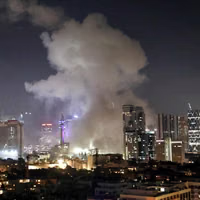


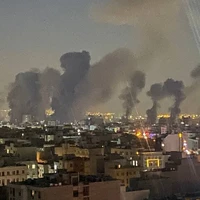
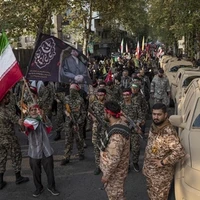



Tehran’s unveiling of a towering statue depicting the Roman Emperor Valerian kneeling before pre-Islamic Persian King Shapur I has renewed criticism of the Islamic Republic’s appeal to nationalist sentiment following the June war with Israel.
For over forty years, the theocracy purged ancient Persian history from schoolbooks, replacing it with post-Islamic narratives. But after the 12-day conflict with Israel, officials have turned to the distant pre-Islamic past to rally a divided society.
From murals of ancient kings and soldiers to patriotic songs added to Shi’ite mourning ceremonies performed before Supreme Leader Ali Khamenei, Tehran now embraces imagery once deemed heretical by its own revolutionary ethos.
'Kneel before Iran' campaign
Tehran’s Revolution (Enghelab) Square was the scene of an unusual spectacle on Friday as officials unveiled a massive bronze statue depicting Roman Emperor Valerian kneeling in submission before Sassanid King Shapur I, commemorating Iran’s victory at the Battle of Edessa (260 AD).
The event was held under the slogan “Kneel before Iran,” part of what authorities describe as a campaign to project “national unity and historical pride” following the June war with Israel.
Tehran Mayor Alireza Zakani, a staunch ultraconservative, said on X: “Enmity with Great Iran can only end in kneeling before this historic nation.”
Municipal official Davood Goodarzi said the installation would be accompanied by visual displays depicting “other victories of Iranians over foreign aggressors,” including the defeat of British forces by local commander Rais-Ali Delvari, Mirza Kuchak Khan’s resistance against Russian troops, and Surena’s triumph over Rome at the Battle of Carrhae in 53 BCE.
The goal, Goodarzi said, is “strengthening concepts such as national dignity, social unity, and Iranian identity.”
The statue, he said, would remain temporarily at Revolution Square before being moved to a city gateway “where it will stand as the first emblem of Iran before diplomats and foreign visitors.”
Unveiled women were allowed to attend the unveiling ceremony—an uncommon scene at events organized by Tehran’s ultra-hardline municipality.
The turn to the pre-Islamic past
The sharp reversal also recalls remarks once made by Khamenei. In a 2011 speech, he asserted that “all the great military victories of this nation came after Islam,” dismissing pre-Islamic accounts as “things that are not documented.”
In 1987, he had said that prophets triumphed over kings such as Cyrus and that “nothing remains of these monarchs in history but names remembered with derision.”
Nevertheless, pro-government social media accounts have now gone so far as to circulate posters equating Khamenei himself with Shapur, showing him standing with a staff as Benjamin Netanyahu and Donald Trump kneel before him. The caption reads: “You will kneel before Iran.”
'Hypocrisy'
Pro-government figures have hailed the move as a patriotic success. Conservative political reporter Hossein Saremi posted: “Today’s grand Iranian gathering showed that people and the state share one essence: Iran itself. Nothing can take our homeland away.”
Others, however, called the spectacle “hypocrisy.” Journalist Gholamhossein Pashaei wrote on X: “Every year you close Pasargadae to stop people from celebrating Cyrus Day, yet you unveil Shapur’s statue in Enghelab Square with drums and fireworks during Fatimiyya (mourning period)!”
Dissident commentator Hamid Asafi called the ceremony “a perfect snapshot of the Islamic Republic’s contradictions.”
On Telegram he wrote: “A week ago they closed Cyrus’s tomb out of fear of the crowds, and now they glorify Shapur in the same breath. The Islamic Republic fears living history but poses for selfies with its corpse.”
He added: “They know people no longer respond to rosaries and sermons. That’s why they’ve brought history back to the stage—in a controlled costume. If they can’t erase the past, they’ll try to own it.”
The irony deepened as UNESCO formally recognized Cyrus’s Charter as one of the earliest human-rights documents.
President Masoud Pezeshkian wrote on X: “Iran, the cradle of dialogue, justice, and coexistence, can still inspire peace today.”
Users swiftly replied, questioning how such pride could coexist with a government that blocks access to Cyrus’s tomb each year to those wishing to visit it on his birthday.