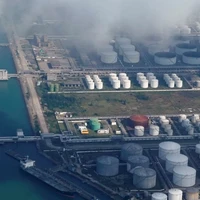
Iran’s atomic energy body dismissed reports that its assets and affiliated companies’ holdings had been frozen in Turkey.
Behrouz Kamalvandi, spokesman for the Atomic Energy Organization of Iran, said the reports were “not correct.”
Turkey announced Wednesday it had blocked the property of Iranian individuals and companies active in nuclear facilities, shipping, energy and research sectors.
Kamalvandi’s denial follows Ankara’s measure, which came into effect on October 1, targeting dozens of Iranian-linked entities.


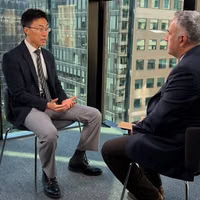
Threats by Iranian hardliners to leave the Non-Proliferation Treaty (NPT) after a June war are likely headed nowhere because of Tehran's keenness not to irritate Russia and China, Middle East expert Kenneth Pollack told Iran International.
“The Chinese absolutely do not want to see Iran acquire nuclear weapons. That would be very problematic for them. For the same reason, the Chinese do not want to see Iran violate the NPT,” added Pollack, Vice President for Policy at the Middle East Institute think tank in Washington DC.
“I would say the same, at least in theory, for the Russians,” he added, referring to the nuclear Non-Proliferation Treaty.
Iran and Western powers are at an impasse on how to revive dialogue and nuclear inspections after a 12-day conflict with Israel and the United States in June.
Stung over the weekend by resumed international sanctions triggered by European powers over its nuclear program, Iran likely sees China and Russia as key bulwarks against further isolation, Pollack said. "That’s too dangerous for them."
While Iranian-designed drones have been key to Russia's war effort against Ukraine, Moscow provided little support during the brief summer war.
The two countries have signed a long-term security framework, but Russia’s restraint underscores the limits of its backing.
China and Iran inked a 25-year cooperation agreement in 2021 which envisioned Chinese investment in Iran’s energy and infrastructure sectors in exchange for long-term energy supply commitments.
But implementation has lagged under sanctions, with Chinese investments limited and its exact terms kept secret.
Iranian President Masoud Pezeshkian did not play a prominent role during a recent Shanghai Cooperation Organization summit, was notably absent from the customary group photo and filed out near the back of invited world leaders at a subsequent Chinese military parade.
China and Russia at the United Nations Security Council last week tried to win Iran a reprieve from the renewed sanctions but failed to muster enough votes.
Maximum pressure return
Pollack said oil sales remain Tehran’s economic lifeline, noting that Iran currently exports—largely through illicit channels—about 1.5 to 1.7 million barrels of oil per day, consistent with independent tracking estimates.
More could be done by the administration of US President Donald Trump to ramp up so-called Maximum Pressure sanctions to deprive Tehran of its revenue.
“The US could reduce that flow to 500,000 barrels per day, or even 300,000,” Pollack added, saying measures against Iran's use of neighboring Iraq's financial system and further listing of oil-exporting networks could yield further pain on Tehran.
“That would have a massive impact on the amount of money coming back into Iran. For the average Iranian, it could be very significant,” he added, noting the hardship wrought on citizens amid the geopolitical tussle.
The maximum pressure sanctions strategy was first pursued under Trump's first term, but since its reimplementation in January has fallen far short of its goal of drive Iran’s oil exports to zero.
The UN sanctions reimposed on Iran over the weekend appear set to deepen the country’s financial crisis. The rial has fallen to record lows against the dollar, inflation remains in double digits, and the cost of food and fuel continues to rise.

Iranian President Masoud Pezeshkian said on Thursday that Tehran can no longer serve as the country’s capital, citing a worsening water crisis that has depleted key reservoirs serving the metropolis.
Pezeshkian said the idea of relocating the capital had already been discussed with the Supreme Leader but now “is not a choice, it is a mandate.”
“Last year, rainfall was 140 millimeters, while the standard is 260 millimeters. That means rainfall has fallen by about 50 to 60 percent. This year, the situation is just as critical,” Pezeshkian said in a speech broadcast from Hormozgan Province.
Iran announced in January it would relocate its capital to the southern coastal region of Makran, citing Tehran’s enduring overpopulation, power shortages and water scarcity.
Pezeshkian warned on Thursday that the cost of transporting water to Tehran could reach €4 per cubic meter (about $4.65), underscoring the unsustainable pressure on the city’s resources.
Tehran’s main reservoirs are nearing depletion. Government figures show that 19 major dams nationwide are operating at below 20 percent capacity, while satellite analysis indicates Amir Kabir reservoir outside Tehran is at just 6 percent of usable volume.
Other key reservoirs, including Lar and Latyan, are also at historic lows. Officials have also reported land subsidence in parts of the capital of up to 30 centimeters per year due to groundwater depletion.
Iran has long studied moving the capital to the shores of the Persian Gulf, where access to water would be less strained.
Agriculture, which consumes about 80 percent of Iran’s water, remains highly inefficient, further straining limited supplies. Experts warn that without major reforms in consumption and water management, the country faces worsening shortages, environmental collapse and growing public unrest.
A long-debated issue
The idea of moving the capital has been raised for decades, with concerns ranging from traffic congestion and pollution to earthquake risk and water scarcity.
In 2016, parliament approved a motion to study the transfer, but high costs and political resistance stalled progress. Previous governments floated alternatives such as Semnan, Qom or Esfahan, but no decision was made.
Pezeshkian is the first Iranian president to frame relocation as unavoidable.
His warning comes after European states triggered the resumption of UN sanctions citing mistrust of Iran's nuclear intentions.
The move looks set to deepen Iran's economic pain as the Iranian currency has fallen to record lows against the dollar, inflation remains above 30 percent and food and fuel prices continue to climb.
Prominent academic and vocal critic of Tehran hardliners Sadegh Zibakalam warned that another clash between Iran and Israel could occur because there are those in Iran who still believe in “the mission of destroying Israel.”
The Tehran University professor said Iran possesses 400 kilograms of uranium enriched to 60% purity, enough to build at least 10 atomic bombs.
“When asked where these stockpiles are, they say ‘none of your business,’ and then it is said, ‘Why are the Israelis worried?’” he added.
Iran’s defense minister described the recent deployment of US refueling aircraft to the Middle East as “psychological warfare,” saying the country must remain ready to defend itself and not be swayed by such tactics.
“We must always be ready to defend the country, and other sectors of the country should not be influenced by the psychological operations surrounding this issue,” Aziz Nasirzadeh said.
“The reason they keep saying there will be an attack is to create problems in society and disrupt economic stability,” he added.
His comments came a day after Newsweek reported that a large number of US Air Force KC-135 stratotankers had recently been deployed to Qatar’s Al Udeid Air Base in one of the region’s biggest aerial refueling operations in months, amid heightened tensions with Iran.

With Iran's rial hitting fresh depths daily amid new international sanctions, it's helpful to remember how the Islamic Republic's founder viewed the economy. The late theocrat famously said it's for the donkeys.
Half a century ago, Ayatollah Ruhollah Khomeini dismissed economics as trivial. “Those who see the economy as the foundation of everything—they see man as an animal,” he said. “An animal’s foundation is its economy."
"A donkey’s foundation, too, is its economy.”
The words were meant as a rebuke to materialism, a call to put ideology and faith above worldly matters. But today, with the rial in free fall, his words feels prophetic. If the economy was fit only for donkeys, the donkey has finally brayed back.
In Iran, the value of money is measured in hours, not days. A few decades ago, a paycheck might last a week. Today, it barely stretches through the weekend. By Monday, the cash in your pocket feels lighter, not because you spent it, but because it has already lost its worth.
The rial, Iran’s national currency, has been devalued so many times that it now flutters like a useless note in the wind. Days after the reimposition of UN snapback sanctions, it trades on Iran's black market at a new low of more than 1.18 million rials to the US dollar.
The rial is no longer currency; it is confession: a declaration that the state has failed to keep its promise to protect the value of people’s lives.
A Broken Machine
Iran’s economic malaise is neither sudden nor accidental. The collapse of the rial is the product of a machine designed to fail: decades of chronic budget deficits, an overreliance on oil, institutional corruption and a governing class that treats money as both tool and weapon.
When oil revenues fall, the state reaches instinctively for the central bank, borrowing and printing money without backing.
Inflation rises; the rial weakens. Banks offer interest rates that lag far behind inflation, eroding public trust. Who, then, would save in rials? Instead, households convert earnings into safer stores of value: gold coins, real estate, US dollars.
Sanctions, too, are the invisible hand pushing Iran’s economy down. Restrictions on oil exports and banking channels cut the country off from hard currency.
Each new penalty, each geopolitical flare-up—whether a US Treasury announcement or a skirmish in the Strait of Hormuz, triggers panic. People rush to buy dollars, and the cycle repeats.
The market itself has become a theater of fear. A small uptick in the dollar can unleash a stampede. Rumors spread faster than official statements. In the currency shops of Tehran, the mere sight of a crowd can turn hesitation into frenzy.
Corruption by Design
If panic is the fuel of this collapse, corruption is its engine. Iran’s multi-tiered exchange-rate system all but invites abuse. Those with political connections receive dollars at subsidized “official” rates.
Some import nothing at all; others flip their cheap dollars on the black market. Either way, fortunes are made. The public pays the price.
This dual economy—one rate for the powerful, another for the powerless—has created a new class of profiteers: the sanctioned, the middlemen, the “dollar kings.” They thrive on scarcity. Every collapse in the rial fattens their accounts.
The Human Ledger
The first line of casualties runs straight through the Iranian kitchen. Rice, meat and fruit—staples of family meals—climb in price by the week.
Medicine, though never formally sanctioned, becomes unaffordable as the exchange rate pushes drugs beyond reach. A prescription that cost ten dollars last year now devours an entire month’s salary.
Rents rise, transportation costs surge, fuel becomes scarce. Savings—those careful stacks of rials stored for weddings, tuition or emergencies—melt like ice left on a Tehran rooftop in a hot summer.
Small manufacturers and workshops, unable to plan around daily price swings, shutter their doors. The result is a slow bleed of jobs, dignity and trust.
What remains is despair.
Young entrepreneurs who once dreamed of building companies now dream only of leaving. Pensioners find their stipends shredded by inflation. Families count coins at night and wonder how to stretch them through the morning.
Winners and Losers
The gulf between winners and losers is vast. On one side are exporters of oil, petrochemicals and metals. Every dollar they earn abroad multiplies when converted into rials.
They are joined by speculators and brokers who treat volatility as opportunity, buying and selling on rumor. And above them, perched like hawks, are those closest to power—officials and insiders who profit from the state’s controlled currencies and the rents they generate.
On the other side is everyone else. Office clerks, teachers and factory workers watch their wages dissolve.
Pensioners shrink under inflation’s weight. Small producers collapse under the cost of imported materials. Patients forgo medicine. Children see parents’ hopes dim.
The Donkey’s Reckoning
The fall of the rial is often described in the language of catastrophe—an earthquake, a storm, a collapse. But unlike those, it is no act of nature. It is a man-made disaster, engineered by structural weakness, amplified by sanctions and perpetuated by fear.
There is a cruel symmetry to it: the winners are narrow and known, the losers broad and nameless. The gains of exporters, speculators and power brokers stand in direct proportion to the losses of the public. The more the rial falls, the higher the profits for those at the top.
In the end, Khomeini’s sneer at economics has come to define the very fate of the Islamic republic he built. To treat the economy as beneath concern is to condemn it to ruin. To deride bread and butter as donkey’s business is to ensure that ordinary people bear the burden of hunger.
The rial’s collapse is not just an economic fact; it is a political one. It testifies to the bankruptcy of a system that equates survival with endurance, not prosperity. It reminds Iranians that in their country, profit flows upward, into the pockets of the few, while loss is spread thinly but cruelly across the many.
And it leaves them with a bitter lesson: you can mock the donkey all you want, but when the donkey finally collapses, it takes the cart with it.