Trump signs executive order to crack down on US flag burning

President Donald Trump issued an executive order on Monday directing federal agencies to prosecute the burning of the American flag as incitement, a hate crime or property destruction.

President Donald Trump issued an executive order on Monday directing federal agencies to prosecute the burning of the American flag as incitement, a hate crime or property destruction.
“Our great American flag is the most sacred and cherished symbol of the United States of America,” the order said, adding that burning it “is uniquely offensive and provocative” and may incite violence.
The measure instructs the attorney general to prioritize enforcement of criminal and civil laws against flag desecration and allows immigration authorities to deny visas or deport foreign nationals involved in such acts.
The announcement comes after scattered incidents in recent years in which US flags were burned at protests across the country.
In April 2024, demonstrators in New York City waving the banners of Hezbollah, Iran’s ally in Lebanon, torched American flags during an anti-Israel rally in Manhattan.
Months later in Washington, DC, protesters opposing Israeli Prime Minister Benjamin Netanyahu’s address to Congress burned a US flag near Union Station, with several arrests reported.
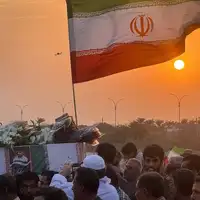
Outside the United States, flag burnings have long been a fixture in Iran, where state-organized rallies for decades have featured the torching of American and Israeli flags.
In June 2025, crowds in Tehran, Tabriz, Shiraz and Isfahan torched US flags during mass state-sponsored demonstrations, chanting slogans against the United States and pledging loyalty to Supreme Leader Ali Khamenei.
In earlier years, Iran’s parliament itself staged televised burnings of the American flag.



Iran’s former deputy parliament speaker on Monday dismissed his past remarks about pursuing a nuclear bomb as a personal opinion, after U.S. President Donald Trump shared a video of the comments and state media criticized him as “inconsiderate.”
On Sunday, Trump shared a video on his Truth Social platform showing Ali Motahari saying in a 2022 interview that Tehran’s initial goal in pursuing nuclear activities was to build a bomb.
“When we first entered nuclear activities, our real goal was to build a bomb. No point denying it… the whole system, everyone who started this. We had started and we wanted to go all the way. If we could keep it secret and test the bomb, it would be over,” Motahari said in the widely shared video interview in April 2022.
On Monday, Motahari responded to Trump’s post, saying he had held no official role in parliament or Iran’s nuclear decision-making team at the time.
“Trump has posted my interview as if it reflects the official decision of the Islamic Republic to build a nuclear bomb. It shows how empty-handed he is when he relies on the personal opinion of an ordinary individual, not an official report,” Motahari said.
Iran’s foreign ministry spokesperson Esmaeil Baghaei also weighed in, accusing Trump of ignoring US intelligence assessments that Iran is not building a nuclear weapon and instead relying on “the personal analysis of an Iranian citizen from 2022.”
In March, US director of national intelligence Tulsi Gabbard told a congressional hearing that Iran was not building nuclear weapons but discourse in Tehran urging the acquisition of a bomb was emboldening advocates for such a move in decision-making circles.
Iran has long denied seeking nuclear weapons, citing a religious edict by Supreme Leader Ali Khamenei banning their use, and says its nuclear activities are entirely peaceful.
Motahari's resurfaced comments, however, sparked backlash inside Iran, with IRGC-affiliated Tasnim news agency publishing a commentary that accused the former Iranian official of handing ammunition to Israel and the West.
Tasnim said Motahari's 2022 remarks, that Iran would have built a bomb if secrecy could have been maintained, “sound more like news than analysis” and could be as destructive “as the missiles of the Zionist regime.”
The outlet also stressed that political figures in senior institutions carry greater weight than ordinary analysts and must be more considerate, warning their words can reverberate domestically and regionally.
Tasnim also criticized Mohammad Sadr, a Khamenei-appointed member of Iran’s Expediency Council, who said on Sunday the assassination of Iran's President Ebrahim Raisi was the work of Israel.
Raisi was killed along with Foreign Minister Hossein Amirabdollahian and other officials in May 2024 when their helicopter went down in mountainous terrain near the border with Azerbaijan. Iranian authorities have consistently said poor weather caused the crash and denied any suggestion of foul play.

A new round of nuclear talks between the Islamic Republic and three European states will take place Tuesday, in Geneva, with Deputy FM Majid Takht-Ravanchi heading the Iranian delegation, Iran’s Tasnim News reported Monday.
Deputy foreign ministers from Germany, France and the UK will also attend, the Revolutionary Guards-affiliated outlet said citing an informed source.
“The agenda of these negotiations is nuclear issues and the lifting of sanctions,” the source said.
Foreign Minister Abbas Araghchi on Friday spoke with his counterparts in the three European capitals and the European Union’s foreign policy chief over the phone, where the snapback mechanism was discussed. The calls led to agreement to continue talks on Iran’s nuclear program.
Snapback debate intensifies
In recent days speculation has mounted over the future of Tehran’s nuclear activities, with the European trio weighing activation of the snapback provision and the Islamic Republic signaling possible responses.
The looming expiry of UN Security Council Resolution 2231’s legal framework has spurred Iranian officials and allies to step up legal consultations aimed at blocking the mechanism.
Britain, France and Germany — the so-called E3 — have warned Iran that unless it returns to nuclear talks by the end of August, they will trigger the mechanism that could reimpose all UN sanctions lifted under the 2015 nuclear deal.
Araghchi and Russian Foreign Minister Sergei Lavrov on Saturday discussed Iran’s nuclear case, recent European moves, and cooperation with the International Atomic Energy Agency in a phone call.
Ali Larijani, secretary of the Supreme National Security Council, also warned that Germany, France and the UK may move to trigger snapback mechanism, but said “important countries” remain divided on how to proceed.
He raised the possibility of Iran’s withdrawal from the Nuclear Non-Proliferation Treaty, saying, “This assumption has always existed. The reality is that the NPT has had no benefit for us.”
Before the 12-day war, Tehran and Washington held five rounds of nuclear talks, but negotiations collapsed when Islamic Republic officials insisted uranium enrichment must continue inside Iran.
Supreme Leader Ali Khamenei on Sunday rejected calls by Tehran moderates for direct negotiations with the United States, insisting that Washington’s hostility cannot be resolved through talks.

Nearly 75 percent of Britain’s Labour voters back designating Iran’s Revolutionary Guards as a terrorist group, a poll cited by the Telegraph shows, increasing pressures on the prime minister to fulfill his party’s pre-election pledge.
The survey of more than 1,500 adults by pollster JL Partners found that 75% of Labour voters and 65% of the wider public back a ban on the IRGC, while only 5% of Labour voters opposed it, the Telegraph reported on Sunday.
Three-quarters of Labour supporters said the group posed a threat to Britain’s national security.
The findings follow MI5 disclosures that security services and police have foiled at least 20 Iran-linked assassination and kidnap plots in Britain over the past two years.
“The British public are rightly under no illusions about the nature of the Iranian regime. It is clearer than ever that the IRGC poses a threat to the safety and security of everyone in Britain,” the Telegraph quoted Labour MP Jon Pearce as saying.
Senior Conservative figures also urged the government to act. Lord Arbuthnot, a former chair of parliament’s defense select committee, was quoted as saying: “With MI5 telling us they have foiled at least 20 state-sponsored attacks by Iran in the UK, what on earth is holding the Government back from proscribing the IRGC?”
The IRGC, a branch of Iran’s armed forces, is already under British financial sanctions, but critics argue those measures are insufficient.
The poll showed that 51% of the public believe sanctions have failed to curb the group’s activities, and 46% doubt authorities are doing enough to counter IRGC-linked operations in the UK.
As an alternative to proscription, Home Secretary Yvette Cooper has backed proposals for new legislation to give ministers powers to blacklist state agencies such as the IRGC, the newspaper said.
The poll was commissioned by the Iranian Front for the Revival of Law and National Sovereignty, founded by Vahid Beheshti, a political activist and journalist who has staged a protest for more than 900 days outside the Foreign Office.
The debate in Britain comes as other Western allies have already taken action. The United States designated the IRGC as a foreign terrorist organization in 2019, while Canada added the group to its terrorist list in 2023.

Israel says it launched airstrikes against the positions of Yemen's Houthis in Sanaa on Sunday, shortly after the group fired a ballistic missile allegedly armed with a cluster bomb warhead at Israel.
The Israeli military said the strikes hit “military infrastructure of the Houthi terrorist regime” in the Sanaa area, including a military site housing the presidential palace, the Hizaz and Asar power plants, and a fuel storage facility.
Israeli media reported that 10 Air Force jets took part in the strikes in Sanaa, dropping about 35 munitions.
Earlier on Sunday, Israeli media reported that an investigation by the Israeli military found that Yemen’s Iran-backed Houthi militant group used a ballistic missile armed with a cluster bomb warhead in its attack on Israel on Friday.
One of the munitions from the strike hit the yard of a house in the central Israeli town of Ginaton, causing minor damage.
The reports said that while an investigation is under way by the Israeli military into the failure to intercept the missile, the probe is not related to the type of warhead it carried.
Reuters reported citing an Israeli Air Force official as saying on Sunday that the missile most likely carried several sub-munitions “intended to be detonated upon impact.”
“This is the first time this type of missile has been launched from Yemen,” the official was quoted as saying.
A day earlier, Ynet wrote that Israeli Air Force is probing why defenses failed to stop Houthi missile that struck near Tel Aviv, and whether it carried cluster munitions like those Iran used in June war.
Such payloads complicate interception and increase the risk of civilian harm.
Five interceptor systems, including THAAD, Arrow, David’s Sling and Iron Dome, engaged the projectile, which initial reviews suggest fragmented in mid-air, Ynet quoted authorities as saying.
Familiar Iranian design
One of the best-known weapons of this type is the Iranian Khorramshahr-4, unveiled in May 2023, with the capacity to scatter dozens of small warheads resembling Grad rockets. Tehran says it can carry a payload of up to two tons over a range of 2,000 kilometers.
During the June war, Iran launched missiles fitted with submunitions designed to disperse small explosives over urban areas to maximize civilian harm.
The Houthis, who control much of Yemen’s population, announced a maritime blockade in the Red Sea in November 2023 after a call by Iran’s Supreme Leader Ali Khamenei to support Hamas in Gaza. Since then, they have fired dozens of ballistic missiles and drones toward Israel.
Most were intercepted, but in May another missile came close to Ben Gurion’s perimeter. The military said its probe would examine how to adapt defenses against cluster-type payloads, which pose a growing challenge as Iran’s allies escalate attacks.

Iran’s Supreme Leader Ali Khamenei on Sunday rejected calls by Tehran moderates for direct negotiations with the United States, insisting that Washington’s hostility cannot be resolved through talks.
“Those who say, ‘Why don’t you negotiate directly with the United States and solve the issues,’ are superficial; because the reality is different," Khamenei said during a meeting with his supporters in Tehran.
"Given America’s true objective in its hostility toward Iran, these issues are unsolvable."
“The enemies, after facing the steadfast unity of the nation, officials, and armed forces, and after suffering heavy defeats in military attacks, have realized that Iran and the Islamic system cannot be subdued by war or forced into obedience," he said.
Khamenei added that enemies had underestimated Iran’s resilience and wrongly believed attacks would separate the people from the state.
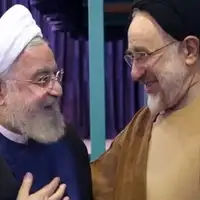
The 86-year-old ruler's remarks came one week after Iran's Reform Front issued a controversial statement urging direct negotiations with Washington, suspension of uranium enrichment, and acceptance of full IAEA monitoring in exchange for sanctions relief.
Regime change
The Supreme Leader, who was absent for 22 days after the June war, accused the United States of preparing for the Islamic Republic's collapse following the June attack.
“On June 13 Iran was attacked; a day later, some American agents met in a European capital to discuss an alternative to the Islamic Republic — that’s how confident they were."
"One day after the attack began, they sat and discussed what government should rule Iran after the Islamic Republic. They even appointed a king, deciding who should be the Shah of Iran. This is how they imagined Iran.”
“They thought this attack would create distance between the people and the system, weaken the system, and allow them to impose their vile and malicious goals,” Khamenei said.
Israel and regional conflict
Khamenei argued that Washington’s enmity was openly acknowledged. “The reason for America’s hostility toward us was revealed by the man in office there today, who said: ‘Our confrontation with Iran, with the Iranian nation, is because Iran must be obedient to the United States.’”
“The Iranian nation is deeply offended by such a grave insult and will stand with full strength against those who hold such a false expectation,” he added.
Turning to Israel, Khamenei said: “Today our enemy, the one standing against us — the Zionist regime — is the most despised government in the world."
He said "the path of aiding the Zionist regime must be cut off, and what the brave people of Yemen are doing today is the right course.”
The Houthis, who control much of Yemen’s population, announced a maritime blockade in the Red Sea in November 2023 after a call by Khamenei to support Hamas in Gaza. Since then, they have fired dozens of ballistic missiles and drones toward Israel as well as commercial vessels navigating the region.
“We are ready for whatever possible for the Islamic Republic,” he continued, pledging readiness to “uproot this deep, malignant cancer [Israel] from the region.”