The United States must compensate Iran for damage caused by recent military strikes on its facilities, Deputy Foreign Minister Saeed Khatibzadeh said on Tuesday in remarks to Al Mayadeen.
Khatibzadeh said Tehran will file a formal complaint with the United Nations, and warned that Washington must be held responsible for what he called unlawful aggression against Iran’s nuclear and scientific infrastructure.
He claimed that it was the US that first sent messages seeking to halt the conflict, not Iran.
“The US must pay for the damage inflicted on Iranian facilities,” he said, adding that Iran will pursue the matter through diplomatic and legal channels.

Iran’s missile response to US and Israeli strikes led directly to the current ceasefire, Foreign Minister Abbas Araghchi said in an interview published Wednesday by Al-Araby Al-Jadeed.
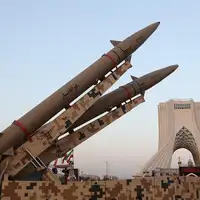
“They thought US involvement would lead to Iran’s surrender,” Araghchi said. “But our strong missile response using Kheibar Shekan missiles forced them to back down and propose a ceasefire through diplomatic channels.”
Iran presents ceasefire as moral victory
The ceasefire ended 12 days of fighting between Iran and Israel and remains in place. Araghchi said Iran accepted the deal to maintain moral high ground and to build the foundation for a new regional policy based on Islamic and regional values.
“We must see whether the aggressor is truly able to uphold the ceasefire, or if—as before—it is simply using it to manage domestic challenges,” he said.
Araghchi also defended Iran’s missile strike on the US Al Udeid base in Qatar, calling it a lawful act of self-defense in response to attacks on Iran’s nuclear facilities. He stressed that the strike was not a threat to Qatar’s sovereignty.
According to Araghchi, the US sent messages before and after the attack to avoid escalation. Iran responded by telling intermediaries, including European officials, that talks with Washington would not resume while aggression continued.
Tehran vows to continue nuclear work despite attacks
Despite attacks on nuclear sites, Araghchi said Iran would not abandon its program, which he described as transparent and under IAEA oversight.
“Diplomacy during war is still diplomacy,” Araghchi added, citing Geneva talks and coordination with regional partners as key in isolating Israel and building broader support for Iran’s position.
Iran has told the United Nations Security Council that its missile strike on the US Al Udeid Air Base in Qatar was a legitimate act of self-defense and posed no threat to the Qatari government or people, according to a letter from its ambassador released Wednesday.
In the letter, Iran’s Ambassador and Permanent Representative to the UN, Amir Saeid Iravani, said the June 23 strike was carried out in response to US attacks on Iranian nuclear sites and was consistent with Article 51 of the UN Charter, which allows for self-defense.
The letter cited US responsibility for strikes on Iran’s nuclear facilities in Fordow, Natanz, and Isfahan on June 22, which President Trump publicly acknowledged. Iravani said the Iranian response was “defensive, legitimate, and proportionate,” and emphasized that the targeted US base was located far from civilian areas to avoid collateral damage.
Iran also stressed that the action did not endanger Qatar, calling the country a “friend and brother” and reaffirming its commitment to strong bilateral relations.
The death toll in Iran from Israeli military strikes has risen to 1,054, with 4,476 others injured, the US-based Human Rights Activists News Agency (HRANA) said on Tuesday.
Of those killed, 417 were civilians, and around 2,000 of the wounded were non-combatants, according to HRANA. A ceasefire between Iran and Israel took effect earlier in the day and remains in place.
Since the start of the conflict, at least 823 people in Iran have been arrested on political or security-related charges, the human rights group added.

The United States is holding negotiations with Iran aimed at securing a long-term peace agreement, US Special Envoy to the Middle East Steve Witkoff said on Tuesday in an interview with Fox News.
"We are already talking to each other, not just directly but also through interlocutors. I think that the conversations are promising. We are hopeful that we can have a long-term peace agreement that resurrects Iran,” Witkoff said.
He also defended recent US strikes on Iran’s nuclear infrastructure, rejecting doubts about their effectiveness. “Iran cannot develop a nuclear weapon following the destruction of Esfahan, Natanz, and Fordow,” Witkoff said, adding that the strikes eliminated Iran’s nuclear capability.
Witkoff said bunker buster bombs rendered Esfahan’s conversion facility and Natanz’s enrichment site inoperable, and that the Fordow site was also destroyed.
His comments came after CNN reported on a leaked preliminary US intelligence assessment suggesting the strikes did not destroy the three targeted nuclear sites. Citing sources familiar with the assessment, CNN said the Defense Intelligence Agency believes the attacks failed to eliminate key components of Iran’s nuclear program or its stockpile of highly enriched uranium, and likely only delayed its progress by several months.
Witkoff called for an investigation into the leak, saying the claims undermined the administration’s message and ongoing diplomatic efforts.

The International Atomic Energy Agency has no information on the location of roughly 900 pounds (408 kilograms) of enriched uranium in Iran, Director General Rafael Grossi said Tuesday in an interview with Fox News.
Grossi said Iranian officials told the agency they removed the material for “protective measures” ahead of US strikes on nuclear facilities, but the IAEA has not been informed where it was taken. “We do not have information on the whereabouts of this material,” he said.
He stressed that locating the uranium is part of the agency’s mandate and not a political act. “My job is to determine where this material is, as Iran has an obligation to report and account for all nuclear material in its possession,” Grossi said. “This will continue to be my focus.”
Grossi also confirmed that US strikes caused “very serious damage” to a centrifuge hall at the Natanz nuclear site. He said the Isfahan facility was also hit, but added the IAEA does not currently have access to fully assess the extent of the damage.