“Iranian authorities must release all those arbitrarily detained and should relocate other prisoners away from locations at risk of being attacked by Israel," Amnesty International said Monday.
"Prison security forces must not use force or firearms against distressed prisoners,” the rights group said in its statement.
Amnesty also said it is extremely distressed by video footage and reports of Israeli attacks on Evin prison, where hundreds of prisoners, including political dissidents and human rights defenders, are imprisoned.
“Deliberately attacking civilian objects is prohibited under international humanitarian law and would amount to a war crime.”
It also urged prison security forces not to use force or firearms against distressed prisoners.

Qatar has shut down airspace temporarily as part of measures taken amid developments in the region, the Qatari foreign ministry said in a post on X.
The move comes to ensure safety of residents and visitors, the statement added.
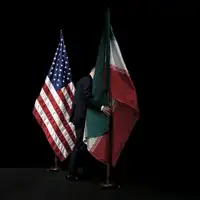
The move comes as Iran has threatened to retaliate against the United States after strikes on its nuclear sites.

US airstrikes on Iran’s nuclear facilities are unlikely to cause serious radioactive fallout, nuclear experts told Iran International despite fears of a nuclear disaster.
Their assessments come as Iran threatens retaliation, and the International Atomic Energy Agency (IAEA) holds an emergency meeting on Monday in response to the escalating crisis.
“For most facilities the impact of direct strikes will, to a large extent, most likely be very localized,” said Dr. Kathryn Higley, distinguished professor of nuclear science and engineering at Oregon State University and president of the National Council on Radiation Protection and Measurements told Iran International.
“While enriched uranium is radioactive, it is not terribly so. If the uranium is present and released as hexafluoride, that could also pose a serious but still localized hazard due to the fluorine in the compound being reactive," she said.
Dr. David Albright, founder of the Institute for Science and International Security, told Iran International that concerns over radiation from a strike on Fordow are overblown when compared with past incidents.
“One way to understand the low radiological risk of bombing Fordow is from a comparison to the underground Natanz enrichment site with over 15,000 centrifuges and many tons of uranium,” he said.
“It was attacked with earth penetrators and there is no off-site radiation risk. Fordow has about 2,700 centrifuges and much less uranium, and is more deeply buried underground. Hard to expect worse than Natanz.”
Albright emphasized that the design and location of Iran’s underground enrichment sites inherently limit the spread of radioactive.
Temporary contamination risks are primarily limited to areas near uranium conversion and enrichment plants, according to Andrea Stricker, a research fellow at the Foundation for Defense of Democracies (FDD).
“Response teams going near the destroyed facilities, for example, would need to wear protective gear temporarily due to risks of inhaling or ingesting aerially dispersed uranium chemical compounds,” said Stricker. “There is not concern for dispersal beyond the immediate plants.”
The US strike on the heavily fortified Fordow facility has likely trapped radioactive material underground, limiting any broader hazard, Stricker said.
Iran's response: 'no signs of contamination'
Their comments follow US President Donald Trump’s announcement on Sunday that American forces had struck Iran’s Fordow, Isfahan, and Natanz nuclear sites, which he described as “completely and fully obliterated.”
While Iran confirmed the strikes, it insisted its nuclear program would continue undeterred.
Iran’s National Nuclear Safety System reported that radiation detectors at the affected facilities showed “no signs of contamination” and stated, “There is no danger to the residents living around the aforementioned sites," according to Iran State media.
The IAEA said it had observed “no increase in off-site radiation levels” and would continue monitoring the situation.
Director General Rafael Grossi announced an emergency meeting of the agency’s 35-member board of governors. In response, Iran’s nuclear chief Mohammad Eslami called for an investigation and accused Grossi of “inaction and complicity.”
Isfahan and Natanz—both previously targeted by Israeli airstrikes—have not shown any evidence of radiation release, according to IAEA monitoring.
Experts say Bushehr not likely to be targeted
Bushehr, Iran’s only operational nuclear power reactor, is not expected to be targeted.
“Israel will not have the Bushehr nuclear power plant on its target list, as striking the reactor would cause a radiological disaster in the region,” Stricker said.
Bushehr is used for civilian energy production, not enrichment. The plutonium it generates is not suitable for nuclear weapons, and spent fuel is required to be returned to Russia.
Still, the plant contains significant quantities of nuclear material, and Grossi has warned that an attack on Bushehr could have the most serious radiological consequences of any site in Iran.
Tehran continues to maintain that its nuclear program is for peaceful purposes, but Trump and Israeli officials argue Iran is moving dangerously close to weapons capability.
“There will either be peace," Trump said during a national address following the strikes, "or there will be tragedy for Iran."
"There is no reason for us, or for me personally, to criticize what Israel started a week ago, nor is there any reason to criticize what America did last weekend," German Chancellor Friedrich Merz said on Monday.
Speaking at a BDI event, he acknowledged the operations carried risks but argued that “leaving it as it was wasn’t an option either.”
“The evidence that Iran is continuing on its path to building a nuclear weapon can no longer be seriously disputed.”

The US and Israel may have altered the trajectory of the Mideast with military strikes on Iran’s nuclear infrastructure—but without a broader strategy for internal change, the window of opportunity could quickly close, experts told Iran International.
Over the weekend, US forces carried out unprecedented airstrikes targeting Iran’s Fordow, Natanz, and Isfahan nuclear facilities. B-2 stealth bombers and Tomahawk cruise missiles were used in a mission that involved more than 120 aircraft—making it one of the largest US military operations against the Islamic Republic in decades.
“This marks a dramatic and consequential shift in the region’s strategic balance,” said Dr. Eric Mandel, founder of the Middle East Political Information Network (MEPIN), a think tank focused on US foreign policy and national security in the Middle East. But he warned military strikes alone were not a strategy for lon-term success.
Mandel emphasized that lasting success depends on political vision, regional coordination, and tangible support for the Iranian people—including support for dissident networks, and a clear set of US conditions for any future negotiations.
The removal of nuclear capabilities from “the world’s most dangerous regime” makes the world safer, argued Jonathan Harounoff, spokesperson for Israel’s Mission to the United Nations and author of Unveiled: Inside Iran’s #WomanLifeFreedom Revolt.
'Rare opportunity' for change
Harounoff, whose family is of Iranian origin, said the Iranian people “deserve a government that cares more about their social and economic wellbeing and safety than in pouring hundreds of millions of dollars into constructing a dangerous foreign policy, a destructive nuclear program and a web of terror proxies across the Middle East.”
“The door has been opened to make sure Iran cannot continue its pursuit of nuclear weapons,” said former US Ambassador John Craig, who was part of the Carter administration’s mission to assess the Shah’s position just prior to the 1979 revolution. While it’s too early to predict long-term outcomes, Craig said Iran’s leadership is now under enormous pressure to either return to negotiations or risk further escalation.
“Iran is in a very, very bad place. The leadership has very few options,” said Craig.
Craig added that internal discontent is growing—but warned that the international community must consider who can credibly lead a push for regime change from within. “Time for the mullahs to go,” he said. “But who leads the way is the real question.”
Experts agree that Israel’s initial strikes—combined with US firepower—shattered the Islamic Republic’s sense of impunity. But they caution that without a coherent American strategy, this moment could be lost.
Unless the United States now moves with strategic clarity—disrupting Iran’s centers of power and actively supporting the Iranian people—this rare opportunity for meaningful change could slip away, Mandel warned.

The US and Israel are preparing for a renewed wave of Houthi attacks on American shipping and Israeli territory, following the US nuclear strikes in Iran, as the Iran-backed group announced it had officially entered the war.
The Houthis' official X account posted in Hebrew on Sunday morning, warning Israelis to “leave the country immediately”, with a video of a missile launching and scenes of destruction in Israel from Iran’s recent missile attacks.
Houthis recently brokered a ceasefire with the Trump administration and agreed to cease attacks on US ships and assets in the Red Sea region. In the early hours of Sunday, the ceasefire was over.
"We will officially enter the war - keep your ships away from our territorial waters," an announcement from the group said.
The Houthis had been waging a maritime blockade since the early weeks of the Gaza war in 2023, in what it says is allegiance with the Palestinians in Gaza.
An Israeli intelligence source told Iran International that given the complexity of striking US assets, the Houthis, designated a foreign terrorist organization by the US and others, are more likely to target Israel first.
'Not a big deal'
“It’s a bit early to say but the Houthis would prefer to target Israel first, it’s less complex at this stage, but it’s hard to tell. The next 24 hours will be revealing,” he said.
“There is no major threat from the Houthis,” the intelligence source added. “They’re limited in their capability and while they will try to retaliate for the current situation, it is not a big deal.”
The Israeli military says that more than 40 surface-to-surface missiles have been fired towards Israel since the Gaza war began, with one barely missing Israel’s biggest airport, Ben Gurion, just weeks ago.
Another 320 UAVs had been fired towards Israel, over 100 of which intercepted with two effective hits as of January data. The remainder fell in open areas, failed to reach Israeli territory or caused no significant damage.
Yemeni military journalist Rashid Maarouf, based in Marib city, told Iran International on Sunday that the Houthis' next steps will depend on the extent of the impact of the American strikes on Iran's nuclear reactors.
Targeting Arab nations
He also agrees the group's capabilities are limited. “They are launching missiles at Israel, but the Houthis' missiles are limited. They do not have a large number to launch a large salvo like Iran does. Even if the Houthis struck Israel, they would not be able to strike with more than two to three missiles a day.”
Abdul Basit Al-Baher, the spokesman for Yemen's military in the governorate of Taiz, told Iran International: "The Houthis are in the crosshairs of the US-Iranian escalation, between the tool and the victim."
He says the US attacks on Iran will require the Houthis to launch new attacks on American or associated ships, using drones or missiles, in an attempt to divert attention from the US strike on Iran and to pressure Washington to halt any potential escalation against Tehran.
It may also trigger attacks on Saudi or Emirati targets, the two nations strong US allies, Al-Baher said.
"They are expected to attempt to expand the scope of the confrontation by targeting Arab coalition countries, particularly Saudi Arabia, to send a message that any targeting of Iran will destabilize the entire region," he said.
He warns that the most dangerous scenario would be full engagement in a "proxy war", Iran activating its regional military allies.
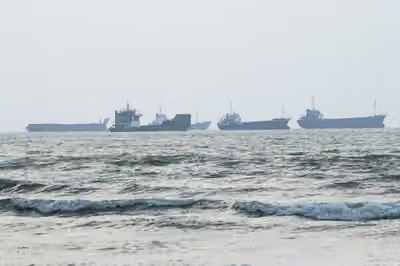
"If Iran decides to respond forcefully, it may use the Houthis as an offensive force against Western interests in the Red Sea," he said, including special attacks on commercial and military vessels or even an attempt to threaten oil and energy corridors."