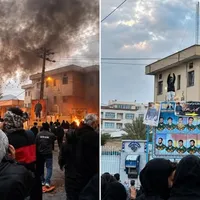
Iranian missiles hit multiple Israeli cities early Monday, killing at least eight people and wounding over 100, according to Israeli army radio.
The latest casualties bring Israel’s death toll to 21 since Friday, as Iran continues retaliatory strikes following Israeli attacks on its nuclear and missile infrastructure.
The escalation has raised alarm among leaders attending this week’s G7 summit, amid fears that the conflict could expand into a broader regional war.
Israel’s recent strikes on Iran’s nuclear facilities may have seriously damaged the underground Natanz enrichment site, according to a report by The Wall Street Journal citing Israeli and international officials.
An Israeli official told the paper there are early indications that the underground portion of the Natanz facility may have imploded, though further assessments are still needed. The International Atomic Energy Agency (IAEA) said the sudden loss of power at Natanz could have destroyed some of the site’s 14,000 centrifuges, which are highly sensitive and can be damaged if not shut down properly.
The fate of Iran’s enriched uranium stockpiles — stored at Natanz, Isfahan, and Fordow — remains unclear. Israeli officials said Tehran had recently signaled it might disperse those supplies, adding urgency to the timing of the strikes.
Minor damage was reported near the US Embassy branch office in Tel Aviv following “concussions of Iranian missile hits nearby,” US Ambassador Mike Huckabee said Monday.
No US personnel were injured, but the US Embassy in Israel and its consulate remain officially closed on Monday due to an ongoing shelter-in-place order.

Israeli Defense Minister Israel Katz on Monday threatened retaliation against Tehran, accusing Iran’s leadership of targeting Israeli civilians in an effort to deter continued military operations.
“The boastful dictator in Tehran has become a cowardly murderer, firing directly at Israel’s civilian rear to stop the IDF from continuing its assault,” Katz wrote on social media. “Tehran residents will pay the price — soon.”
Iran on Monday executed Esmaeil Fekri, accused of spying for Israel’s Mossad, after the Supreme Court upheld his death sentence, state media said.
Authorities said Fekri passed classified information to Israeli agents.
The execution is the third in recent weeks related to allegations of espionage on behalf of Israel.
In April, Mohsen Langarneshin, a cybersecurity expert, was executed in Ghezelhesar prison. Rights groups and activists have said his conviction was based on forced confessions and flawed legal proceedings.
Earlier this year, Norway-based rights group Iran Human Rights (IHR) warned that Fekri was transferred from Ward 4 of Evin Prison to Ghezelhesar Prison on 15 February alongside Langarneshin, raising concerns of their imminent execution as hangings of prisoners held in Evin are often carried out in Ghezelhesar.
Iran’s parliament speaker Mohammad Bagher Ghalibaf accused Israel on Monday of trying to topple the Islamic Republic by sparking unrest and using internal infiltrators.
“Israel fantasized it could bring people into the streets of Tehran and finally achieve its 40-year dream of eliminating the Islamic system,” Ghalibaf said in parliament. “But the will of the people and the leadership turned that plan into failure.”
He also warned that “a significant part of the enemy’s attacks are not military, but carried out through internal infiltration.”