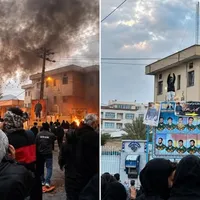
The recent actions against Israel represent only part of Iran’s response, Behnam Saeedi, secretary of Iran’s parliamentary national security committee said Sunday.
“What has been carried out so far is only a portion of our answer, and more crushing responses are on the way,” he added.


Amid escalating military conflict between Iran and Israel, the exchange rate for the US dollar in Iran surpassed 960,000 rials on Sunday morning.
In response to the turmoil, Iran’s Supreme Stock Council announced a three-day closure of the national stock exchange.
The Central Bank also suspended Tether (USDT) trading for a second consecutive day.

Israeli Foreign Minister Gideon Sa’ar told his German counterpart Johann Wadephul on Saturday that the IDF’s military operation in Iran would continue, citing remaining strategic objectives.
Sa’ar accused Iran of deliberately targeting civilians in violation of international law, while asserting that Israeli strikes are focused on military infrastructure and Iran’s nuclear program. He thanked Germany for supporting Israel’s right to self-defense. Wadephul briefed Sa’ar on his recent visit to the Middle East.
Pipelines and transmission lines at the Bazan oil refinery complex in Haifa sustained localized damage during Iran’s overnight missile barrage, the operator reported to the Tel Aviv Stock Exchange.
Refining operations continue, though some facilities have been shut down. No casualties were reported.
The company is assessing operational impact and has not addressed potential environmental effects on local residents, wrote the Times of Israel.
The Haifa area was hit with around 40 missiles overnight, one of which struck a home in nearby Tamra, killing four civilians.


According to information received by Iran International, numerous bank ATMs in Tehran have gone offline, leaving residents facing difficulties in withdrawing cash.