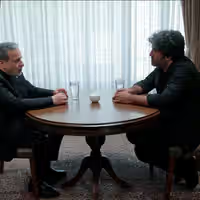
Iran has become "much more aggressive" in ongoing nuclear talks, US President Donald Trump told Fox News in an interview.
"Iran is acting much differently in negotiations than it did just days ago," Fox News quoted Trump as saying. "Much more aggressive. It’s surprising to me. It’s disappointing, but we are set to meet again tomorrow – we’ll see."
Fox News cited senior administration officials as saying they believe Iran is delaying the talks as concrete progress remain lacking while it advances its nuclear program.
Republican advocates of a harder line on Iran are increasingly clashing with US President Donald Trump's more non-interventionist MAGA movement over nuclear talks with Tehran, Politico reported on Tuesday.
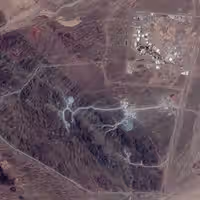
Influential conservatives are ramping up a lobbying campaign to end a push for a nuclear deal with Tehran and instead allow its nemesis Israel to strike Iran's nuclear sites, Politico reported citing informed sources.
Those lines were advocated by popular right-wing talk show host Marc Levin in a private lunch with Trump at the White House on Wednesday also attended by the US envoy for the talks Steve Witkoff - whom Levin has frequently criticized.


Republican advocates of a harder line on Iran are increasingly clashing with US President Donald Trump's more non-interventionist MAGA movement over nuclear talks with Tehran, Politico reported on Tuesday.
Influential conservatives are ramping up a lobbying campaign to end a push for a nuclear deal with Tehran and instead allow its nemesis Israel to strike Iran's nuclear sites, Politico reported citing informed sources.
Those lines were advocated by popular right-wing talk show host Marc Levin in a private lunch with Trump at the White House on Wednesday also attended by the US envoy for the talks Steve Witkoff - whom Levin has frequently criticized.
Rupert Murdoch's media empire has also begun piling pressure on the outreach, Politico wrote, and the New York Post which he owns has lambasted Witkoff and suggested the real estate billionaire is beholden to Qatar.
“They’re trying to push the president to make a decision that’s not what he wants,” Politico quoted a senior Trump administration official as saying.
“There’s clearly a lobby for war with Iran vs. those who are more aligned with the president, that know he is the one that has been able to bring them to the negotiating table.”
Tucker Carlson, a top conservative commentator, became aware of Levin's White House meeting and blasted his efforts as likely to embroil the United States in a war that could draw in other powers and result in American defeat.
White House press secretary Karoline Leavitt told the Politico that Trump listens to a broad array of voices but makes his own policy judgments.
“With respect to Iran, President Trump has made his own opinion clear: he would like to pursue diplomacy and make a deal, but IF Iran makes a deal impossible, President Trump has other options on the table,” she said.
The Make America Great Again movement founded by Trump prioritizes populist issues like jobs and economic growth over foreign entanglements, which the president has said led to defeat and disrepute for the country.
Stalwart MAGA influencers Charlie Kirk and Jack Posobiec have advocated for diplomacy to their broad online followings.
A longtime Trump ally quoted by the outlet questioned the wisdom of attempting to pressure the anti-war president into a conflict.
“The president is not going to support war… But I’m telling you, these guys won’t take no for an answer. This is why there’s a breach in the Bibi-President Trump relationship. ... Israel isn’t reading the room. The MAGA movement doesn’t support military operations.”
The latest US proposal in the nuclear talks proposed an international consortium to enrich uranium in which Tehran would take part in order to produce nuclear fuel.
Politico quoted a senior Trump administration official as saying the offer may provide a way for compromise: “It is a very creative proposal that allows both sides to claim a win."

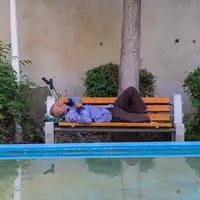
Once tucked away in quiet corners of rural life, opium has grown into a central fact of existence in Iran—traded openly, consumed quietly and relied upon by millions looking to salve social and economic anxiety.
In voice messages and phone calls to Iran International, Iranians from cities and provinces across the country said they believed the usually vigilant state turns a blind idea to the blight.
“The regime uses it to suppress voices,” said Hamid from Siahkal. “They instantly arrest women for not wearing the hijab. You think they can’t stop opium? Of course they can. But they don’t want to.”
Former health minister sparks outrage
The latest public reckoning began when a video of former Health Minister Dr. Reza Malekzadeh circulated widely online last month. “The highest opium consumption in Iran is in Rafsanjan in Kerman province; 27% of the people in this city use opium. Golestan ranks next with 18%,” he said.

The backlash from residents of Rafsanjan was swift, prompting Malekzadeh to release a second video. This time, he broadened the scope: “More than 45% of the world’s opium production is consumed in Iran, and about 10% of the population over the age of 40 uses opium either recreationally or due to addiction.”
According to the United Nations Office on Drugs and Crime, Iran consumes approximately 450 metric tons of opium annually—about 42% of the global total.
While statistics vary, all indicators point to an addiction crisis of unprecedented scale driven by proximity to Afghan production, weak deterrent policies and systemic neglect.
From local habit to national structure
Sociologist Saeed Peyvandi said Iran’s addiction crisis deepened after the 1979 revolution, when the state embraced violent crackdowns instead of treatment.
“After the Islamic Revolution it expanded so much and we are dealing with a very vast social phenomenon,” he told Iran International. “Before the revolution it was so geographical … but after, the clerical rulers began a very tough stance to arrest and execute drug dealers … and we witnessed its expansion in contrast.”

“The policies of the Islamic Republic, excluding the human element from the process and putting stigma on addicts led them to become addicted again. The rehabilitation is done very badly and they are humiliated,” he added.
In contrast to Iran’s punitive approach, Peyvandi cited decriminalization and public health strategies in countries like Portugal, the Netherlands and Switzerland.
“The more secret such acts become, the harder it is to treat them,” he said.
‘The system does not want to solve the issue’
For many inside the country, the failure to address addiction is not just incompetence, but deliberate neglect, said Sam from the northwestern city of Anzali.
Despite claims of nationwide surveillance, Sam said drugs move freely. “You say you have (Islamic Revolutionary Guard Corps) IRGC intelligence and the intelligence ministry who watch every single move. So why is this happening?”
“With so much economic strain and social repression, people can't tolerate the pressure anymore,” he added. “There are no pastimes or fun."
Majid from Mashhad offered a simpler explanation. “The simplest reason for vast use of opium in Iran is that there is money in it,” he said.
“Either for those addicted to it, or those who want to quit.”
'A tool of political control'
Hamid from Siahkal near the Caspian Sea likened Iran to a mental asylum. “The only medication to use is opium,” he said. “It's the good stuff, which soothes the people and makes them sit down and never think of getting back up.”

“(Authorities) clamp down on everything like a piece of cake. Two girls come out without hijabs and they instantly arrest them. You think they can't deal with the opium problem?”
“Unfortunately, we Iranians, when in great pain, take stronger painkillers—and opium is considered a painkiller as well. My body can’t tolerate it, otherwise I would have taken some myself.”
Ehsan from Tehran drew a similar conclusion. “I believe the Islamic Republic is using opium as a preventive,” he said.
“If you go to rehab centers, you will see that it is making guys more addicted because junkies cannot shout and raise their voices against the government.”
“The Revolutionary Guard is the largest narcotics cartel itself … It's not just opium. You can easily find crack and meth inside Iran,” he added.
A society without alternatives
For Toomaj in Rasht in northwest Iran, the problem is not only addiction, but isolation. “All are profiteers—from the ones who bring Methadone to those who sell drugs,” he said. “They are trading using the life of people.”
“In other countries, people find a good feeling in nightclubs, bars. When none of them are available in Iran, people have to make themselves happy with something else.”
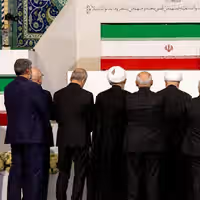
Iran's Atomic Energy Organization spokesman, Behrouz Kamalvandi, said on Tuesday that the country's 60% enriched uranium is "definitely safe."
He also dismissed Western proposals for limiting enrichment inside the country as unacceptable, saying Iran has the right to have nuclear fuel cycle.
“The negotiations have not yet entered technical details, but there is absolutely no possibility for the country to accept zero or miniature enrichment. Both our negotiators and the leadership are committed."
About the country's stockpile of enriched uranium, Kamalvandi said, "We must have guarantees for everything we do, and one of the strong guarantees is keeping nuclear materials."
"The 60% enriched uranium is definitely safe, and no one can easily harm it. It is certainly a guaranteed means for the country, and we are very careful about this issue."
US President Donald Trump favors financially crippling Iran over military intervention to address its nuclear ambitions and regional activities, according to Mike Huckabee, the US ambassador to Israel.
In a podcast interview, Huckabee said he hoped for a diplomatic resolution to the Iran situation, saying: "I'd love to see a diplomatic solution to the Iranian situation. Nothing would thrill me more. And I think the president is pushing for that because he really is a president of peace."
Huckabee added that “Trump has said repeatedly Iran will never have a nuclear device. They must have a total dismantlement of their nuclear program. What they must do is end enrichment of all kinds. Those are his words. Those are his doctrines."
The ambassador said Trump prefers economic measures, adding: "The president would rather bankrupt them than bomb them. That’s his view. It would be better to crush them financially than it would be to crush them militarily."
Huckabee also described Iran as the primary driver of regional instability, saying that groups like Hamas, Hezbollah, and the Houthis are "empowered by Iran."
"That’s where they get a lot of their hardware. It is where they get a lot of their philosophical fanaticism. And it is also where they get most of their funding."