Conservative commentator Tucker Carlson has sharply criticized renewed calls in Washington for military action against Iran, accusing proponents of exaggerating the threat posed by Tehran’s nuclear program and pursuing regime change under the guise of national security.
In a lengthy post on X, Carlson singled out media personality Mark Levin, who he said had visited the White House to advocate for “war with Iran.” Carlson wrote, “Mark Levin was at the White House today, lobbying for war with Iran. To be clear, Levin has no plans to fight in this or any other war. He’s demanding that American troops do it.”
Carlson argued that claims about Iran being weeks away from developing a nuclear weapon are not supported by credible intelligence. “In fact, there is zero credible intelligence that suggests Iran is anywhere near building a bomb, or has plans to. None,” he wrote. “If the US government knew Iran was weeks from possessing a nuclear weapon, we’d be at war already.”
He also criticized US policy toward disarmament and cited the example of Libya. “Iran knows it’s unwise to give up its weapons program entirely. Muammar Gaddafi tried that and wound up sodomized with a bayonet,” Carlson said. “As soon as Gaddafi disarmed, NATO killed him. Iran’s leaders saw that happen. They learned the obvious lesson.”
Carlson alleged that the real aim of voices pushing confrontation is regime change, not nonproliferation. “So why is Mark Levin once again hyperventilating about weapons of mass destruction? To distract you from the real goal, which is regime change — young Americans heading back to the Middle East to topple yet another government.”


Iranian pilgrims chanted “Death to America” and “Death to Israel” during the annual “Disavowal of Polytheists” ceremony held on Thursday in the plain of Arafat in Saudi Arabia, Iranian media reported.
The event, organized as part of Iran’s official Hajj program, took place in tents allocated to Iranian pilgrims and was attended by senior officials, including Iran’s ambassador to Saudi Arabia and the country’s top Hajj representative.
Participants carried placards with slogans such as “Al-Quds is ours” and “Israel is absolute evil.”
The Islamic Republic of Iran has long regarded the “Disavowal of Polytheists” as a politically symbolic ritual, tying religious observance to opposition to perceived global oppressors. The chant “Death to America” has been a staple of the ceremony since it was first introduced after the 1979 revolution.
In 1987, the event led to a deadly confrontation between Iranian pilgrims and Saudi security forces, resulting in more than 400 deaths. Following that incident, the ceremony was suspended for several years and resumed in 2001 in a more restricted format. It is now conducted inside enclosed tents under Iranian supervision and coordinated with Saudi authorities.

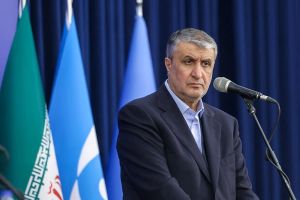
Iran is using American-made nuclear reactors and maintains that the level of uranium enrichment is not inherently important, the head of the Atomic Energy Organization of Iran (AEOI) said, as negotiations between Tehran and Washington remain stalled.
"The Tehran reactor we use was built by the Americans. In Canada and the United States, reactors operate with 90% enriched fuel," Mohammad Eslami said on Iranian state television. "So the percentage of enrichment has no particular significance."
The nuclear chief also stressed that 20% enrichment is necessary for research reactors. "Without the capability to design and manufacture reactors and complete the fuel cycle, one cannot claim to be nuclear-capable — and we are now at that level," he said.
Eslami emphasized that Iran’s nuclear development is rooted in national capability. "We have now reached full maturity in the nuclear fuel cycle, which is the foundation of the nuclear industry," he said.
"The West cannot tolerate this and continues to escalate its hostility toward us in every possible way."
He accused the United States and its allies of trying to maintain monopolistic control over nuclear technology. "They have always said Iran should have no domestic reactor and must import fuel indefinitely," Eslami said. "Our response has always been clear: we will not accept such dependency."


He said the West’s portrayal of Iran’s nuclear intentions was misleading. "They do not want development unless it’s under their flag," he said. "But all our progress has been achieved by our own youth."
On Wednesday, Eslami vowed to continue advancing the country’s nuclear program with “faith, revolutionary spirit, and heartfelt conviction,” asserting that Iran will resist excessive demands from the United States and other global powers in a statement addressed to Supreme Leader Ali Khamenei.
Diplomatic talks mediated by Oman between Iranian Foreign Minister Abbas Araghchi and US envoy Steve Witkoff have stalled over Iran’s insistence on maintaining enrichment activities inside the country.
US and Iran want an agreement, UN nuclear watchdog says
International Atomic Energy Agency (IAEA) Director-General Rafael Grossi, speaking in Damascus, said that the agency is not party to the negotiations but remains in close contact with both sides.
"They are negotiating, not us, but it is obvious that the IAEA will have to be the guarantor of whichever agreement they come to," he said.
Grossi expressed cautious optimism. "I think they both want an agreement, which doesn’t mean that it’s easy to get," he said. "But having two sides that want a deal is already a big advantage."
On Wednesday, US President Donald Trump urged Tehran to respond swiftly to American demands. "Time is running out on Iran’s decision pertaining to nuclear weapons, which must be made quickly!" Trump wrote on Truth Social. He also said that Russian President Vladimir Putin had offered to mediate.
In March, Trump warned that if a deal was not agreed upon within two months, the US would bomb Tehran, though he did not state a deadline.
Iran has consistently said that its nuclear program is for peaceful purposes. However, Western powers have accused Tehran of seeking nuclear weapons capabilities—allegations Iran denies.
Iran is the only non-nuclear weapon state enriching uranium to 60% U-235. The IAEA has consistently maintained that there is no credible civilian use for uranium enriched to this level, which is a short technical step from weapons-grade 90% fissile material.
Arab states astride the Persian Gulf, led by Saudi Arabia and the United Arab Emirates, are pursuing a hedging strategy to navigate growing risks from Iran’s advancing nuclear program, according to an analysis published Thursday by Israel’s Alma Research and Education Center.
The report said that Iran’s uranium stockpile enriched to 60% now exceeds 400 kg—theoretically enough for nearly ten nuclear weapons.
According to the analysis, Iran’s Persian Gulf neighbors are preparing for two possible outcomes: a military strike—likely Israeli or US-led—on Iran’s nuclear facilities, or a new US-Iran agreement that might allow Iran’s nuclear infrastructure.
While publicly supporting diplomacy, Saudi Arabia and the UAE are quietly distancing themselves from direct confrontation with Iran, balancing outreach with deterrence, Alma said. The UAE maintains economic ties with Tehran while cooperating militarily with Israel under the Abraham Accords, and Riyadh is boosting its defense posture through a $142 billionarms framework with the United States.
“There is no doubt that Saudi Arabia continues to see Iran and its proxies as a central threat,” Alma said.

US President Donald Trump on Wednesday signed a new executive order barring entry to nationals from 12 countries, including Iran, in what the White House described as an effort to prevent terrorism and safeguard national security.
“Iran is a state sponsor of terrorism. Iran regularly fails to cooperate with the United States Government in identifying security risks, is the source of significant terrorism around the world, and has historically failed to accept back its removable nationals,” the announcement said late on Wednesday.
"The countries that we have (on the travel ban list) don't have things under control," Trump told reporters in the White House on Thursday.
"And why now? I can say that it can't come soon enough frankly. We want to keep bad people out of our country."
The US State Department designated the Islamic Republic a state-sponsor of terrorism in 1984. However, the latest statement against Iran comes amid sensitive nuclear negotiations between Washington and Tehran.
Effective June 9, the directive prohibits most travelers from Afghanistan, Myanmar, Chad, Congo, Equatorial Guinea, Eritrea, Haiti, Iran, Libya, Somalia, Sudan, and Yemen from entering the United States. Partial travel restrictions have also been imposed on citizens from seven additional countries: Burundi, Cuba, Laos, Sierra Leone, Togo, Turkmenistan, and Venezuela.
“We cannot have open migration from countries where we cannot safely and reliably vet individuals,” Trump said in a video address. “The recent terror attack in Boulder, Colorado, showed the danger of allowing unvetted foreign nationals to enter our country and overstay their visas.”


The announcement comes days after an Egyptian national was charged with throwing a Molotov cocktail at a pro-Israel rally in Colorado. Officials say the suspect had overstayed his tourist visa and was working illegally in the US. Egypt is not among the countries affected by the ban.
It is also just days after two staff members from the Israeli embassy were gunned down in Washington's Jewish Museum by a man who, according to court papers, said he did it "for Palestine".
The White House said the latest decision follows a State Department-led review, coordinated with national security agencies, which identified persistent security failures, such as inadequate identity verification systems, poor criminal record keeping, high visa overstay rates and lack of cooperation on counterterrorism.
Exceptions to the ban include US lawful permanent residents, holders of valid visas, dual nationals using a non-restricted passport, certain US government employees, Olympic athletes and individuals whose entry is deemed in the national interest.
“The suspension of and limitation on entry... shall not apply to immigrant visas for ethnic and religious minorities facing persecution in Iran,” the statement added.
The new order builds on Trump’s first-term travel bans, which were upheld by the Supreme Court. The White House said the policy may be revised based on improvements in cooperation or emerging threats.
“Our priority is to keep America safe,” Trump said. “We will not admit those who wish to do us harm.”
Iran has reached full maturity in its nuclear fuel cycle and now possesses all elements required for domestic nuclear fuel production, the country’s atomic chief Mohammad Eslami said on Thursday.
“We have reached a point of complete maturity,” Eslami said in a televised interview, adding that enrichment is the foundation of Iran’s nuclear industry. “Without enrichment, you can’t achieve nuclear fuel, and without fuel, there is no nuclear capability.”