Defense minister says Israel lacks power to threaten Iran
Israel cannot pose a real threat to the Islamic Republic, Iran’s Defense Minister said Wednesday.
“Israel does not have the power to threaten Iran,” Brigadier General Aziz Nasirzadeh said in an interview with Al Mayadeen. “Iran’s strength prevents them from doing so.”
“Those who can actually threaten don’t speak this way. They are incapable.”
Israeli officials have not issued a formal response to Ali Khamenei’s latest remarks, but private assessments see the speech as a serious escalation, Middle East analyst Menashe Amir told Iran International TV.
“In private conversations I’ve had with informed individuals, the conclusion was that we are one step closer to war,” Amir said.
According to Amir, those consulted described Khamenei’s address as his most forceful to date, resolving long-standing doubts.
In his speech, the Supreme Leader said that the Islamic Republic will under no circumstances give up uranium enrichment.
Iran’s Supreme Court has upheld the death sentence of Azad Shojaei, a political prisoner accused of aiding the assassination of senior Revolutionary Guards commander and nuclear figure Mohsen Fakhrizadeh, the human rights website HRANA reported.
Shojaei was convicted by the Revolutionary Court in Urmia of “espionage for Israel” and allegedly supplying equipment used in the 2020 killing of Fakhrizadeh, who served as deputy defense minister and was a key figure in Iran’s nuclear and missile programs. His death was widely blamed on Israel.
A theatrical “hell” installation staged by Iran’s Revolutionary Guards failed to deliver its fiery finale after technical issues left the exhibit cold on its final night, the online newspaper Faraz reported.
The immersive experience, part of the Heaven Time project in Gilan Province, aimed to depict scenes from the Islamic afterlife using real flames, costumed actors, and dramatized punishments. But on the final night, hell failed to ignite—at least on Earth.
Civil rights lawyer Hassan Younesi wrote on X that several women were denied entry to the “hell” exhibit for not wearing the mandatory hijab—sparking widespread irony online, where users said that those supposedly destined for hell were barred from even visiting it.
Images and reports from the event had already sparked ridicule online for what many called a crude and unsettling parody of faith.
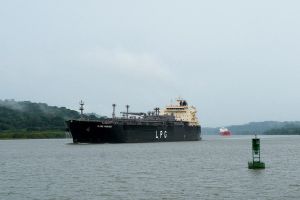
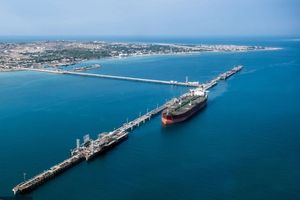
Iran’s crude oil shipments to China fell sharply in May as tighter US sanctions and seasonal refinery maintenance weighed on flows, Bloomberg reported on Wednesday, citing preliminary ship-tracking data and market analysts.
According to data from Vortexa Ltd., Iran exported just over 1.1 million barrels per day (bpd) of crude and condensate to China last month, marking a drop of roughly 20% compared to the same period a year earlier.
The figures, based on shipping movements, remain subject to revision due to a growing number of tankers switching off their tracking systems in an effort to avoid detection.
“The tightening US sanctions are straining the supply chain and raising concerns about the reliability of shipments,” said Emma Li, senior market analyst at Vortexa. “At the same time, refinery demand in China has weakened, largely due to delayed seasonal maintenance, which now appears likely to extend through July.”
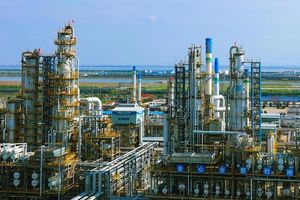
Independent Chinese refiners, known as teapots, are Iran’s primary customers, drawn by steep discounts on sanctioned barrels. But the facilities—mostly concentrated in Shandong province—are currently operating near record-low rates, Li noted. Many refiners had already stockpiled Iranian oil earlier this year, reducing the need for additional purchases in May.
Lower prices of competing crude from Russia, including Sokol and Novy Port grades, have also edged out Iranian supplies in the Chinese spot market.
Impact of sanctions and port restrictions
The decline follows months of escalating US pressure on Iran’s oil exports. Since early 2025, Washington has sanctioned dozens of tankers and companies involved in the trade, particularly targeting Iran’s so-called “shadow fleet.”
The latest round of sanctions, imposed in May, included Hebei Xinhai Chemical Group Co.—a Chinese independent refiner alleged to have received hundreds of millions of dollars’ worth of Iranian crude—as well as several port operators in Shandong and seven vessels used to disguise Iranian shipments.
“The United States remains resolved to intensify pressure on all elements of Iran’s oil supply chain,” said Treasury Secretary Scott Bessent in a statement at the time.
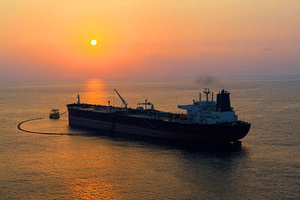
The sanctions have disrupted, but not halted, Iran’s crude flows to China. According to Bloomberg, many shipments now occur in “dark mode,” with vessels turning off their transponders and conducting ship-to-ship transfers off Malaysia to obscure the oil’s origin.
However, sanctions have pushed freight costs sharply higher, with chartering rates for non-sanctioned supertankers reaching up to $6 million—an increase of 50% over the past year.
Shandong Port Group has reportedly advised local operators to avoid dealings with blacklisted tankers, further complicating logistics for Iranian crude.
Earlier cracks in the trade
China’s imports of Iranian oil began declining steeply in January after authorities barred sanctioned tankers from entering Shandong ports, which handle around 90% of Iranian cargoes.
According to Kpler data, Iranian oil deliveries to China dropped below 850,000 bpd in January, compared to over 1.8 million bpd in October 2024.
At the same time, Iran’s floating oil reserves have surged to 35 million barrels, underscoring the widening gap between official shipment figures and actual deliveries.
Despite sporadic rebounds—such as a brief rise in April driven by a backlog of delayed cargoes—the overall trend has been downward.
As US sanctions intensify and China takes further precautions, Iran’s reliance on its shrinking pool of buyers could deepen, while Tehran says its energy exports remain stable.
Iran will prioritize expanding relations with countries that resist American influence, Parliament Speaker Mohammad Bagher Ghalibaf said during an official visit to Cuba.
“Our approach is to strengthen ties with nations standing against the United States,” Ghalibaf said. “Whether these countries are geographically near or far, they are a priority—and this is the Leader’s consistent policy.”