Iran’s top court upholds death sentence for man accused in nuclear figure killing
Iran’s Supreme Court has upheld the death sentence of Azad Shojaei, a political prisoner accused of aiding the assassination of senior Revolutionary Guards commander and nuclear figure Mohsen Fakhrizadeh, the human rights website HRANA reported.
Shojaei was convicted by the Revolutionary Court in Urmia of “espionage for Israel” and allegedly supplying equipment used in the 2020 killing of Fakhrizadeh, who served as deputy defense minister and was a key figure in Iran’s nuclear and missile programs. His death was widely blamed on Israel.
A theatrical “hell” installation staged by Iran’s Revolutionary Guards failed to deliver its fiery finale after technical issues left the exhibit cold on its final night, the online newspaper Faraz reported.
The immersive experience, part of the Heaven Time project in Gilan Province, aimed to depict scenes from the Islamic afterlife using real flames, costumed actors, and dramatized punishments. But on the final night, hell failed to ignite—at least on Earth.
Civil rights lawyer Hassan Younesi wrote on X that several women were denied entry to the “hell” exhibit for not wearing the mandatory hijab—sparking widespread irony online, where users said that those supposedly destined for hell were barred from even visiting it.
Images and reports from the event had already sparked ridicule online for what many called a crude and unsettling parody of faith.
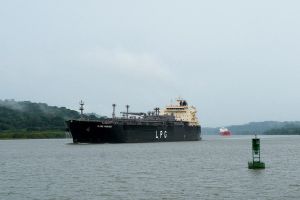
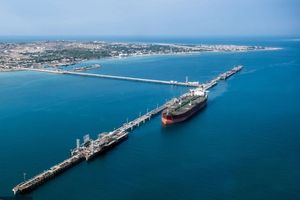
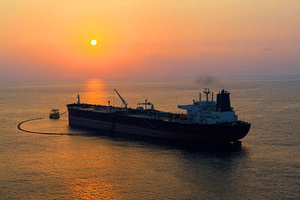
Iran’s crude oil shipments to China fell sharply in May as tighter US sanctions and seasonal refinery maintenance weighed on flows, Bloomberg reported on Wednesday, citing preliminary ship-tracking data and market analysts.
According to data from Vortexa Ltd., Iran exported just over 1.1 million barrels per day (bpd) of crude and condensate to China last month, marking a drop of roughly 20% compared to the same period a year earlier.
The figures, based on shipping movements, remain subject to revision due to a growing number of tankers switching off their tracking systems in an effort to avoid detection.
“The tightening US sanctions are straining the supply chain and raising concerns about the reliability of shipments,” said Emma Li, senior market analyst at Vortexa. “At the same time, refinery demand in China has weakened, largely due to delayed seasonal maintenance, which now appears likely to extend through July.”
Independent Chinese refiners, known as teapots, are Iran’s primary customers, drawn by steep discounts on sanctioned barrels. But the facilities—mostly concentrated in Shandong province—are currently operating near record-low rates, Li noted. Many refiners had already stockpiled Iranian oil earlier this year, reducing the need for additional purchases in May.
Lower prices of competing crude from Russia, including Sokol and Novy Port grades, have also edged out Iranian supplies in the Chinese spot market.
Impact of sanctions and port restrictions
The decline follows months of escalating US pressure on Iran’s oil exports. Since early 2025, Washington has sanctioned dozens of tankers and companies involved in the trade, particularly targeting Iran’s so-called “shadow fleet.”
The latest round of sanctions, imposed in May, included Hebei Xinhai Chemical Group Co.—a Chinese independent refiner alleged to have received hundreds of millions of dollars’ worth of Iranian crude—as well as several port operators in Shandong and seven vessels used to disguise Iranian shipments.
“The United States remains resolved to intensify pressure on all elements of Iran’s oil supply chain,” said Treasury Secretary Scott Bessent in a statement at the time.
The sanctions have disrupted, but not halted, Iran’s crude flows to China. According to Bloomberg, many shipments now occur in “dark mode,” with vessels turning off their transponders and conducting ship-to-ship transfers off Malaysia to obscure the oil’s origin.
However, sanctions have pushed freight costs sharply higher, with chartering rates for non-sanctioned supertankers reaching up to $6 million—an increase of 50% over the past year.
Shandong Port Group has reportedly advised local operators to avoid dealings with blacklisted tankers, further complicating logistics for Iranian crude.
Earlier cracks in the trade
China’s imports of Iranian oil began declining steeply in January after authorities barred sanctioned tankers from entering Shandong ports, which handle around 90% of Iranian cargoes.
According to Kpler data, Iranian oil deliveries to China dropped below 850,000 bpd in January, compared to over 1.8 million bpd in October 2024.
At the same time, Iran’s floating oil reserves have surged to 35 million barrels, underscoring the widening gap between official shipment figures and actual deliveries.
Despite sporadic rebounds—such as a brief rise in April driven by a backlog of delayed cargoes—the overall trend has been downward.
As US sanctions intensify and China takes further precautions, Iran’s reliance on its shrinking pool of buyers could deepen, while Tehran says its energy exports remain stable.
Iran will prioritize expanding relations with countries that resist American influence, Parliament Speaker Mohammad Bagher Ghalibaf said during an official visit to Cuba.
“Our approach is to strengthen ties with nations standing against the United States,” Ghalibaf said. “Whether these countries are geographically near or far, they are a priority—and this is the Leader’s consistent policy.”
Washington’s posture in nuclear negotiations aims to erode the country’s independence and internal capabilities, Iran’s Supreme Leader said on Wednesday.
“The American plan in the nuclear issue is one hundred percent against our ‘we can’ doctrine,” Ali Khamenei said in a speech on the anniversary of Ruhollah Khomeini’s death in Tehran.
Iran’s Supreme Leader Ali Khamenei waves to the crowd at the mausoleum of Islamic Republic founder Ayatollah Ruhollah Khomeini during the 36th anniversary of his death, southern Tehran on June 4, 2025.
Iran’s Supreme Leader Ali Khamenei on Wednesday reaffirmed that uranium enrichment remains a central and non-negotiable component of Iran’s nuclear program, rejecting a US proposal for a possible nuclear deal and dampening hopes for a quick compromise.
"The rude and arrogant leaders of America repeatedly demand that we should not have a nuclear program. Who are you to decide whether Iran should have an enrichment?," Khamenei said during a televised speech.
“The US nuclear proposal contradicts our nation's belief in self-reliance and the principle of 'We Can',” he added, referring to a core slogan of the Islamic Republic's founder Rouhollah Khomeini.
Speaking at Khomeini’s mausoleum in southern Tehran, Khamenei added, “The first word of the US is that Iran should not have a nuclear industry and should rely on the United States.
“Our response to the US nonsense is clear: they cannot do a damn thing in this matter.”
The phrase echoed another famous slogan by Khomeini, "America can't do a damn thing against us," during the Iran hostage crisis shortly after the Islamic Revolution, which marked a nadir in US-Iran relations.
The US proposal for a new nuclear deal was presented to Iran on Saturday by Oman, which is mediating talks between Iranian Foreign Minister Abbas Araghchi and President Donald Trump's Middle East envoy, Steve Witkoff.
After five rounds of talks, several issues remain, including Iran's insistence on maintaining uranium enrichment on its soil and Tehran's refusal to ship abroad its entire existing stockpile of highly enriched uranium -- possible raw material for nuclear bombs.
Iran’s Supreme Leader Ali Khamenei and Hassan Khomeini, the grandson of Ayatollah Ruhollah Khomeini, attend a ceremony at the mausoleum of the Islamic Republic’s founder in southern Tehran on June 4, 2025.
Trump has revived his so-called maximum pressure campaign against Tehran since his return to the White House in January, which included tightening sanctions. He also threatened to bomb Iran if the negotiations yield no deal.
During his first term in 2018, Trump pulled out of Tehran's 2015 nuclear deal with six world powers and reimposed sanctions that have damaged Iran's economy significantly. Iran responded by escalating enrichment far beyond the pact's limits.
Khamenei emphasized that Iran would not abandon its enrichment work, despite Western pressure.
“Uranium enrichment is the backbone of our nuclear program,” he said. “They want to dismantle our nuclear program and weaken our national power. But the US will not be able to weaken our nuclear program."
Collapse of 2010 nuclear fuel deal
Khamenei added that the United States cannot be trusted to supply Iran with the nuclear fuel it needs for its fuel cycle, citing past instances of US and European unreliability in previous nuclear agreements.
“In the 2010s, we experienced the unreliability of the Americans — they broke their promise and did not provide 20% enriched fuel,” Khamenei said.
Khamenei was referring to a 2010 fuel swap agreement brokered by Turkey and Brazil, under which Iran was to exchange 1,200 kilograms of low-enriched uranium for 120 kilograms of fuel for its Tehran Research Reactor. Although based on a proposal from the US and its partners, the deal collapsed amid international mistrust and subsequent sanctions.
“Why are you interfering?” Khamenei said, addressing Washington. “Whether Iran enriches uranium or not — what does it have to do with you? Who are you?”
He defended Iran’s pursuit of a complete nuclear fuel cycle, saying that the country is among perhaps only ten in the world capable of achieving it. He emphasized that the nuclear industry serves broader scientific purposes beyond energy, describing it as a “parent industry.”
Tehran says it wants nuclear technology for peaceful purposes. Iran is the only non-nuclear weapon state enriching uranium to 60% U-235.
The IAEA has consistently maintained that there is no credible civilian use for uranium enriched to this level, which is a short technical step from weapons-grade 90% fissile material.
Senior officials double down on Khamenei's remarks
Hours after Khamenei’s speech, Iran’s foreign minister and nuclear chief reinforced the message, saying Iran will not bow to foreign pressure and will protect its nuclear gains.
“There is no scenario in which we will give up on the patriots who made our dream come true,” said Foreign Minister Abbas Araghchi on X. “No enrichment, no deal. No nuclear weapons, we have a deal.”
Echoing the stance, Iran’s nuclear chief Mohammad Eslami vowed to continue expanding Iran’s atomic program with “faith, revolutionary spirit, and heartfelt conviction.”
In a statement addressed to Khamenei, Eslami said, “Iran would stand against the excessive demands of the United States and other hegemonic powers.”
Iran open to regional consortium as hopes for deal narrow
On Tuesday, Axios cited a senior Iranian official as saying that Tehran is open to a nuclear agreement based on the idea of a regional uranium enrichment consortium, provided it is based in Iran.
CNN on Monday also reported that the next round of nuclear talks is “very uncertain and may not happen at all,” citing sources familiar with the negotiations. Reuters reported that Tehran was drafting a negative response to the US proposal.
According to the New York Times on Tuesday, the US has proposed allowing Iran to continue uranium enrichment at reduced levels, with the expectation that enrichment would fully stop once the regional consortium becomes operational.
The consortium would include countries such as Saudi Arabia and the United Arab Emirates, and the US would help facilitate the construction of its nuclear facilities.
Citing Iranian and European officials, it added that while the idea signals a possible path toward resolving the long-running dispute, the details remain vague.
Two Iranian officials quoted by the newspaper said that while Iran is open to the consortium concept, they insist it must be located on Iranian territory -- possibly on Kish or Qeshm islands in the Persian Gulf.