Senior Iranian lawmaker says nuclear talks with US will yield no results
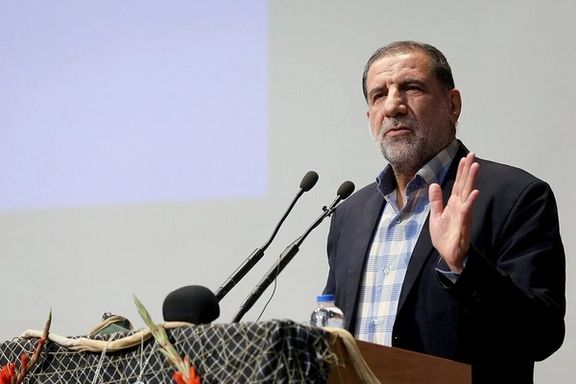

Iranian MP Mohammad Esmail Kowsari said ongoing nuclear negotiations with the United States are destined to fail and differ fundamentally from the 2015 nuclear deal.
“We will not achieve anything in these negotiations, and it is different from the JCPOA. Talks will continue, but no result will come out of them,” Kowsari said.
Kowsari, who sits on the Iranian parliament’s National Security and Foreign Policy Committee, said each round of negotiations is reviewed by the committee but insisted there is no expectation of progress.
Iraq’s foreign minister recently conveyed a message from US President Donald Trump to Iranian officials demanding the withdrawal of Iranian forces from positions in Iraq within two weeks and requesting access to dozens of Iranian military and nuclear sites, Iraqi diplomatic sources told UAE-affiliated Erem News.
According to the sources, the message delivered by Foreign Minister Fuad Hussein during a visit to Tehran included a request for Iran to open 31 military, nuclear and research facilities for inspection by US experts in the coming weeks.
Fuad Hussein traveled to Tehran earlier this week.
The message, the sources said, warned that a potential US escalation against Iran could follow, depending on Tehran’s response and the speed of compliance.
The proposed inspections were described as unrelated to ongoing nuclear talks mediated by Oman, and were presented as a separate condition, the sources added.

Iran’s foreign ministry said Friday that its objectives in the nuclear negotiations remain unchanged as its delegation arrives in Rome for the fifth round of talks with the United States.
“We arrive in Rome, Italy, to continue the negotiating process we started on 23 Farvardin 1404 (12 April 2025) in Muscat. As we're entering the fifth round, our goal and goalpost remain unchanged,” the ministry’s spokesperson posted on X.
“Iran's nuclear program is the product of a long-term perseverance, resistance and resilience by a nation that takes pride in its hard-won achievements and expects their diplomats to stand firm and hold fast to our nation's rights and interests,” the post added.

The fifth round of nuclear talks between Iran and the United States will take place at the residence of the Omani ambassador in Rome, with mediation led by Oman’s Foreign Minister Badr Al-Busaidi, Iran’s state-run news agency IRNA reported Friday.
According to IRNA, the Iranian ambassador’s residence is located about 300 meters from the venue.
The report also said that Italy’s foreign minister is currently out of Rome on an official trip.
"Uranium enrichment is absolutely non-negotiable,” a senior Iranian lawmaker said Friday, warning that Western objections are aimed at undermining Iran’s independence and technological progress.
“What the West presents as concern over enrichment is, in reality, an attempt to block the independence and progress of the Iranian nation,” said Deputy Chairman of the Iranian Parliament’s National Security and Foreign Policy Committee, Abbas Moghtadaei.
Moghtadaei said the Iranian people must protect the country’s nuclear achievements, which he described as the result of significant national effort. He added that ongoing negotiations aim to preserve a diplomatic path to secure Iran’s interests.
“We have repeatedly said that our goals in the nuclear field are entirely peaceful and that all uses remain within this framework,” he said.
Iran’s Armed Forces General Staff warned on Friday that any US action in the region could lead to what it described as consequences similar to America’s past military engagements in Vietnam and Afghanistan.
“Any US mischief in the region will bring a fate like Vietnam and Afghanistan,” state media quoted the military as saying in a statement marking the anniversary of the 1982 liberation of Khorramshahr, a strategic city recaptured from Iraqi forces during the Iran-Iraq war.
The statement accused Washington of stirring regional tensions and using what it called “Iranophobia” to extract wealth from Arab states, while asserting that Iran’s approach to the region remains focused on stability and sovereignty.