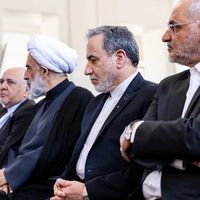
Iran’s ultra-hardline Kayhan newspaper said the United States is under growing pressure to strike a deal with Tehran, arguing that shifting regional dynamics have left Washington with few alternatives.
"The US is not choosing to offer concessions — the facts on the ground are forcing them to," Kayhan wrote in an editorial. The paper, which is managed by a representative of Iran’s Supreme Leader, described American negotiators as "deeply discredited" and "compelled to agree" due to regional realities and Iran's unchanged negotiating stance.
To point to Iran’s upper hand, the article said: "The visit of Saudi Defense Minister Prince Khalid bin Salman to Tehran and the military agreements between the two countries, Grossi’s desperate request to join the Iran-US talks and Iran’s rejection of it, the exclusion of Europe from the nuclear talks and regional developments, and the retreat of the European troika from their earlier conditions all show that nothing can be imposed on Iran under current conditions.”


Turkey's state-owned Halkbank has asked the US Supreme Court to review a lower court decision that allows it to be prosecuted for allegedly helping Iran evade American sanctions, a lawyer for the bank said on Monday.
The Supreme Court had set a Monday deadline for Halkbank to file a petition appealing the October 2024 ruling by the 2nd US Circuit Court of Appeals in Manhattan, which cleared the way for the prosecution.
In a letter to the appeals court, Halkbank's lawyer Robert Cary confirmed the petition had been filed, though it was not immediately available on the Supreme Court's website.
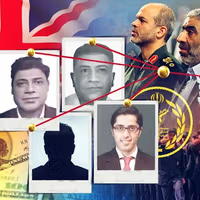
Halkbank has pleaded not guilty to charges of fraud, money laundering, and conspiracy, accused of using money servicers and front companies in Iran, Turkey, and the United Arab Emirates to circumvent US sanctions.
US prosecutors allege that Halkbank facilitated the secret transfer of $20 billion in restricted Iranian funds, converted oil revenue into gold and cash for Iranian interests, and fabricated documentation for food shipments to justify oil proceeds transfers.
The case, initiated in 2019, has strained relations between the US and Turkey, with Turkish President Tayyip Erdogan denouncing it as an "unlawful, ugly" step.
However, both Erdogan and US President Donald Trump reported a productive phone call on Monday, with mutual invitations to visit their respective countries.
It is Halkbank's second appeal to the Supreme Court. In 2023, the court ruled that while the Foreign Sovereign Immunities Act of 1976 shields foreign countries from civil liability, it does not extend to criminal cases.
The Supreme Court then instructed the 2nd Circuit to further examine whether common law immunity protected Halkbank, leading to the October ruling that the bank could be prosecuted.
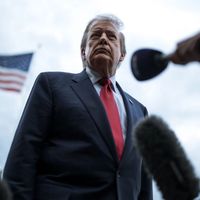
Trump maintains his so-called maximum pressure campaign against Iran, threatening secondary sanctions and targeting those aiding sanctions evasion, while indirect nuclear talks between the US and Iran continue.

Iranian methanol exports to China could come under US scrutiny after Washington warned of secondary sanctions on Iranian oil and petrochemicals buyers while nuclear talks continue, Bloomberg reported on Tuesday.
About 40% of China’s methanol imports — some 5.2 million tons in 2024 — came from Iran, data from shipping analytics firm Kpler shows.
Methanol, used to produce plastics, is a key feedstock for China’s methanol-to-olefin (MTO) plants, which are major buyers of Iranian cargoes, according to ICIS, a global market intelligence firm.
"Iranian methanol is almost the only efficient way for coastal MTO units to get enough supply," said Ann Sun, senior analyst at ICIS.
US President Donald Trump last week said countries or firms that buy Iranian oil or petrochemicals could face immediate sanctions. The US has already targeted Iranian energy exports and Chinese refineries allegedly involved in such trade.
Although some Iranian methanol reaches China via third countries like the UAE or Oman, further sanctions could disrupt flows.
The latest move by Trump comes as he is squeezing Iran amid ongoing indirect nuclear talks between the US and Iran. They have now passed the third stage and are awaiting the fourth round in Oman.
Iran says that lifting sanctions is a priority in the nuclear talks.
An Iranian lawmaker said a deal between Tehran and Washington is within reach, despite internal opposition in both countries, and suggested Iran could seek US guarantees for investment in its power sector.
"The agreement is close and will happen," said Ahmad Bakhshayesh Ardestani, a member of Iran's parliamentary national security and foreign policy commission, in an interview with ILNA on Tuesday. He added that “based on available evidence and variables,” he believes the talks will yield results.
The lawmaker said that while hardliners in the US may oppose negotiations, there is political will in Iran to reach an agreement.
Bakhshayesh also said Iran could ask for US guarantees to support investment in its electricity industry, calling it a strategic sector needing foreign participation.

Iranian methanol exports to China could come under US scrutiny after Washington warned of secondary sanctions on Iranian oil and petrochemicals buyers, Bloomberg reported on Tuesday.
About 40% of China’s methanol imports — some 5.2 million tons in 2024 — came from Iran, data from shipping analytics firm Kpler shows.
Methanol, used to produce plastics, is a key feedstock for China’s methanol-to-olefin (MTO) plants, which are major buyers of Iranian cargoes, according to ICIS, a global market intelligence firm.
"Iranian methanol is almost the only efficient way for coastal MTO units to get enough supply," said Ann Sun, senior analyst at ICIS.
US President Donald Trump last week said countries or firms that buy Iranian oil or petrochemicals could face immediate sanctions. The US has already targeted Iranian energy exports and Chinese refineries allegedly involved in such trade.
Although some Iranian methanol reaches China via third countries like the UAE or Oman, further sanctions could disrupt flows.
The United States is working to schedule the fourth round of nuclear talks with Iran for this weekend, Axios reporter Barak Ravid reported citing White House envoy Steve Witkoff.
“If it doesn’t happen, it’s only because of the president’s trip to the Middle East,” Witkoff said.
Describing the negotiations as positive, Witkoff added, “We are making some progress. I hope it is moving in the right direction. The president wants to see this solved diplomatically if possible, so we’re doing everything we can to get it going.”